


If you have ever bitten your cheek or had a nosebleed, you may have wondered: why does blood taste like metal? The short answer is that hemoglobin contains iron-bearing heme. However, you are not simply tasting loose iron. Blood mixes with saliva, iron-related reactions can generate odor-active compounds, and your brain combines taste with smell into a metallic flavor.
A brief taste after an obvious minor mouth injury is usually easy to explain. In contrast, clinicians call a persistent distorted taste without visible blood dysgeusia. That distinction matters because the second situation has many possible causes.
| Quick question | Direct answer |
|---|---|
| Why does blood taste like metal? | Heme iron, saliva chemistry, taste, and retronasal smell work together. |
| Is blood full of loose iron? | No. Its iron is held within heme in hemoglobin. |
| Is “metallic” one of the five basic tastes? | No. It is a broader flavor sensation rather than a clearly defined basic taste. |
| Why do people say “copper” or “pennies”? | Those words describe a familiar metallic sensation; copper is not the main explanation for blood. |
| What if there is no visible blood? | A metallic taste can be dysgeusia and may have a dental, medication, infection, or other cause. |
| When is it urgent? | Get emergency help for uncontrolled bleeding, coughing or vomiting blood, severe breathing trouble, chest pain, or fainting. |
What Is the Short Answer to Why Blood Tastes Metallic?
Blood’s iron-containing heme provides the central chemical link to its metallic flavor. When a small amount of blood enters the mouth, it contacts saliva, oral tissues, fats, proteins, and oxygen. These interactions can produce volatile molecules, while the tongue, nose, and other sensory nerves send signals that the brain interprets together.
Therefore, a complete answer to “why does blood taste like metal?” includes both chemistry and perception. Iron matters, but so do saliva and smell.
| Key fact | Explanation |
| Iron source | Heme groups inside hemoglobin |
| Iron form | Chemically bound, not loose elemental metal |
| Main blood protein involved | Hemoglobin, which carries oxygen in red blood cells |
| Sensory pathways | Taste, retronasal smell, and oral chemical sensations |
| Persistent metallic taste | May be dysgeusia rather than actual blood |
| Scientific limitation | Researchers have not reduced metallic flavor to one molecule or one receptor |
Why Does Blood Taste Like Metal Even Though the Iron Is Bound?
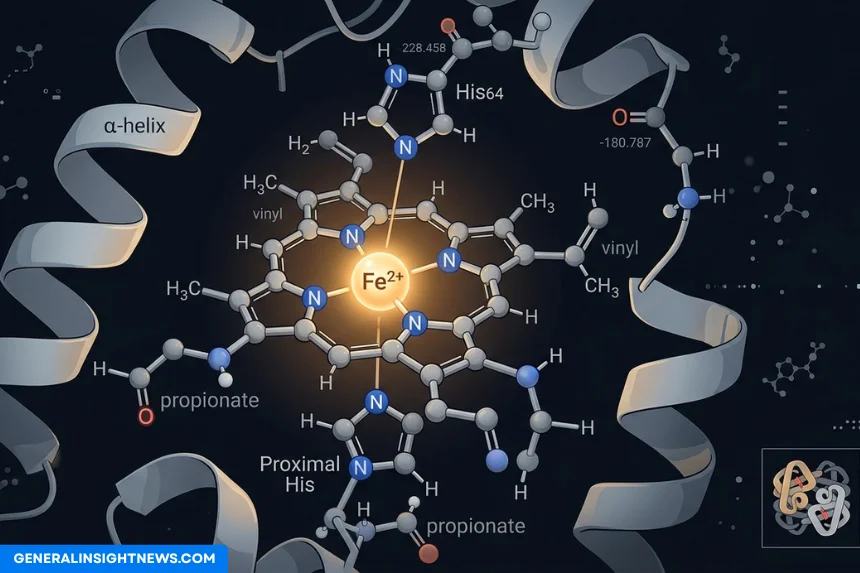
Hemoglobin is the red-cell protein that carries oxygen. The National Heart, Lung, and Blood Institute describes it as an iron-rich protein. Each heme group holds an iron ion in a precise molecular structure, so blood does not contain tiny iron filings floating through it.
Nevertheless, bound iron can still participate in chemistry that affects flavor. A peer-reviewed metallic flavor study tested iron and copper ions in people’s mouths. Ferrous iron produced a particularly strong metallic sensation. It also increased oxidation of lipids in saliva and the production of odor-active aldehydes.
In simple terms, iron can help transform fats into small molecules that have strong aromas. Those molecules can travel from the back of the mouth into the nose. Consequently, part of what feels like a metal “taste” may actually come from smell.
However, the study did not ask people to taste whole blood. Instead, it tested controlled metal solutions, so it supports a plausible mechanism rather than proving every molecular step behind blood’s flavor. A later review of heme as a taste molecule found evidence that heme itself may play a primary role. Still, the review noted that direct research on heme taste remains limited.
The evidence-based conclusion is nuanced: heme iron is central, and reactions in the mouth help create the sensation. Saying “blood tastes metallic because it contains iron” is directionally correct, but it leaves out much of the sensory chemistry.
Is Metallic Flavor a Taste or a Smell?
It is both a mouth sensation and a smell-influenced flavor. The standard basic taste qualities are sweet, sour, salty, bitter, and umami. Researchers do not firmly classify “metallic” as a separate basic taste with one dedicated receptor.
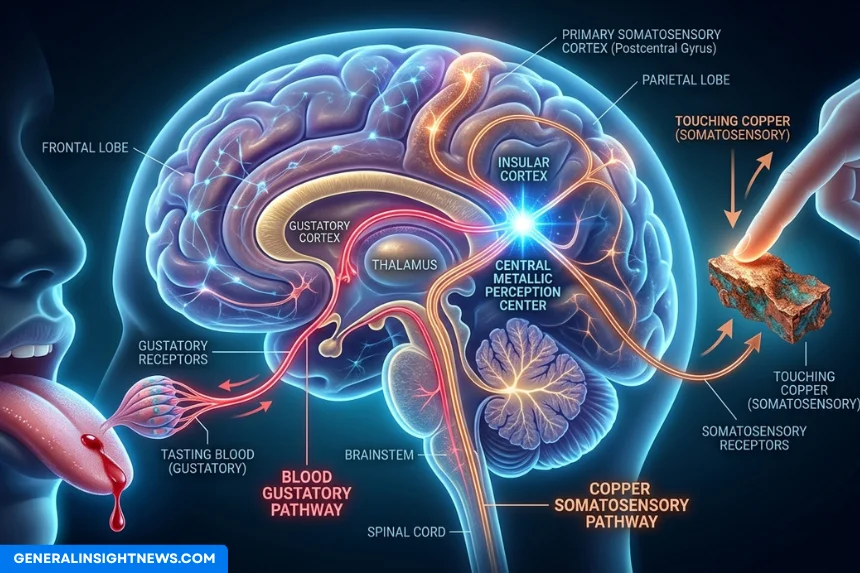
The National Institute on Deafness and Other Communication Disorders explains how taste and smell combine. Molecules stimulate taste cells, while food or fluid aromas reach smell receptors through a passage between the mouth and nose. Researchers call this route retronasal olfaction.
In addition, nerve endings in the mouth detect irritation, temperature, and texture. The brain blends all these inputs into one experience called flavor. Thus, blood can seem metallic, salty, slightly bitter, and distinctive at the same time.
This also explains why two people may describe blood differently. Smell sensitivity, saliva, oral health, congestion, medications, and expectations can all change the final perception.
What Happens When Blood Reaches the Mouth?
The following table presents a simplified, evidence-informed model. It does not claim that scientists have mapped every receptor or measured each step in an ordinary cheek bite.
| Stage | What likely happens |
| 1. Contact | A small amount of blood enters the mouth and mixes with saliva. |
| 2. Exposure | Heme and iron-containing compounds contact oral lipids, proteins, tissues, and oxygen. |
| 3. Reaction | Iron-related oxidation can generate aldehydes and other volatile carbonyl compounds. |
| 4. Detection | Taste cells and oral sensory nerves respond, while volatile molecules reach the nose from behind the mouth. |
| 5. Perception | The brain combines these signals into a metallic, salty, or penny-like flavor. |
Consequently, the entire process can become noticeable with only a little blood. Flavor intensity does not directly reflect the percentage of iron by weight. Instead, a small amount of a potent odor-active compound can have an outsized sensory effect.
Why Does Blood Taste Like Copper or Pennies?
“Copper” and “pennies” are comparisons, not a chemical diagnosis. Blood’s relevant metal is the iron that heme holds. However, copper and iron can both create sensations that people place in the same familiar “metallic” category.
Moreover, the smell associated with touching a coin or metal object often comes from reactions between the metal and substances on skin, not metal atoms floating into the nose. Similar reaction products can contribute to the metallic character of blood in the mouth.
Therefore, a copper-like description does not mean copper gives blood its usual flavor. It means the brain recognizes a resemblance between two complex sensory experiences.
Why Is the Metallic Flavor So Noticeable?
The amount of a substance and its sensory impact are not the same thing. Humans can detect some odor-active molecules at very low concentrations, and retronasal smell can amplify what begins in the mouth.
Also, much of blood is water, while its salts and other dissolved substances add background tastes. Against that relatively mild background, distinctive iron-related reaction products can stand out. That is why a tiny cheek bite can create a recognizable flavor even though iron accounts for only a small part of whole blood.
Individual sensitivity also varies. One person may immediately say “pennies,” while another mainly notices saltiness or almost nothing at all.
When Is Actual Blood Likely Causing the Taste?
Meanwhile, actual blood likely explains the taste when you can connect it to a visible or recent source. Common examples include:
| Situation | What may be happening | Sensible next step |
| Bitten lip, cheek, or tongue | A small wound releases blood into saliva | Rinse gently, apply pressure if needed, and monitor healing |
| Brushing or flossing | Inflamed or injured gums may bleed | Note whether bleeding recurs and arrange dental care if it does |
| Dental work | Healing tissues may release a small amount of blood | Follow the dentist’s aftercare instructions |
| Mouth sore or sharp food | Minor tissue injury can mix blood with saliva | Avoid further irritation and watch for infection or poor healing |
| Nosebleed | Blood may drain backward toward the throat | Lean forward and use proper nosebleed first aid |
The American Dental Association lists easy bleeding, red or swollen gums, persistent bad breath, and persistent bad taste among the warning signs of gum disease. Therefore, repeated blood taste during brushing is not something to dismiss as “just iron.” A dentist can check for gingivitis, periodontitis, a tooth problem, or another local cause.
During a nosebleed, do not tilt your head back. Mayo Clinic’s nosebleed first aid advises sitting up, leaning forward, and pinching both nostrils for 10 to 15 minutes. Leaning forward helps keep blood out of the throat, where you might taste, swallow, or inhale it.
Minor oral wounds often heal without a problem. However, a deep wound, uncontrolled bleeding, spreading swelling, pus, fever, severe pain, or trouble swallowing needs professional assessment.
Why Does Blood Taste Like Metal When No Blood Is Visible?
A metallic or blood-like taste does not prove that your mouth contains blood. Dysgeusia is the medical term for a distorted taste, which can include a persistent metallic sensation. Sometimes people also have phantom taste perception, meaning an unpleasant taste lingers even when nothing is in the mouth.
For example, possible categories include:
- Poor oral hygiene, gum disease, tooth infection, or another dental problem.
- A cold, sinus infection, or other upper respiratory illness.
- A changed sense of smell.
- Certain antibiotics, antihistamines, and other medicines.
- Chemotherapy or radiation involving the head or neck.
- Recent dental, ear, nose, or throat procedures.
- Pregnancy, indigestion, dry mouth, or other individual factors.
Because the list is broad, the taste by itself cannot identify a cause. For example, it does not establish internal bleeding, anemia, iron overload, kidney disease, cancer, or poisoning. Those conditions require other evidence and proper medical evaluation.
If the sensation started after a new medicine, speak with the prescribing clinician or pharmacist. Do not stop a prescribed drug on your own. Meanwhile, see a dentist when bleeding gums, tooth pain, swelling, loose teeth, or persistent bad breath accompanies the taste. Contact a healthcare professional when the taste has no clear cause, does not go away, or comes with other new symptoms.
Why Can You Taste Metal During Exercise?
Some people notice a blood-like or metallic flavor during hard exercise. Several explanations are possible, including dry mouth, cold or dry air, irritation in the nose or throat, bleeding gums, or a small unnoticed oral injury. Heavy breathing may also make an existing taste or smell more noticeable.
However, the sensation alone does not prove that lung capillaries have ruptured or that blood has entered the airways. Online explanations sometimes present that idea as certain, but a taste cannot confirm it.
First, stop and check for visible blood if the sensation appears. If it fades promptly and no other symptom occurs, note the trigger and monitor it. In contrast, seek medical advice if it recurs, persists, or appears with a cough, wheezing, reduced exercise tolerance, dizziness, or visible blood. Chest pain, severe shortness of breath, fainting, or coughing up blood needs urgent assessment.

What Should You Do About a Blood-Like or Metallic Taste?
First, decide whether there is an obvious local source. Look for a bitten area, mouth sore, bleeding gum, recent dental wound, or active nosebleed. Do not repeatedly poke the area, and never taste blood intentionally to “test” the explanation.
Next, take simple, cause-appropriate steps:
- Rinse the mouth gently with water after minor bleeding.
- Apply clean, steady pressure to a small oral cut that is still bleeding.
- For a nosebleed, sit up, lean forward, and pinch the nostrils as directed.
- Continue gentle oral hygiene, but do not scrub an open wound.
- Record when the taste occurs, how long it lasts, whether blood is visible, and which symptoms accompany it.
- Review new medicines or supplements with a pharmacist or clinician.
- Arrange dental care for recurring gum bleeding, tooth symptoms, or a persistent bad taste.
- Arrange medical care for a persistent or unexplained metallic taste.
Finally, avoid unproven “detox” products or iron treatments. A metallic taste does not show that you need more or less iron, and unnecessary supplements can cause harm.

When Should You Get Medical Help?
Use the source and severity—not the flavor description alone—to choose care.
| Level of care | Examples |
| Dentist or routine clinician visit | Persistent unexplained taste, recurring gum bleeding, tooth pain, ongoing nasal symptoms, or a possible medication effect |
| Prompt medical assessment | Recurrent nosebleeds, a nosebleed while taking a blood thinner, blood seen with a cough, worsening symptoms, or a wound that will not heal |
| Emergency care | Uncontrolled or excessive bleeding, coughing or vomiting blood, severe breathing difficulty, chest pain, fainting, confusion, or bleeding after major injury |
Cleveland Clinic directs people with uncontrolled bleeding or those coughing or vomiting blood to an emergency department. If the situation appears life-threatening, call 911 rather than driving yourself.
The threshold for emergency care may also be lower for someone taking an anticoagulant or living with a bleeding disorder. When in doubt about active bleeding, contact an appropriate medical service rather than relying on an online taste guide.
Frequently Asked Questions
1. Does blood taste metallic because it contains iron?
Yes, iron-bearing heme in hemoglobin is central to the metallic flavor. However, the full answer to why does blood taste like metal also includes saliva chemistry, lipid oxidation, taste, and retronasal smell. It is not simply the direct taste of loose iron.
2. Is the iron in blood the same as iron metal?
It is the same chemical element, but its form and environment are different. In blood, an iron ion sits inside the heme structure of hemoglobin. Therefore, blood does not contain free metal fragments that a magnet could pull out.
3. Why does blood taste like copper if it contains iron?
Copper or pennies describe a familiar sensory resemblance. Iron and copper can both participate in reactions that generate metallic flavors, but heme iron is the relevant component in blood. Consequently, the comparison does not mean copper is the main cause.
4. Is metallic taste a real type of taste?
People certainly experience metallic flavor, but science does not classify it with the five standard basic tastes. Instead, taste, retronasal smell, and oral chemical sensations appear to combine. Researchers are still studying the exact molecular pathways.
5. Why can I taste blood after brushing my teeth?
Your gums may be bleeding from irritation or gum disease, so a small amount of blood mixes with saliva. If this happens repeatedly, or your gums are swollen or tender, arrange a dental checkup. Meanwhile, continue gentle oral hygiene unless a dentist advises otherwise.
6. Why can I taste blood during a nosebleed?
Blood can travel from the back of the nose into the throat and mouth. Sit upright, lean forward, and pinch the nostrils rather than tipping the head back. Seek help if bleeding is heavy, follows a significant injury, causes faintness, or does not stop.
7. Why do I taste blood when I exercise?
Dry mouth, cold air, nasal or throat irritation, gum bleeding, or a small mouth injury can contribute. However, the taste alone cannot prove bleeding in the lungs. Stop and seek medical care if you see blood or develop chest pain, breathing difficulty, faintness, or a persistent cough.
8. Can medicine make my mouth taste like blood?
Yes. Some medicines can cause dysgeusia, which may feel metallic or blood-like even when no bleeding exists. Ask a pharmacist or the prescribing clinician about the symptom, but do not stop a prescribed medicine without medical advice.
9. Can anemia change how blood tastes?
A metallic taste is not a reliable test for anemia, and the normal metallic character of blood does not show that iron levels are high. Anemia requires symptoms, medical history, and blood testing for diagnosis. Therefore, do not use taste to decide whether to take iron.
10. When should a metallic or blood-like taste worry me?
Arrange dental or medical care if the taste persists, has no obvious cause, or comes with recurring gum or nasal bleeding. Get emergency help for uncontrolled bleeding, coughing or vomiting blood, severe shortness of breath, chest pain, fainting, confusion, or major injury.
11. Why does blood taste like metal after biting your tongue or lip?
Blood tastes metallic mainly because red blood cells contain iron-bearing hemoglobin. When blood reaches your mouth, its interaction with saliva and taste receptors produces the familiar metallic sensation. (Ohio State Health)
12. Why does blood taste like metal when there is no visible bleeding?
A blood-like metallic taste without visible bleeding may result from gum problems, certain medicines, indigestion, pregnancy, or respiratory infections. If the taste persists or appears with other symptoms, consult a doctor or dentist to identify the underlying cause. (Cleveland Clinic)
Conclusion
So, why does blood taste like metal? Hemoglobin carries iron within heme, while reactions in saliva can create odor-active compounds. Taste, retronasal smell, saltiness, and other mouth sensations then merge into the recognizable metallic flavor.
If a brief taste follows an obvious minor bite or nosebleed, treat the source and monitor it. However, a persistent metallic taste without visible blood may be dysgeusia and deserves dental or medical attention when it continues or lacks a clear cause. Finally, call 911 or seek emergency care for uncontrolled bleeding, coughing or vomiting blood, severe breathing trouble, chest pain, or fainting.
Medical safety note: This article provides general education and cannot diagnose the cause of a metallic or blood-like taste. A dentist or licensed healthcare professional can evaluate individual symptoms.