

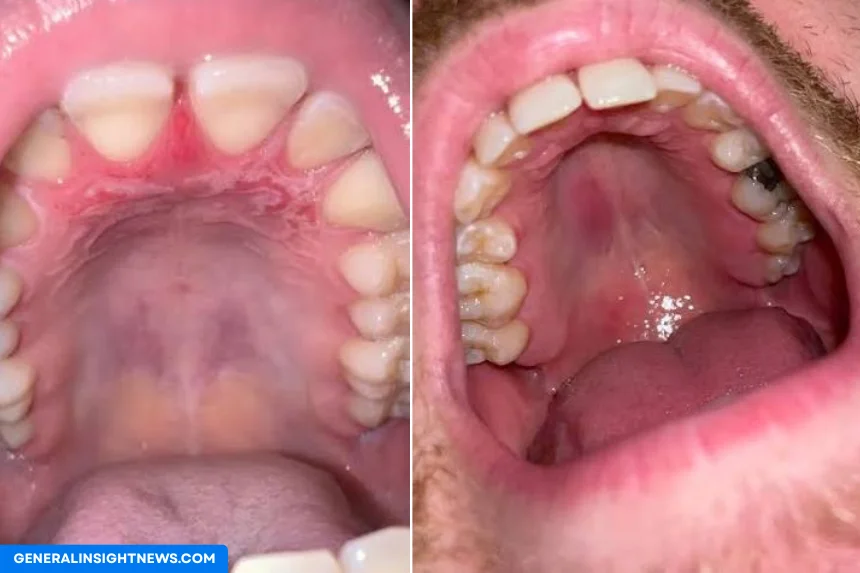
The roof of your mouth may look bruised because tiny blood vessels beneath the tissue have broken after minor trauma, heat, pressure or suction. Hard or sharp food, a hot drink, forceful coughing, vomiting, dental appliances and some sexual activity can all irritate the palate.
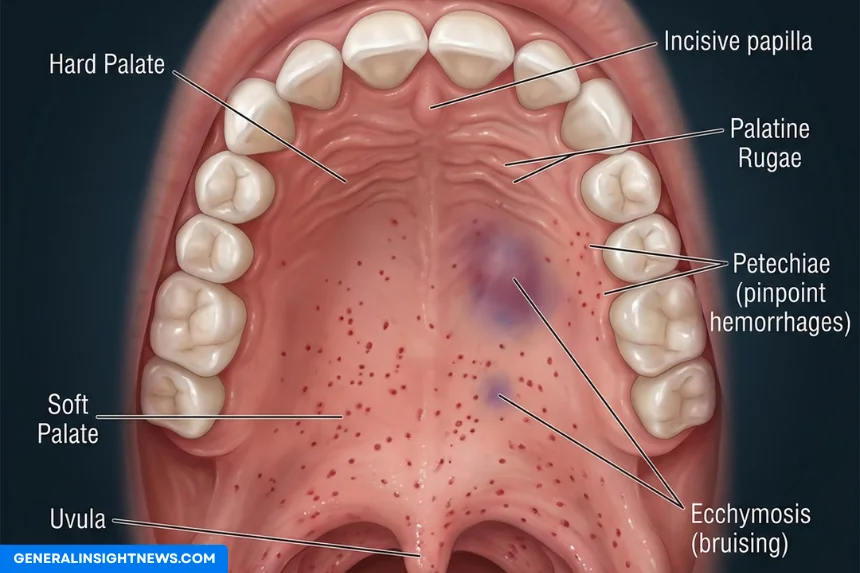
Small red or purple dots are often called palatal petechiae. A larger purple or reddish area may represent purpura, a blood blister, a burn or another type of oral injury.
However, an infection can sometimes cause similar marks. Strep throat and infectious mononucleosis can both produce red spots on the palate, especially when the discoloration appears with fever, swollen glands or a significant sore throat.
Most minor injuries improve after the source of irritation stops. Still, unexplained, recurring or persistent discoloration deserves an assessment from a dentist or doctor, particularly when you also bruise easily or experience bleeding elsewhere.
This article provides general health information and cannot diagnose the cause of a mouth lesion.
Bruised Roof of the Mouth at a Glance
| Possible cause | Other clues | Suggested action |
|---|---|---|
| Hard, sharp or crunchy food | Soreness began after eating | Avoid irritation and monitor healing |
| Hot food or drink | Burning pain, tenderness or peeling | Use cool foods and drinks; avoid further heat |
| Suction or direct pressure | Red-purple dots on the soft palate | Avoid the trigger and monitor |
| Dental appliance or sharp tooth | Irritation repeatedly occurs in one place | Arrange a dental examination |
| Strep throat | Sudden sore throat, fever, painful swallowing | Seek medical testing |
| Infectious mononucleosis | Fatigue, sore throat and swollen neck glands | Contact a healthcare professional |
| Oral thrush | White patches with red tissue underneath | Ask a doctor, dentist or pharmacist |
| Low platelets or another bleeding issue | Easy bruising, nosebleeds or bleeding gums | Seek medical advice promptly |
| Blood-thinning medicine | New or unusual bleeding and bruising | Contact the prescribing clinician |
| Persistent oral lesion | Lasts several weeks, forms a lump or changes | See a dentist or doctor |
These clues overlap, so appearance alone may not reveal the cause.
What Does a Bruised Palate Look Like?
A bruised palate can appear as:
- Tiny red or purple pinpoints.
- A cluster of flat reddish spots.
- A larger purple or dark-red patch.
- A tender swollen area.
- A blister filled with dark blood.
- A raw or peeling patch after a burn.
- An ulcer with a pale centre and red border.
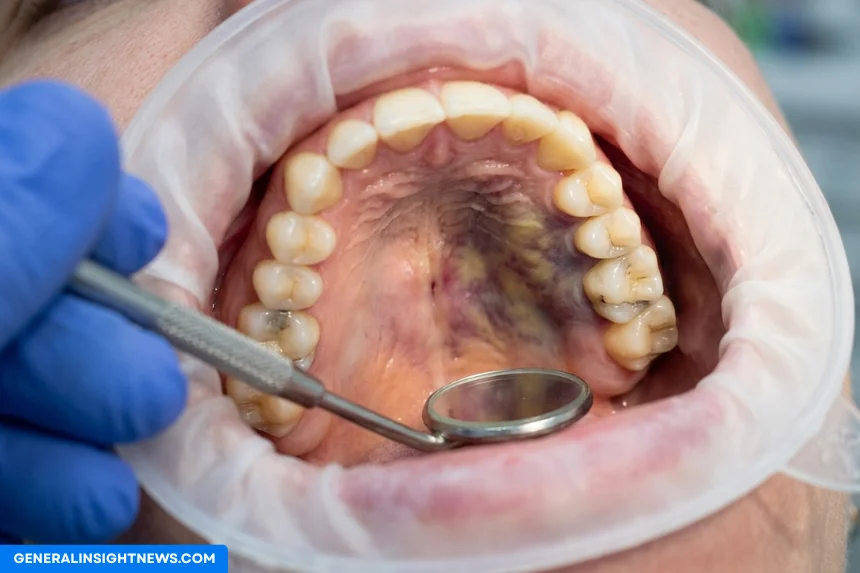
Petechiae are small spots caused by bleeding from tiny blood vessels. Larger flat areas of bleeding are generally described as purpura or ecchymosis.
The mark may appear on the hard palate near the front of the mouth or the softer tissue closer to the throat. Palatal petechiae commonly affect the soft palate, but infections and injuries may affect either area.
Common Reasons the Roof of Your Mouth Looks Bruised
1. An Injury From Hard or Sharp Food
Food-related trauma is one of the most straightforward explanations.
Possible triggers include:
- Crisps or tortilla chips.
- Crusty bread.
- Hard sweets.
- Nuts and seeds.
- Fish or chicken bones.
- Sharp-edged cereal.
- A fork or other utensil.
- Food chewed before it softened sufficiently.
The injury may scrape the surface, break small blood vessels or produce a blood blister. You may remember a sharp pain while eating, although the discoloration sometimes becomes noticeable later.
The NHS lists cuts and burns from hard food or hot drinks among the common causes of individual oral sores. Its mouth-ulcer self-care guidance also recommends avoiding rough, crunchy, spicy, salty and acidic foods while irritated tissue heals.
2. A Burn From Hot Food or Drink
Pizza, melted cheese, hot coffee, tea and soup can burn the roof of the mouth before you realise how hot they are.
A minor oral burn may cause:
- Immediate burning pain.
- Redness or dark discoloration.
- Mild swelling.
- Tenderness while eating.
- Peeling tissue after a day or two.
- A shallow sore as the tissue heals.
A burn may look more red or raw than purple. However, damaged tissue and small areas of bleeding can make it resemble a bruise.
Avoid additional heat, spicy meals and sharp foods until the area feels normal. Seek medical or dental advice when the burn is extensive, severely blistered, worsening or preventing you from drinking.
3. Pressure or Suction
Strong pressure or suction can rupture tiny blood vessels in the soft palate.
This may follow:
- Forceful coughing.
- Repeated vomiting or retching.
- Suction involving an object.
- Playing a wind instrument.
- Receptive oral sex.
- Another activity that places direct pressure on the palate.
Medical literature includes a published case report on palatal petechiae after oral sex. The report explains that receptive penile oral sex can cause bleeding beneath the palatal lining through forceful contact and negative pressure. However, these marks are not proof that a person engaged in sexual activity because several other injuries and illnesses can produce the same appearance.
When a recent activity clearly explains the marks and there are no other symptoms, avoiding further pressure may allow them to fade naturally.
4. A Dental Appliance, Sharp Tooth or Recent Procedure
Anything that repeatedly rubs against the roof of your mouth can damage the tissue.
Possible causes include:
- Dentures that no longer fit correctly.
- A removable retainer.
- An orthodontic appliance.
- A sharp or broken tooth.
- A rough filling.
- A dental impression or suction device.
- Local anaesthetic injections.
- Recent oral surgery.
An appliance-related injury often returns in the same location. Therefore, book a dental appointment rather than repeatedly treating the irritation at home.
Do not attempt to reshape a denture, retainer or wire yourself. A dentist can identify the contact point and adjust it safely.
5. Strep Throat
Strep throat can cause tiny red spots on the roof of the mouth.
Other common symptoms include:
- A sudden sore throat.
- Fever.
- Pain when swallowing.
- Red and swollen tonsils.
- White material or streaks on the tonsils.
- Tender or swollen lymph nodes at the front of the neck.
The CDC guidance on strep throat lists palatal petechiae among the examination findings associated with group A streptococcal pharyngitis. However, healthcare professionals cannot reliably distinguish strep from other causes through palate spots alone. A rapid antigen test or throat culture may be necessary.
Do not use leftover antibiotics. Antibiotics help confirmed bacterial strep infections but do not treat viral sore throats.
6. Infectious Mononucleosis
Infectious mononucleosis, commonly called mono or glandular fever, may also cause petechiae where the hard and soft palates meet.
Additional symptoms can include:
- Significant tiredness.
- Fever.
- A severe sore throat.
- Swollen glands, particularly in the neck.
- Enlarged tonsils.
- Reduced appetite.
- General body aches.
The Merck Manual overview of infectious mononucleosis includes palatal petechiae among its possible findings. It also notes that enlarged lymph nodes and spleen enlargement may occur.
Contact a healthcare professional when a sore throat appears with pronounced fatigue or swollen glands. Avoid contact sports until a clinician has ruled out or managed an enlarged spleen.
7. Oral Thrush
Oral thrush does not usually create a simple purple bruise. However, it can cause red, sore tissue that people mistake for bruising.
Typical signs include:
- Creamy white patches inside the mouth.
- Redness or soreness beneath the patches.
- Areas that bleed after the white coating is wiped.
- An unpleasant taste.
- Cracks near the corners of the mouth.
- Difficulty eating because of discomfort.
The NHS guidance on oral thrush explains that removing white patches may reveal red spots that bleed.
Thrush is more likely after antibiotics, with dentures, during inhaled corticosteroid use or when the immune system is weakened. A clinician or pharmacist can help determine whether antifungal treatment is appropriate.
8. A Mouth Ulcer
An ulcer can begin as a painful red spot before developing a pale or yellowish centre. It may therefore look like a small bruise during its early stage.
Possible triggers include:
- Accidental injury.
- A sharp tooth or filling.
- Stress.
- Certain foods.
- Some medicines.
- Nutritional deficiencies.
- A tendency to develop recurrent aphthous ulcers.
Most ordinary mouth ulcers improve within one or two weeks. The NHS advises seeing a dentist or doctor when an ulcer lasts longer than three weeks, differs from previous ulcers, bleeds or becomes increasingly painful and red.
9. A Low Platelet Count or Bleeding Disorder
Platelets help blood clot after blood vessels become damaged. When the platelet count is low, a person may develop unexplained bruising, petechiae or mucosal bleeding.
Warning signs can include:
- Bruises without a clear injury.
- Frequent or prolonged nosebleeds.
- Bleeding gums.
- Numerous red-purple dots elsewhere on the body.
- Heavier-than-usual menstrual bleeding.
- Bleeding that takes a long time to stop.
- Blood in urine or stool.
The MedlinePlus information on thrombocytopenia lists mouth or gum bleeding, bruising, nosebleeds and petechiae among possible symptoms of a low platelet count. It advises contacting a healthcare professional about unexplained bleeding or bruising.
A single mark after eating something sharp is much more likely to reflect local trauma than a blood disorder. However, several unexplained bruises or bleeding symptoms require prompt medical evaluation.
10. Blood-Thinning Medicines
Anticoagulants and antiplatelet medicines can make bleeding or bruising occur more easily.
Examples include:
- Warfarin.
- Apixaban.
- Rivaroxaban.
- Dabigatran.
- Clopidogrel.
- Prasugrel.
- Heparin or enoxaparin.
The MedlinePlus guide to blood thinners identifies unusual bruising and gum or nose bleeding among the signs that should be discussed with a healthcare provider.
Do not stop a prescribed blood thinner without medical advice. Stopping suddenly can increase the risk of a dangerous blood clot. Instead, contact the prescribing clinician when new or unusual bruising develops.
Can a Bruised Roof of the Mouth Be Cancer?
A new bruise that follows a clear injury and heals normally is unlikely to represent mouth cancer.
However, persistent red, white or mixed-colour patches need professional examination because not every discoloured area is a bruise. Other concerning changes include:
- An ulcer lasting more than three weeks.
- A persistent red or white patch.
- A lump or thickened area.
- Mouth pain that does not improve.
- Difficulty swallowing or speaking.
- A persistent hoarse voice.
- A lump in the neck or throat.
- Unexplained weight loss.
The NHS symptoms of mouth cancer include a mouth ulcer lasting longer than three weeks, red or white patches, unexplained lumps and persistent swallowing or speaking problems. These symptoms often have noncancerous causes, but a dentist or doctor should examine them.
Do not wait for a persistent lesion to become painful. Some significant oral changes cause little discomfort initially.
How Long Does a Bruised Palate Take to Heal?
A minor injury should begin looking and feeling better within several days once the irritation stops.
The exact healing time depends on:
- The depth of the injury.
- Whether the area keeps rubbing against something.
- Whether it is a bruise, ulcer or burn.
- Your general health.
- Smoking or tobacco exposure.
- Medicines that affect clotting.
- Whether an infection is present.
A straightforward traumatic mark may fade within about a week. An ulcer or burn may require one to two weeks. However, you should not use a specific timetable to dismiss a lesion that grows, repeatedly bleeds or develops other concerning features.
Arrange an examination when there is no improvement after approximately one week, the cause is unclear or the lesion remains present for more than two to three weeks.
What Can You Do at Home?
Home care may be reasonable when the discoloration followed an obvious minor injury and you have no warning signs.
Avoid Irritating the Area
Temporarily avoid:
- Crisps, toast and other rough food.
- Very hot meals or drinks.
- Spicy food.
- Acidic food and fruit juice.
- Alcohol-containing mouthwash.
- Smoking, vaping and chewing tobacco.
- Any activity that caused pressure or suction.
Instead, choose softer meals and cool or lukewarm drinks. The NHS recommends soft foods and avoiding rough, very hot, salty, spicy and acidic items while oral sores heal.
Rinse Gently With Salt Water
A mild saline rinse can keep the mouth comfortable:
- Dissolve half a teaspoon of salt in a glass of warm water.
- Swish it gently around your mouth.
- Spit it out rather than swallowing it.
This method appears in the NHS mouth-ulcer self-care guidance. Stop if the rinse causes substantial pain or irritation.
Maintain Gentle Oral Hygiene
Continue brushing, but use a soft-bristled toothbrush and avoid scraping the injured tissue.
Do not:
- Puncture a blood blister.
- Pick at peeling tissue.
- Scrape off a persistent patch.
- Apply aspirin directly to the palate.
- Use harsh disinfectants inside the mouth.
- Attempt to repair a dental appliance yourself.
A pharmacist can advise on an appropriate oral pain-relieving gel, spray or mouthwash based on your age, medicines and medical history.
Take a Photograph
A clear photograph taken in good lighting can help you monitor:
- Whether the area is getting smaller.
- Changes in colour.
- The appearance of ulcers or blisters.
- Whether new dots are developing.
Do not rely on a photograph for diagnosis, especially when symptoms worsen.
When Should You See a Dentist?
A dentist is an appropriate first contact when:
- A sharp tooth, filling, denture or retainer may be causing the injury.
- The mark repeatedly develops in the same location.
- You have a blood blister or ulcer that is not healing.
- A red, purple or white patch remains present.
- You notice an unexplained lump.
- The area interferes with eating.
- You are uncertain whether the mark is a bruise.
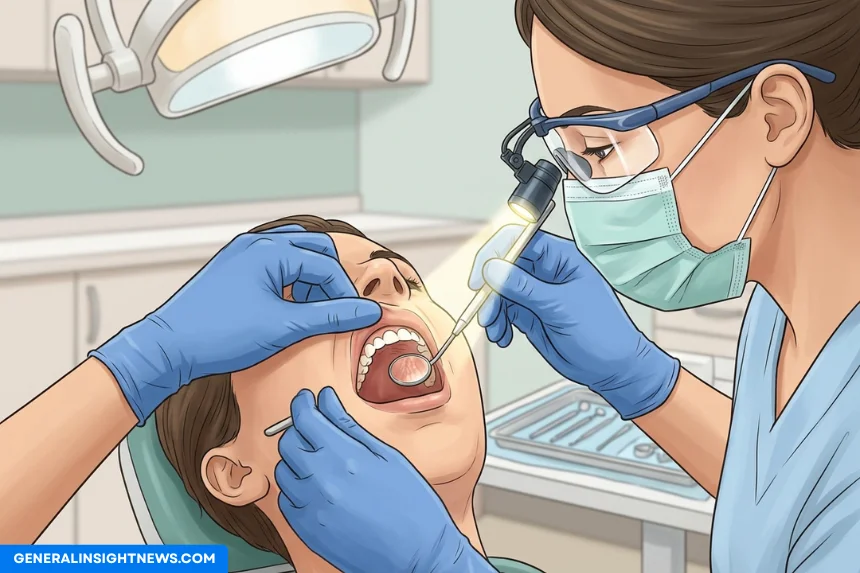
A dentist can examine the hard and soft palate, teeth, gums and dental appliances. Depending on the findings, the dentist may reassure you, adjust an appliance, recommend treatment or refer you to a doctor or oral specialist.
When Should You See a Doctor?
Contact a doctor or urgent-care service when the bruised appearance occurs with:
- Fever and a sudden sore throat.
- Painful swallowing.
- Swollen neck glands.
- Extreme fatigue.
- A widespread rash.
- Unexplained bruises elsewhere.
- Frequent nosebleeds or bleeding gums.
- Heavy menstrual bleeding.
- A new medicine associated with bleeding.
- A weakened immune system.
- A known blood or platelet disorder.
- Symptoms that continue to worsen.
A doctor may perform a throat swab, blood count or other tests based on your symptoms. Petechiae alone do not reveal whether you have strep, mono or a platelet problem.
When Is It an Emergency?
Seek emergency medical assistance when you experience:
- Difficulty breathing.
- Rapid swelling of the tongue, lips, mouth or throat.
- Inability to swallow saliva.
- Severe or uncontrolled bleeding.
- Fainting, marked dizziness or confusion.
- A rapidly spreading rash with serious illness.
- A major facial or mouth injury.
- Vomiting or coughing up blood.
Rapid mouth or throat swelling with breathing difficulty can indicate a severe allergic reaction. The NHS guidance on anaphylaxis treats this as a life-threatening emergency requiring immediate assistance.
Can a Dentist Tell What Caused the Bruise?
A dentist may recognise that a lesion looks consistent with trauma, an ulcer, an infection or petechiae. However, appearance rarely proves the exact cause by itself.
The dentist may ask about:
- Recent hot or sharp food.
- Vomiting or severe coughing.
- Dental treatment or appliances.
- Sexual activity involving oral pressure.
- Sore throat, fever or fatigue.
- Current medicines.
- Easy bruising or bleeding.
- How long the mark has been present.
Answering honestly helps the clinician avoid unnecessary testing and identify significant causes. Medical and dental professionals routinely discuss sensitive health information and should approach it without judgment.
Frequently Asked Questions
Why is the roof of my mouth purple?
A purple area may be a bruise or blood blister caused by sharp food, heat, suction, a dental appliance or another minor injury. Persistent or unexplained purple patches should be examined because oral discoloration can have several causes.
Why are there tiny red dots on the roof of my mouth?
Tiny red dots may be palatal petechiae, which form when small blood vessels bleed beneath the tissue. Trauma can cause them, but they may also occur with strep throat, infectious mononucleosis or a platelet-related problem.
Can eating crisps bruise the roof of your mouth?
Yes. Sharp or rough food can scrape the palate, break tiny blood vessels or create an ulcer. The area should gradually improve after you switch to soft foods and avoid further irritation.
Can hot pizza bruise the roof of your mouth?
Hot pizza can burn the palate, particularly when melted cheese sticks to the tissue. The resulting redness, peeling, blistering or tenderness may resemble a bruise.
Can oral sex cause a bruised palate?
Yes. Direct contact and suction during receptive penile oral sex can produce petechiae or a larger area of bleeding on the soft palate. However, these marks are not definitive evidence of sexual activity because other injuries and illnesses produce similar lesions.
Does a bruised palate mean I have strep throat?
Not necessarily. Strep can cause palatal petechiae, but an injury, another infection or pressure can do the same. Fever, sudden sore throat, painful swallowing and swollen neck glands make strep more likely, but testing confirms the diagnosis.
Should I pop a blood blister on the roof of my mouth?
No. Popping it may cause further bleeding, introduce infection and delay healing. Avoid the trigger and seek dental advice when the blister is large, recurrent, very painful or unexplained.
How long should I wait before seeing a dentist?
Arrange an appointment sooner if the cause is unclear, the mark is worsening or you have significant pain. A persistent ulcer, red patch, white patch or lump should be examined, especially when it remains for approximately three weeks.
Can blood thinners cause mouth bruising?
They can make bruising and bleeding occur more easily. Contact the prescribing clinician about new or unusual bruising, but do not stop the medicine without medical advice.
Can stress cause a bruised roof of the mouth?
Stress does not usually create a true bruise directly. However, stress may contribute to mouth ulcers, teeth clenching or habits that irritate oral tissue. A purple or petechial lesion still requires consideration of trauma, infection and bleeding-related causes.
Conclusion
The roof of your mouth most commonly looks bruised after local irritation from hard food, a hot drink, pressure, suction or a dental appliance. These minor injuries generally improve once the trigger stops.
Nevertheless, red or purple palate spots can also accompany strep throat, infectious mononucleosis, oral thrush, low platelets or medicines that increase bleeding. The surrounding symptoms matter more than the colour alone.
Seek professional advice when the cause is unclear, the mark keeps returning, you have fever or swollen glands, or bruising and bleeding occur elsewhere. A lesion that lasts approximately three weeks, forms a lump or causes persistent swallowing difficulty should receive a dental or medical examination.