


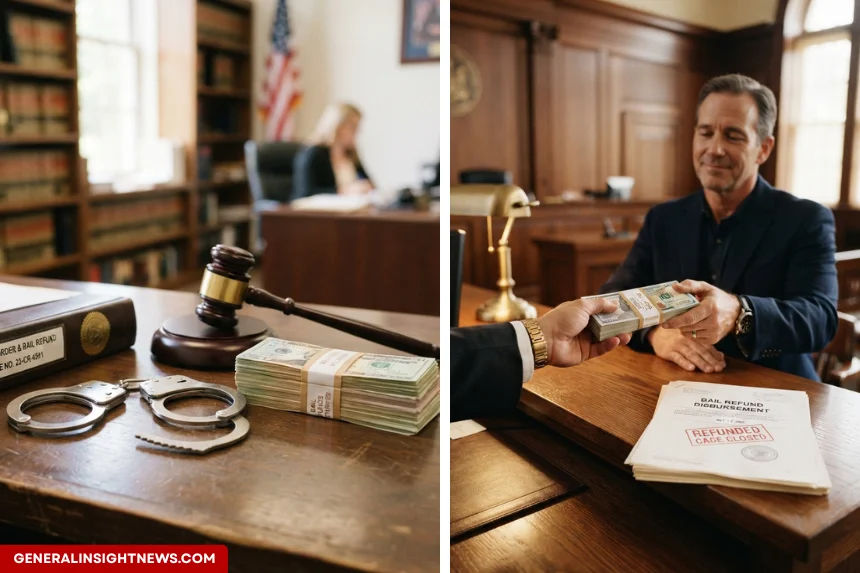
Do you get bail money back after a case ends? The answer depends on the type of bail, the court rules, the country or state, and whether the defendant follows all bail conditions.
In many cash bail systems, the court may return bail money if the defendant attends every required hearing and follows the court’s rules. However, the court may keep some or all of the money if the defendant misses court, breaks conditions, or owes certain fees.
If you use a bail bondsman, the answer is usually different. The fee or premium paid to the bond company is normally not refundable because it pays for the company’s service. Collateral may be returned if the defendant meets the bond terms, but the premium usually stays with the bail bond company.
This article explains how bail refunds work, when bail money may be returned, when it may be forfeited, and what to do if you have not received a refund.
Legal note: Bail rules vary by country, state, and court. This article gives general information only. It is not legal advice.

Quick Answer: Do You Get Bail Money Back?
Yes, you may get bail money back if you paid cash bail directly to the court and the defendant follows the rules. This usually means the defendant must attend court, obey bail conditions, and complete the case process.
However, you usually do not get back a bail bond premium paid to a bail bondsman. That fee is the cost of using the bond service.
Here is the simple version:
| Bail type | Do you get it back? |
|---|---|
| Cash bail paid to court | Often yes, if court rules are followed |
| Bail bond premium | Usually no |
| Collateral for bond | Usually yes, if bond terms are met |
| UK security paid into court | Usually yes, if bail conditions are followed |
| Forfeited bail | Usually no, unless the court later reverses it |
The result also depends on local law. Some courts deduct fees, fines, restitution, or administrative costs before sending a refund.
Cash bail may come back, but a bail bond fee usually does not.
What Is Bail?
Bail is a way for a defendant to leave custody while waiting for a court hearing, trial, or case decision. The purpose of bail is to make sure the person returns to court and follows any conditions set by the court or police.
Bail is not the same as a fine. A fine is punishment after a decision or conviction. Bail is a financial promise or legal condition before the case finishes.
Bail may involve:
- Money paid to court
- A bail bond
- A surety
- A security deposit
- Conditions of release
- Regular reporting
- Travel restrictions
- No-contact orders
- A promise to attend court
The court may set bail based on the case, the defendant’s history, flight risk, public safety concerns, and local law.
Bail helps secure court attendance before the case ends.
When Do You Get Bail Money Back?
You usually get bail money back when the defendant follows all court requirements and the case reaches the point where bail is no longer needed.
Common refund conditions include:
- The defendant attends all required hearings
- The defendant follows bail conditions
- The case ends or bail is discharged
- The court issues a refund order
- The correct person requests or receives the refund
- No forfeiture order applies
- Required paperwork is complete
In many places, the refund goes to the person who paid the bail, not necessarily the defendant. That person may be called the payer, surety, depositor, or bailor, depending on the legal system.
The court may also deduct certain amounts before returning the balance. These can include court fees, fines, restitution, or administrative costs, depending on local rules.
Bail money usually comes back when the defendant attends court and the court releases the money.
When Can Bail Money Be Kept?
The court may keep bail money if the defendant fails to follow the rules. This is often called bail forfeiture.
Bail may be forfeited if the defendant:
- Misses a court hearing
- Leaves the area without permission
- Breaks a no-contact order
- Fails to report as required
- Commits a new offence while on bail
- Gives false information
- Violates travel restrictions
- Does not surrender to custody when required
The court may also issue a warrant if the defendant fails to appear. In that situation, the person who paid bail may lose the money, and the defendant may face additional legal problems.
Some courts allow a person to ask for forfeiture to be set aside, but that depends on local law and the reason for the missed hearing.
Bail money can be lost if the defendant skips court or breaks bail conditions.
Cash Bail vs Bail Bond: What Gets Refunded?
The biggest confusion comes from the difference between cash bail and a bail bond.
Cash Bail
Cash bail means someone pays the full bail amount directly to the court or jail. If the defendant follows the rules, the court may return the money when the case ends or when bail is discharged.
Bail Bond
A bail bond means a bail bond company promises the court that the defendant will appear. The defendant or family usually pays the bond company a fee or premium. That fee is usually not refundable.
Collateral
Collateral is property or money given to secure the bond. This may include cash, a car title, property, or other assets. If the defendant follows the rules, collateral may be returned. If the defendant skips court, the collateral may be at risk.
| Payment type | Usually refundable? | Main condition |
|---|---|---|
| Cash bail | Often yes | Defendant follows court rules |
| Bail bond premium | Usually no | Fee pays for bond service |
| Collateral | Usually yes | Defendant meets bond terms |
| Court fees | Usually no | Fees may be deducted |
| Forfeited bail | Usually no | Court keeps it after violation |
Cash bail can be refundable, but a bail bond fee usually is not.
How Bail Refunds Work in the US
In the United States, bail rules vary by state, county, and court. Some places use cash bail often. Others have reduced cash bail or changed their pretrial release rules.
A typical cash bail refund process may look like this:
- Someone pays bail to the court or jail.
- The defendant leaves custody.
- The defendant attends all required hearings.
- The case ends or the court releases the bail.
- The court processes a refund.
- The refund goes to the person listed as the payer or surety.
- The court may deduct fees or other amounts.
If the person uses a bail bondsman, the bond company charges a premium. That premium usually does not come back, even if the defendant appears in court.
In the US, cash bail may be returned, but bail bond premiums are usually kept by the bond company.
How Bail Works in the UK
In the UK, bail often means release from custody until a police or court date. It does not always involve paying money upfront in the same way some US cash bail systems do.
A person on bail may need to follow conditions such as:
- Living at a specific address
- Reporting to a police station
- Not contacting certain people
- Staying away from certain places
- Giving up a passport
- Attending court when required
In some cases, the court may require a surety or security. A surety is someone who promises money if the defendant fails to attend court. Security can involve money paid into court before release.
If the defendant follows the rules, the surety or security may be released. If the defendant fails to attend court or breaches required terms, the money may be forfeited.
UK bail often focuses on conditions, but money can still be at risk when a surety or security is involved.
Do You Get Bail Money Back If Charges Are Dropped?
If charges are dropped, cash bail may usually be returned as long as the defendant followed the rules before the case ended. The court may still need time to process the refund.
However, the result depends on the type of bail.
If you paid cash bail to the court, you may receive a refund after the court closes or discharges the case. If you paid a bail bond premium, that fee usually remains non-refundable because the bond company provided a service.
The court may also deduct unpaid fees or other amounts if local rules allow it.
If charges are dropped, cash bail may come back, but a bail bond fee usually does not.
Do You Get Bail Money Back If Found Guilty?
A guilty verdict does not automatically mean you lose bail money. In many systems, the key question is whether the defendant appeared in court and followed bail conditions.
If the defendant attended court as required, cash bail may be returned after the case ends, even if the defendant is found guilty. However, the court may deduct fines, fees, restitution, or other amounts where allowed.
If the defendant used a bail bondsman, the premium is usually still non-refundable.
A guilty verdict does not always stop a cash bail refund, but court deductions may apply.
Do You Get Bail Money Back If Found Not Guilty?
If the defendant is found not guilty and followed all bail conditions, cash bail may usually be returned. The court may still need time to close the case and process the refund.
A not-guilty verdict does not usually make a bail bond premium refundable. The premium paid to a bondsman normally remains the cost of the bond service.
If the defendant is found not guilty, cash bail may come back, but a bond premium usually does not.
How Long Does It Take to Get Bail Money Back?
The refund timeline depends on the court and the legal system. Some refunds may take a few weeks. Others may take longer if paperwork, court orders, fee deductions, or address issues cause delays.
Refunds may be delayed because:
- The case has not officially closed
- The court has not issued a refund order
- The payer’s address is wrong
- The receipt is missing
- Court fees need to be deducted
- A forfeiture issue exists
- The court clerk needs more paperwork
- The refund must go through a government finance office
If you paid bail, keep all receipts and court documents. These records help prove who paid and where the refund should go.
Bail refunds may take weeks or longer, depending on the court and paperwork.
Who Gets the Bail Money Back?
The refund usually goes to the person who paid the bail. This may be the defendant, a family member, a friend, or another surety.
For example, if a parent pays cash bail for a child, the parent may receive the refund, not the defendant. Court records matter, so the person listed on the receipt should keep that receipt safe.
If a bail bond company posted the bond, the company may receive its bond release, but the premium paid to the company usually stays with the company.
The person who paid cash bail usually gets the refund, unless the court records say otherwise.
Can the Court Deduct Fees From Bail?
Yes, some courts may deduct fees, fines, restitution, or administrative charges from a cash bail refund. This depends on local law.
Possible deductions may include:
- Court costs
- Administrative fees
- Fines
- Restitution
- Public defender fees
- Unpaid case charges
- Other court-ordered amounts
This means the refund may be smaller than the original payment. In some cases, deductions can reduce the refund significantly.
You may not get the full bail amount back if the court deducts allowed fees or fines.
Common Reasons Bail Refunds Are Delayed
Bail refunds can take longer than expected. Delay does not always mean the money is lost.
Common reasons include:
- The case is still open
- The court has not issued a refund order
- The defendant missed a hearing
- The court needs updated payee information
- Fees or fines need calculation
- The payer moved without updating the court
- The receipt is missing
- The money was paid through a bond company
- The court is reviewing a forfeiture issue
- The finance department has a processing backlog
The best first step is to contact the court clerk or the office that handles bail refunds.
Refund delays often happen because of paperwork, case status, court fees, or wrong payment details.
What to Do If You Have Not Received Bail Money Back
If you expected a refund and have not received it, take practical steps.
- Check your bail receipt.
- Confirm who paid the bail.
- Contact the court clerk.
- Ask whether the case is closed.
- Ask whether a refund order has been issued.
- Confirm the mailing address or payment details.
- Ask whether any fees were deducted.
- Ask whether bail was forfeited.
- Contact the bail bond company if you used one.
- Speak with a lawyer if the court says the money was forfeited.
Do not wait too long. Some courts have deadlines or formal procedures for refund questions.
Start with the court clerk, your receipt, and the case status.
Bail Refund Example
Here is a simple example.
A sister pays $5,000 cash bail for her brother. Her brother attends every hearing and follows all bail conditions. When the case ends, the court releases the bail.
The court deducts $250 in administrative fees and sends the sister a refund of $4,750.
Now compare that with a bail bond example.
A family pays a bail bond company a $500 premium to post a $5,000 bond. The defendant attends court. The case ends. The family does not get the $500 premium back because it was the bond company’s fee.
Cash bail and bail bond fees work very differently.
Common Mistakes to Avoid
People often lose money or misunderstand the process because they do not know how bail refunds work.
Avoid these mistakes:
- Assuming all bail payments are refundable
- Confusing cash bail with a bond premium
- Losing the receipt
- Ignoring court dates
- Breaking bail conditions
- Moving without updating refund details
- Assuming the defendant receives the refund
- Forgetting about court deductions
- Waiting too long to ask about a refund
- Believing a not-guilty verdict automatically refunds every payment
The safest approach is to keep documents, follow every court rule, and ask the court how refunds work in that specific case.
The biggest mistake is assuming every bail-related payment comes back automatically.
Quick Facts About Bail Money Refunds
| Question | Short answer |
|---|---|
| Do you get cash bail back? | Often yes, if rules are followed |
| Do you get bond premium back? | Usually no |
| Who gets the refund? | Usually the person who paid |
| Can court fees be deducted? | Yes, in some places |
| What if the defendant skips court? | Bail may be forfeited |
| What if charges are dropped? | Cash bail may be refunded |
| What if found guilty? | Cash bail may still be refunded if rules were followed |
| What if found not guilty? | Cash bail may be refunded |
| How long does it take? | It depends on the court |
| Should you keep receipts? | Yes, always |
Cash bail is often refundable, but only if the defendant follows the rules and the court releases the money.
FAQs
Do you get bail money back?
You may get bail money back if you paid cash bail to the court and the defendant followed all court rules. The court may return the money after the case ends or bail is discharged.
If you paid a bail bond premium to a bail bondsman, that fee is usually not refundable.
Do you get bail money back if charges are dropped?
Cash bail may be returned if charges are dropped and the defendant followed bail conditions. The court may still need time to process the refund.
A bail bond premium usually remains non-refundable.
Do you get bail money back if found guilty?
Yes, cash bail may still be returned if the defendant attended court and followed the rules. A guilty verdict does not automatically mean the court keeps bail.
However, the court may deduct fines, fees, or other amounts where allowed.
Do you get bail money back if found not guilty?
Yes, cash bail may usually be returned if the defendant followed all requirements. The court may process the refund after the case ends.
A bond company premium usually does not come back.
Is a bail bond fee refundable?
Usually, no. A bail bond fee or premium pays the bail bond company for its service. The company usually keeps that fee even if the defendant appears in court.
Collateral may be returned if all bond terms are met.
Who gets the bail refund?
The person who paid the cash bail usually gets the refund. Court records and receipts decide where the money goes.
If someone else paid for the defendant, that person may receive the refund.
Can the court keep my bail money?
Yes, the court may keep bail money if the defendant misses court or breaks bail conditions. This is called forfeiture.
The court may also deduct fees, fines, or restitution in some places.
What happens if the defendant skips court?
If the defendant skips court, the court may issue a warrant and forfeit bail. The person who paid cash bail may lose the money.
If a bail bond company is involved, the company may seek payment or keep collateral based on the bond agreement.
How does bail work in the UK?
In the UK, bail usually means release from custody with conditions. These conditions may include living at a certain address, reporting to police, or avoiding certain people.
In some cases, a surety or security may involve money. That money may be at risk if the defendant fails to attend court.
How can I check my bail refund status?
Contact the court clerk or court finance office. Have your receipt, case number, defendant name, and payer information ready.
Ask whether the case is closed, whether a refund order exists, and whether any fees or forfeiture issues apply.
Conclusion
So, do you get bail money back? If you paid cash bail directly to the court, you may get it back if the defendant appears in court and follows all bail conditions. The court may return the money after the case ends, although fees or fines may reduce the refund.
If you paid a bail bondsman, the premium is usually not refundable. That fee pays for the bond service. Collateral may be returned if the defendant meets all bond terms.
The safest rule is simple: keep receipts, follow every court condition, attend every hearing, and ask the local court how refunds work. Bail rules vary, so case-specific questions should go to the court clerk or a qualified lawyer.
Discover more on our website about nick lachey net worth