


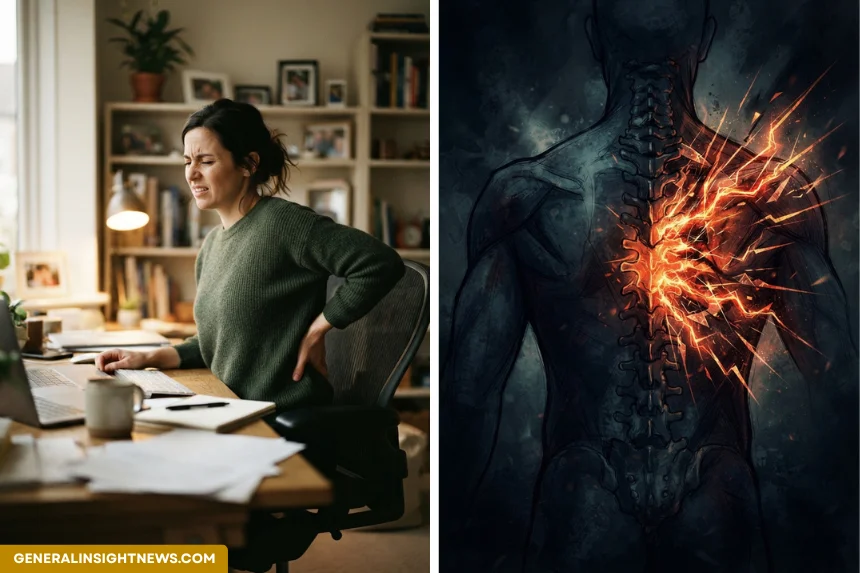
Mid back pain on the right side can come from a strained muscle, prolonged sitting, awkward lifting or irritation around the ribs and thoracic spine. In many cases, it improves gradually with gentle movement and simple self-care.
However, pain in this area does not always begin in the back itself. The kidneys, gallbladder, lungs and nerves can sometimes cause pain that is felt in the right side of the mid back. The symptoms accompanying the pain—including fever, urinary changes, abdominal pain, breathing difficulty, numbness or a skin rash—can provide important clues.
This guide explains the common possibilities, what you can safely try at home and when to seek medical help. It cannot diagnose the cause of your pain, so contact a qualified healthcare professional if symptoms are severe, unusual or persistent.
Where Is the Mid Back?
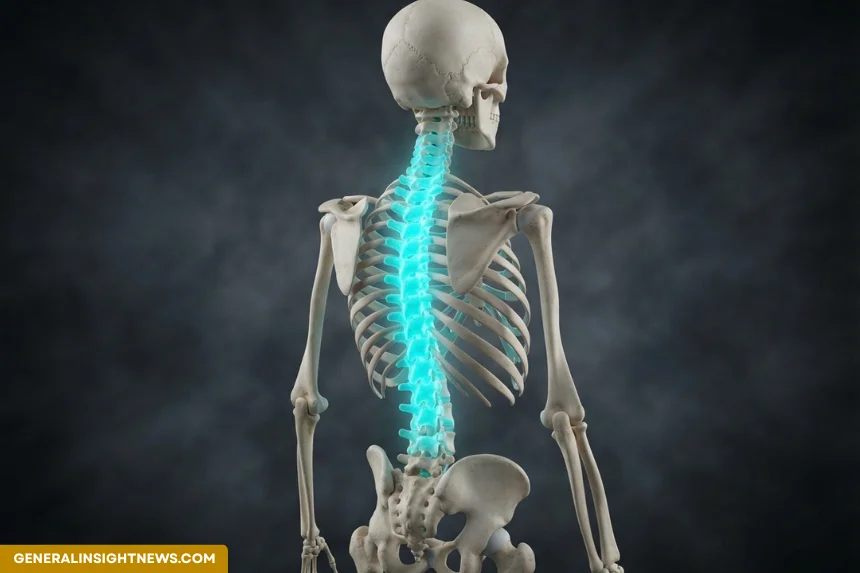
The mid back is the area between the neck and lower back. It contains the thoracic spine, ribs, muscles, ligaments, joints and nerves.
Pain may be felt:
- Beside the spine
- Beneath the right shoulder blade
- Around the back of the rib cage
- Under the lowest ribs
- As a band extending around the side of the body
Common musculoskeletal triggers include muscle strains, awkward lifting, twisting, carrying heavy bags, inactivity and remaining in one position for long periods.
When Right-Sided Mid-Back Pain Is an Emergency
Call 999 or go to A&E if the pain occurs with:
- Chest pain, pressure or tightness
- Severe difficulty breathing
- Fainting or a very fast heartbeat
- Weakness, tingling or numbness in both legs
- Loss of feeling around the genitals, buttocks or anus
- New difficulty controlling or emptying your bladder or bowels
- Pain beginning after a serious accident or major fall
These symptoms can indicate a serious spinal, heart or lung problem requiring immediate assessment.
Contact NHS 111 or request an urgent GP appointment when the pain:
- Is severe and starts suddenly
- Is worsening quickly
- Occurs with fever, chills or feeling generally unwell
- Prevents you from moving normally
- Persists after a significant injury
- Is accompanied by unexplained weight loss or severe night pain
- Occurs in someone with a history of cancer
Mid-back pain is usually not caused by serious disease, but these warning signs should not be managed only with home remedies.
Common Causes of Mid Back Pain on the Right Side
1. Muscle Strain or Soft-Tissue Irritation
A muscle strain is one of the more common explanations for pain on one side of the mid back. It may develop after lifting, twisting, exercising, coughing repeatedly or making a sudden movement.
The pain may feel:
- Achy, tight or tender
- Sharp during certain movements
- Worse when twisting, reaching or bending
- Sore when the affected muscle is pressed
- Better or worse in different positions
Pain that starts after physical activity and changes noticeably with movement may be musculoskeletal, although this pattern alone cannot confirm the cause.
2. Prolonged Sitting or Sustained Positioning
Working at a desk, driving for long periods or remaining in one position can contribute to stiffness and muscle tension around the shoulder blades and rib cage.
There is no single perfect posture that everyone must maintain. Regularly changing position is generally more useful than trying to hold one rigid position throughout the day. Leeds Community Healthcare advises moving regularly and getting up after approximately 30 minutes of sustained sitting when possible.
3. Rib or Thoracic Joint Irritation
The ribs connect to the thoracic vertebrae through small joints. Muscles also run between and around the ribs.
Irritation in these structures may cause pain that:
- Sits beside the spine or under a shoulder blade
- Wraps partly around the rib cage
- Worsens when twisting
- Increases with a deep breath, cough or sneeze
- Becomes tender when the area is pressed
Pain with breathing should not automatically be assumed to be muscular. Seek medical advice if it is accompanied by chest pain, coughing, fever or shortness of breath.
4. Kidney Infection
The kidneys sit toward the back of the upper abdomen, beneath the lower ribs. A kidney infection can therefore cause pain in the back or side, sometimes mainly on one side.
Other possible symptoms include:
- Fever or chills
- Painful or frequent urination
- Cloudy, dark, bloody or foul-smelling urine
- Nausea or vomiting
- Pain extending toward the side or groin
A suspected kidney infection needs prompt medical care because it can become serious without treatment.
5. Kidney Stones
A kidney stone may cause sharp pain in the back or side. The pain can come and go in waves and may travel toward the lower abdomen or groin.
Possible accompanying symptoms include:
- Blood in the urine
- Pain or burning while urinating
- A frequent urge to urinate
- Passing only a small amount of urine
- Nausea or vomiting
- Cloudy or unpleasant-smelling urine
Seek medical assessment promptly if these symptoms occur, especially when the pain is intense or accompanied by fever or chills.
6. Gallstones or Gallbladder Inflammation
Gallbladder pain usually begins in the upper-right abdomen or beneath the right ribs, but it may spread toward the back or right shoulder.
Gallstone pain may:
- Be severe and constant
- Last longer than 30 minutes
- Occur beneath the right ribs or in the centre of the upper abdomen
- Cause nausea or vomiting
- Spread from the abdomen toward the back
Call NHS 111 for abdominal pain lasting longer than 30 minutes. Seek emergency help for sudden severe abdominal pain, pain spreading to the back with vomiting, a very high temperature or yellowing of the skin or eyes.
7. Pleurisy or Another Lung-Related Problem
Pleurisy is inflammation of the tissue surrounding the lungs. It typically causes sharp chest pain that becomes worse when breathing in, coughing, sneezing or moving. The discomfort can spread toward the shoulders or back.
Urgent assessment is important if right-sided back or chest pain occurs with:
- Shortness of breath
- Coughing up blood
- A fast heartbeat
- Fainting
- Fever
- Sudden severe pain
Severe breathing difficulty or pain in the chest or upper back may indicate a pulmonary embolism or another emergency.
8. Shingles
Shingles can begin with burning, tingling, sensitivity or pain on one side of the body before a rash appears. A patch of painful blisters may then develop along the chest, ribs or back.
The rash usually affects only one side rather than crossing evenly across the body. Early medical advice is important because antiviral treatment may be recommended for some people.
9. Spinal or Rib Fracture
A fracture may follow a fall, collision or direct impact. People with osteoporosis can sometimes develop a spinal fracture after a relatively minor injury, and occasionally after movements such as coughing or sneezing.
Possible signs include:
- Sudden severe pain
- Pain after a fall or impact
- Increasing pain while standing or moving
- Loss of height
- A new rounded or stooped posture
- Localised tenderness over the spine
Osteoporosis itself is not normally painful until a bone breaks. Spinal fractures can cause severe or persistent back pain and should be medically assessed.
What the Other Symptoms May Suggest
| Pain pattern | Possible explanation | What to do |
|---|---|---|
| Pain after lifting, twisting or exercise | Muscle or soft-tissue strain | Try gentle self-care if no warning signs are present |
| Fever, chills and painful urination | Kidney infection | Seek prompt medical care |
| Sharp pain travelling toward the groin or blood in urine | Kidney stone | Contact a healthcare professional promptly |
| Upper-right abdominal pain spreading to the back | Gallbladder problem | Contact NHS 111, particularly if it lasts over 30 minutes |
| Pain worse when breathing with shortness of breath | Lung or chest condition | Obtain urgent assessment |
| Burning pain followed by a one-sided rash | Shingles | Contact a GP or pharmacist promptly |
| Numbness, leg weakness or bladder changes | Spinal nerve or cord problem | Seek emergency care |
| Pain after trauma or a fall | Rib or spinal injury | Arrange urgent assessment |
These patterns overlap. A symptom combination may guide a clinician, but it cannot reliably diagnose the problem without an appropriate examination.
How to Relieve Mild Right-Sided Mid-Back Pain
Home care may be reasonable when the pain followed an ordinary activity, remains manageable and is not accompanied by warning signs.
Keep Moving Gently
Avoid spending long periods in bed. Gentle daily movement helps prevent stiffness and supports a gradual return to normal activity.
During the first day or two, you may need to reduce strenuous activity. Continue making comfortable movements regularly rather than stopping movement completely. Increase normal activity gradually as the pain settles.
Use Heat or Cold Safely
A wrapped heat pack or hot-water bottle may reduce muscle tightness and spasms. A wrapped cold pack may help after a recent strain or when the area feels swollen.
Do not apply intense heat or ice directly to the skin. Limit each application and check the skin regularly, especially if you have reduced sensation.
Change Position Regularly
Break up long periods of sitting, driving or screen use. Stand, walk or gently move your shoulders and upper back at regular intervals.
You may also find it helpful to:
- Keep frequently used objects within easy reach
- Alternate between sitting and standing
- Avoid carrying a heavy bag on one shoulder
- Support your arms during prolonged computer work
- Return gradually to lifting rather than testing the pain with heavy loads
Ask About Suitable Pain Relief
A pharmacist or GP can advise which pain relief is appropriate for you. Anti-inflammatory medicines such as ibuprofen are not suitable for everyone, particularly when other health conditions or medicines are involved.
The NHS recommends checking with a pharmacist or GP when you are uncertain which painkiller is safe or appropriate.
Try Gentle Mobility Exercises
Comfortable shoulder rolls, light walking and gentle thoracic rotation may help stiffness. Movements should remain controlled and should not cause severe, shooting or rapidly worsening pain.
Stop and seek advice if exercise causes new numbness, weakness, breathing difficulty or significant pain around the chest or abdomen.
What to Avoid
During recovery, avoid:
- Staying in bed for several days
- Repeatedly forcing a painful stretch
- Heavy lifting while movement remains restricted
- Sudden twisting under load
- Ignoring urinary, abdominal, breathing or neurological symptoms
- Assuming all right-sided pain is caused by posture
- Taking medicine without checking whether it is suitable for you
Complete rest can increase stiffness and make returning to normal movement more difficult. Most uncomplicated mid-back problems respond better to a gradual return to activity.
When to Book a GP or Physiotherapy Appointment
Arrange a routine appointment if:
- The pain has not started improving after a few weeks
- It repeatedly returns
- It limits work, sleep or everyday activities
- You are worried or struggling to manage it
- It is consistently worse at night
- There is a lump, swelling or visible change in the back
- It is mainly between the shoulders rather than in the lower back
Many areas allow people to refer themselves directly to an NHS musculoskeletal or physiotherapy service without first seeing a GP.
How the Cause Is Diagnosed
A healthcare professional may ask:
- When and how the pain started
- Whether it changes with movement or breathing
- Whether there was an injury
- Whether pain travels around the ribs, abdomen or groin
- Whether you have urinary, digestive or respiratory symptoms
- Whether you have numbness, weakness or balance problems
- Whether you have osteoporosis, cancer or another relevant condition
The examination may include checking spinal movement, muscle tenderness, strength, sensation, breathing and the abdomen.
Scans are not routinely required for uncomplicated mid-back pain. They may be considered when a fracture, infection, tumour, significant nerve problem or another serious condition is suspected.
Urine or blood tests may be needed when kidney problems are suspected. Gallbladder symptoms may be investigated with blood tests and an abdominal ultrasound.
Frequently Asked Questions
Is right-sided mid-back pain usually muscular?
It is often related to muscles, joints, lifting, twisting, inactivity or sustained positioning. However, urinary symptoms, abdominal pain, breathing problems, fever, numbness or a rash suggest that another cause needs to be considered.
How can I tell whether the pain is coming from my kidney?
Kidney pain may occur beneath the ribs in the back or side. A kidney infection often causes fever, chills and urinary symptoms. Kidney stones may cause intense pain that travels toward the abdomen or groin, sometimes with blood in the urine.
Can gallbladder pain be felt in the right side of the back?
Yes. Gallbladder pain usually begins beneath the right ribs or in the upper abdomen and may spread toward the back or right shoulder. Nausea, vomiting, fever or jaundice require prompt medical attention.
Why does my right mid back hurt when I breathe?
Muscle or rib irritation can hurt during a deep breath, but pleurisy and other lung conditions can cause a similar pattern. Seek urgent help if the pain occurs with shortness of breath, coughing up blood, faintness or a fast heartbeat.
How long does muscular mid-back pain last?
Many uncomplicated mid-back problems begin improving within several weeks and may settle within approximately six weeks. Seek medical advice if the pain is worsening, remains severe or does not begin improving.
Should I use heat or ice?
Either may help, depending on what feels more comfortable. Cold may be useful after a recent strain, while heat may ease stiffness or muscle spasms. Wrap the pack in a towel rather than placing it directly on the skin.
Conclusion
Mid back pain on the right side is frequently connected to muscle tension, lifting, twisting or prolonged positioning. Gentle movement, regular position changes and suitable pain relief may help when symptoms are mild and no warning signs are present.
Seek medical advice when pain is severe, persistent or accompanied by fever, urinary changes, abdominal symptoms, breathing difficulty, a one-sided rash, numbness or weakness. Call 999 for chest pain, severe breathing problems, major trauma or new loss of bladder, bowel or genital sensation.
Discover more on our website about annette o’toole