


The new bank withdrawal rules 2026 are an important topic for people in Pakistan who regularly withdraw cash, use ATMs, or make large banking transactions.
However, the phrase “new bank withdrawal rules” can be misleading because several different requirements can affect a withdrawal. These include withholding tax on cash withdrawals, bank-specific ATM limits, transaction charges, account rules, and reporting requirements.
The most important point is that there is no single universal withdrawal limit that applies identically to every Pakistani bank account. Your bank, account type, withdrawal method, and tax status can all affect the amount you can withdraw and the charges or taxes that may apply.
For official tax information, the Federal Board of Revenue (FBR) should be treated as the primary source rather than social-media posts or unofficial banking blogs.
What Are the New Bank Withdrawal Rules in 2026?
In 2026, Pakistani bank customers should pay attention to four main areas:
- Cash-withdrawal withholding tax
- ATM and daily withdrawal limits
- Bank service charges
- Tax and transaction reporting requirements
These areas are separate.
For example, a bank may allow you to withdraw a certain amount from an ATM, but a tax rule could apply to a qualifying cash withdrawal. Similarly, a bank may impose a fee for using another bank’s ATM even when no withholding tax applies.
Therefore, understanding the rule requires looking at both tax law and your bank’s current schedule of charges.
Cash Withdrawal Tax in Pakistan
One of the biggest concerns surrounding bank withdrawals is withholding tax.
Pakistan’s tax rules can impose withholding requirements on certain cash withdrawals by individuals who fall within the applicable taxpayer categories.
The exact treatment depends on the prevailing tax law and the taxpayer’s status.
The Income Tax Ordinance, 2001 is an important primary source for understanding Pakistan’s income-tax framework.
Because tax legislation can be amended through Finance Acts and other official measures, people should check the current FBR rules before making a large withdrawal based on an older article.
Does Every Bank Withdrawal Have Tax?
No.
A common misunderstanding is that every withdrawal from every bank account automatically attracts a government tax.
Tax treatment can depend on factors such as:
- The amount withdrawn
- The taxpayer’s status
- The type of transaction
- The applicable tax year
- Whether the withdrawal falls within the relevant statutory provision
Consequently, you should not assume that a small ATM withdrawal and a large over-the-counter cash withdrawal will necessarily receive identical treatment.
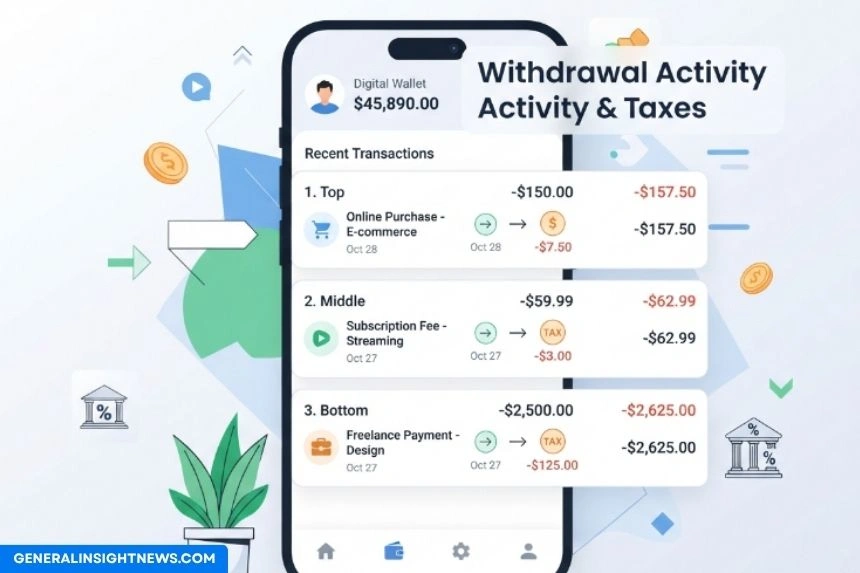
Who Needs to Pay Cash Withdrawal Tax?
The applicable withholding-tax provisions can distinguish between different categories of taxpayers.
Pakistan’s tax system uses concepts such as tax filers and non-filers, although the precise legal treatment depends on the applicable provision and current legislation.
The FBR’s Active Taxpayer List is the official resource for checking taxpayer status.
If you are unsure about your status, checking the official record is more reliable than relying on an old filer/non-filer list circulating online.
New Bank Withdrawal Rules 2026 for Non-Filers
Non-filers should pay particular attention to cash-withdrawal rules because Pakistan’s tax system has historically imposed higher withholding-tax consequences on certain transactions involving people who are not on the relevant taxpayer lists.
However, the applicable rate and threshold should always be checked against the current tax law for the relevant tax year.
An article published several years ago may contain a rate that no longer applies in 2026.
For official legislation and tax updates, the FBR laws and rules section is the safer reference.
Is There a Daily ATM Withdrawal Limit?
Yes, but the limit is generally determined by the bank and account/card configuration, rather than by one nationwide ATM withdrawal limit.
For example, a bank may establish a daily cash-withdrawal ceiling for a particular debit card.
The limit can vary according to:
- Bank
- Debit-card type
- Account type
- ATM network
- Customer profile
- Domestic or international use
- Security settings
This means that one customer may be able to withdraw a different maximum amount from another customer’s account even when both use the same ATM network.
Bank-Specific ATM Limits
Before planning a large cash withdrawal, customers should check their bank’s current terms.
Banks periodically update their Schedule of Bank Charges (SOBC) and product terms.
For example, the Bank of Punjab publishes customer information and banking documents, while MCB Bank provides its own banking schedules and customer-service information.
These bank-specific documents are more useful for determining charges and card-related conditions than a generic article claiming that every Pakistani bank follows exactly the same limit.
ATM Withdrawal Charges
A cash withdrawal can potentially involve more than one type of cost.
Depending on the transaction, customers may encounter:
- Own-bank ATM charges
- Other-bank ATM charges
- Interbank transaction fees
- International ATM fees
- Card-related charges
- Applicable government taxes
The exact amount depends on the bank and transaction.
This is why checking your bank’s current Schedule of Bank Charges is important before making frequent cash withdrawals.
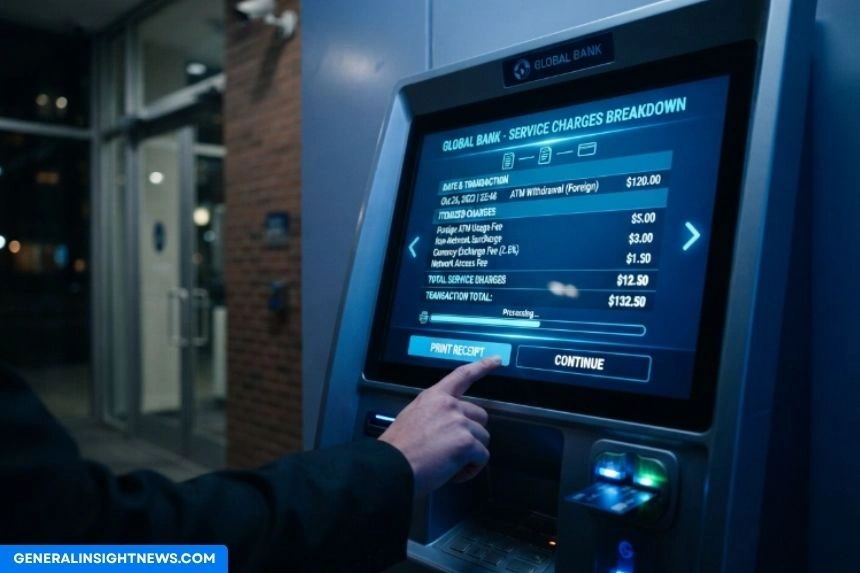
Withdrawing Cash From Another Bank’s ATM
Using another bank’s ATM can result in an additional charge.
For example, if you hold a debit card issued by Bank A and withdraw cash from an ATM operated by Bank B, the transaction may be subject to the applicable interbank or ATM fee.
The amount and conditions can change, so customers should check the current tariff of their own bank.
The State Bank of Pakistan (SBP) is the primary regulatory institution for Pakistan’s banking sector and provides important information about payment systems and banking regulations.
Over-the-Counter Cash Withdrawals
Not all withdrawals happen at ATMs.
Customers can also withdraw cash directly from a bank branch.
An over-the-counter withdrawal may be subject to different operational requirements from an ATM transaction. For example, the bank may require appropriate identification and account verification.
Large cash withdrawals can also receive greater scrutiny under banking and financial-monitoring requirements.
Customers planning to withdraw a substantial amount should contact their bank beforehand rather than assuming that an ATM or branch will automatically provide the requested cash immediately.
Large Cash Withdrawals and Bank Verification
Banks have responsibilities relating to customer identification, transaction monitoring, and financial crime prevention.
Consequently, a large or unusual transaction may result in additional questions or verification.
This does not necessarily mean that the withdrawal is prohibited.
The bank may simply need to establish that the transaction is legitimate and consistent with its regulatory obligations.
The State Bank of Pakistan’s AML/CFT framework provides regulatory information concerning anti-money-laundering and counter-terrorist-financing requirements for financial institutions.
Are Large Withdrawals Illegal?
A large withdrawal is not automatically illegal simply because it is large.
However, financial institutions operate under regulatory requirements, and unusually large or suspicious transactions can receive additional scrutiny.
Customers should keep appropriate documentation for legitimate transactions, particularly when withdrawing substantial sums for business, property, medical, or other major expenses.
If a bank asks about the purpose or source of funds, providing accurate information is important.

Bank Withdrawal Rules for Business Accounts
Businesses can face different practical considerations when withdrawing cash.
A company may need to maintain appropriate accounting records for cash expenses. Large cash transactions can also create tax and bookkeeping issues if there is no clear documentation.
For businesses, withdrawing cash is therefore not simply a banking decision. It can also affect:
- Accounting records
- Tax documentation
- Expense verification
- Internal controls
- Audit requirements
Business owners should maintain receipts and supporting documents for legitimate cash expenditures.
The Securities and Exchange Commission of Pakistan (SECP) provides regulatory information relevant to companies and corporate entities.
Bank Withdrawal Rules for Senior Citizens
Senior citizens generally use the same banking and tax framework applicable to their account and taxpayer status, unless a specific exemption or banking product provides otherwise.
However, banks may offer services designed to make branch transactions easier for elderly customers.
If a senior citizen has difficulty using an ATM, contacting the bank directly can help identify available assistance and alternative withdrawal methods.
Bank Withdrawal Rules for Pensioners
Pensioners should also distinguish between receiving pension payments and withdrawing cash from a bank account.
The fact that money comes from a pension does not necessarily mean that every subsequent transaction is governed by a special ATM rule.
The applicable treatment depends on the account, transaction, and prevailing law.
Customers receiving government pensions should check with their bank or the relevant pension authority if they believe a special rule applies to their account.
ATM Withdrawal vs. Branch Withdrawal
The most convenient method is often an ATM, but branch withdrawals can be preferable when a customer needs a larger amount.
ATM withdrawals
Advantages include:
- Convenience
- Extended availability
- Faster access
- Reduced need to visit a branch
However, ATMs usually have transaction and daily limits.
Branch withdrawals
Branch transactions can be more appropriate for:
- Large cash requirements
- Transactions requiring verification
- Situations where ATM limits are insufficient
- Customers who prefer face-to-face banking
The bank may have operational requirements for large cash requests, so advance notice can sometimes be useful.
Does Withdrawing Money From a Savings Account Trigger Tax?
Simply holding money in a savings account and withdrawing your own funds should not be confused with earning taxable income.
Pakistan’s tax system separately addresses matters such as profit on debt, banking income, and withholding taxes.
A withdrawal may have a withholding-tax consequence when the relevant statutory conditions are satisfied, but the existence of a withdrawal does not automatically mean that the entire amount is treated as new taxable income.
The State Bank of Pakistan provides information about banking and financial-sector regulation, while the FBR remains the key authority for federal taxation.
Bank Charges vs. Government Taxes
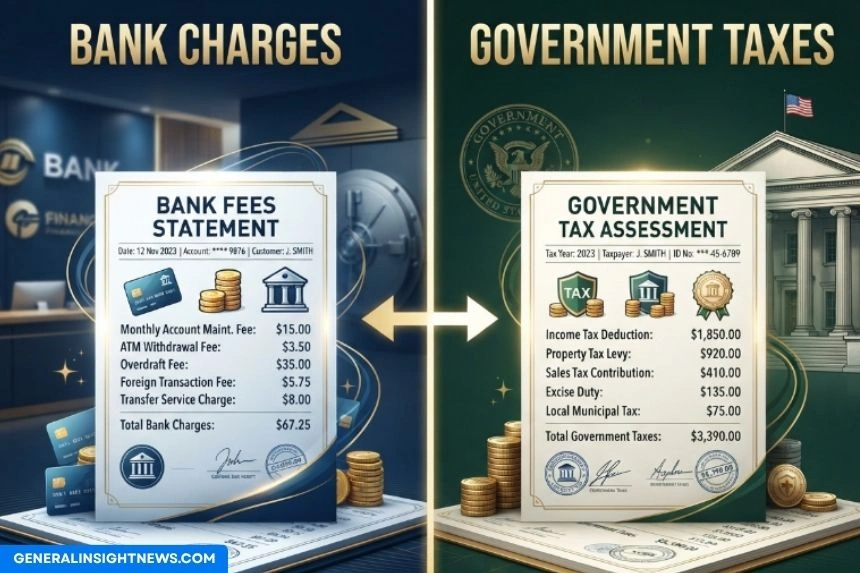
This distinction is extremely important.
A bank charge is a fee collected by the financial institution for providing a service.
A government tax is imposed under tax law.
For example, a bank may charge a fee for using an ATM outside its network. Separately, a government withholding tax may apply to a qualifying cash withdrawal.
These amounts have different legal bases and should not be described as the same thing.
Why Bank Schedules Matter in 2026
Banks regularly publish schedules of charges covering particular periods.
Customers should therefore avoid relying on a screenshot or PDF from an old year.
Before making a transaction, check:
- Your bank’s current schedule of charges
- Your debit-card terms
- Your account terms
- The latest FBR tax provisions
- Any applicable SBP instructions
This approach is particularly important in 2026 because banking tariffs and tax provisions can change during the year.
New Bank Withdrawal Rules 2026 and Digital Payments
Pakistan continues to expand digital financial services, including mobile banking, internet banking, cards, and electronic payments.
That means customers have more alternatives to carrying large amounts of physical cash.
The State Bank of Pakistan’s Raast provides information about Pakistan’s instant payment system.
For everyday purchases, digital transfers can sometimes be more convenient and safer than withdrawing a large amount of cash.
However, cash remains important for many households and businesses, particularly where merchants or services do not consistently accept digital payments.
How to Avoid Unexpected Withdrawal Charges
You can reduce surprises by following a few simple steps.
Check your bank’s tariff
Review the latest Schedule of Bank Charges before making frequent withdrawals.
Know your ATM limit
Check your daily cash-withdrawal limit through your bank’s app, website, helpline, or branch.
Check your tax status
If applicable, verify your status through the official FBR system.
Use your own bank’s ATM when practical
This can help avoid certain third-party ATM charges.
Keep records of large transactions
Maintain supporting documents for significant legitimate cash withdrawals.
Ask before withdrawing a large amount
A branch may need advance notice or additional verification for a substantial cash request.
Common Myths About Bank Withdrawal Rules
Myth 1: Every withdrawal is taxed
Not necessarily. Tax treatment depends on the applicable legal conditions.
Myth 2: Every Pakistani bank has the same ATM limit
No. Card and withdrawal limits can vary by bank and product.
Myth 3: A large withdrawal is automatically illegal
A large transaction is not automatically unlawful, although banks may conduct additional checks.
Myth 4: Bank fees and taxes are the same
They are different. Bank fees are service charges, while taxes arise under applicable law.
Myth 5: Old 2024 or 2025 articles always apply in 2026
They may not. Tax laws, bank tariffs, and banking policies can change.
Frequently Asked Questions About New Bank Withdrawal Rules 2026
1. What are the new bank withdrawal rules in Pakistan for 2026?
The rules involve several separate areas, including cash-withdrawal tax, bank-specific ATM limits, service charges, and financial-monitoring requirements. There is not one universal rule covering every withdrawal.
2. Is there a new tax on bank withdrawals in 2026?
Applicable withholding-tax provisions can affect qualifying cash withdrawals, particularly depending on taxpayer status and the amount involved. The current FBR rules should be checked for the applicable tax year.
3. Do non-filers pay more on cash withdrawals?
Pakistan’s tax framework can impose different withholding treatment on certain transactions depending on taxpayer status. Check the latest FBR provisions before relying on an older rate.
4. How much cash can I withdraw from an ATM in one day?
There is no single ATM limit that applies identically to every customer. Your bank, debit card, account type, and security settings can determine the daily limit.
5. Can I withdraw a large amount of cash from my bank?
Generally, customers can request substantial withdrawals subject to applicable banking procedures, account conditions, available cash, and regulatory requirements. A bank may request additional information for unusually large transactions.
6. Do banks charge for ATM withdrawals?
Some ATM transactions can involve charges, particularly when using another bank’s ATM or certain services. Check your bank’s current Schedule of Bank Charges.
7. Is a bank fee the same as withdrawal tax?
No. A bank fee is a service charge imposed by the bank, while a withdrawal tax is imposed under applicable tax legislation.
8. Can the bank ask why I am withdrawing cash?
Yes. Banks have regulatory obligations involving customer identification, transaction monitoring, and anti-money-laundering requirements. Large or unusual transactions may receive additional scrutiny.
9. Should I check my bank’s withdrawal rules before taking out a large amount?
Yes. Check your bank’s current ATM limits, Schedule of Bank Charges, branch requirements, and any applicable tax provisions before making a large withdrawal.
10. Where can I verify Pakistan’s 2026 bank and tax rules?
For taxation, use the Federal Board of Revenue. For banking regulation and payment-system information, use the State Bank of Pakistan. Your own bank remains the best source for card-specific limits and service charges.
Final Thoughts
The new bank withdrawal rules 2026 should not be understood as one nationwide cash-withdrawal limit. In Pakistan, several different factors can affect a withdrawal, including taxpayer status, cash-withdrawal tax provisions, ATM limits, bank charges, account conditions, and regulatory checks.
The safest approach is to verify the latest information from official sources. Check the FBR for tax rules, SBP for banking regulations, and your own bank for ATM limits and current charges.
Most importantly, do not rely on an old article when planning a large cash withdrawal. Tax rates, banking tariffs, and transaction policies can change, so checking the current official information can help you avoid unexpected costs or delays.
Read More At General Insight News