


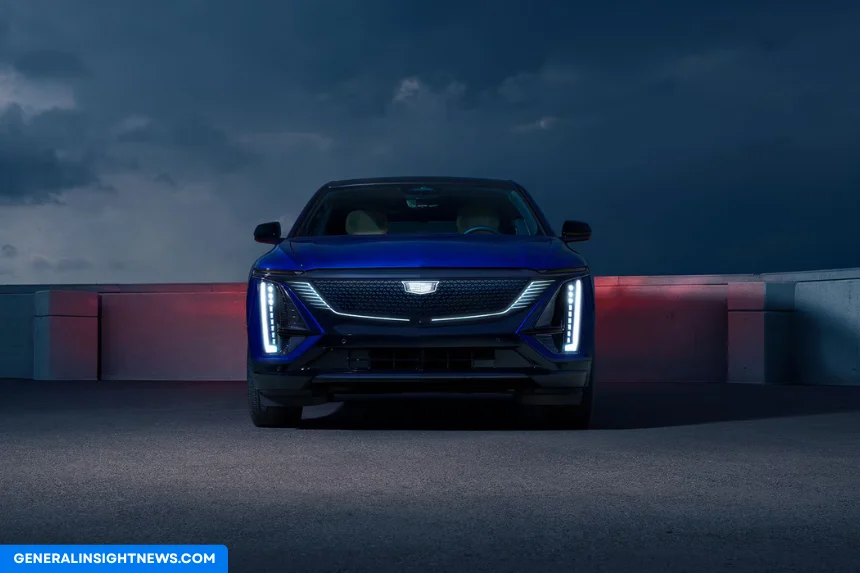
Do the driving modes in Cadillac LYRIQ offer different ranges or battery usages? No—the ordinary modes do not have separate EPA ranges or different battery capacities. Tour, Sport, Snow/Ice, and My Mode use the same battery in a given vehicle, but they alter accelerator response, steering, braking feel, chassis behavior where equipped, and traction calibration. Those differences can indirectly change real-world battery usage by influencing how the vehicle is driven.
In practical terms, Tour is the most economical everyday baseline. Sport can consume more energy when its sharper torque response encourages hard acceleration. Snow/Ice prioritizes traction rather than maximum range, while My Mode depends on the settings selected. Cadillac does not publish a guaranteed percentage or mileage difference between these ordinary modes.
Cadillac LYRIQ Driving Modes Quick Facts
| Question | Best-supported answer |
|---|---|
| Do modes change battery capacity? | No |
| Do modes receive separate EPA ranges? | No |
| Can modes influence real-world usage? | Yes, indirectly |
| Best default for efficiency | Tour |
| Sport effect | May increase use if sharper response is used aggressively |
| Snow/Ice effect | Prioritizes traction; winter conditions usually drive the range loss |
| My Mode effect | Depends on configuration and driver inputs |
| One-Pedal Driving | Recovers some energy during deceleration |
| Velocity Max | Cadillac explicitly says it can deplete the battery faster |
| Biggest range factors | Speed, acceleration, temperature, HVAC, tires, terrain and drivetrain |
So, do the driving modes in Cadillac LYRIQ offer different ranges or battery usages? They can produce different real-world energy results, but Cadillac does not assign the ordinary modes separate EPA ranges or battery capacities.
Direct Answer: Do the Driving Modes in Cadillac LYRIQ Offer Different Ranges or Battery Usages?
Cadillac publishes LYRIQ range by model year and vehicle configuration, not by ordinary drive mode.
For example, Cadillac lists the standard 2026 LYRIQ with up to 326 miles of EPA-estimated range for single-motor rear-wheel-drive models and up to 319 miles for dual-motor all-wheel-drive models. Those numbers describe different powertrains and configurations. They are not “Tour range” and “Sport range.”
Likewise, switching modes does not alter the physical capacity of the battery. Cadillac lists a 102 kWh rated energy capacity for the 2026 LYRIQ battery platform.
However, the same battery can be used more or less efficiently. If Sport mode leads to faster acceleration, higher speed, or more frequent power demands, the vehicle will consume more energy. If a driver uses gentle inputs in either Tour or Sport, the difference may be small.
Therefore, the accurate answer has two parts:
- No separate official range: Tour, Sport, Snow/Ice, and My Mode do not receive individual EPA mileage ratings.
- Possible real-world difference: the selected calibration can influence energy use through vehicle response and driver behavior.
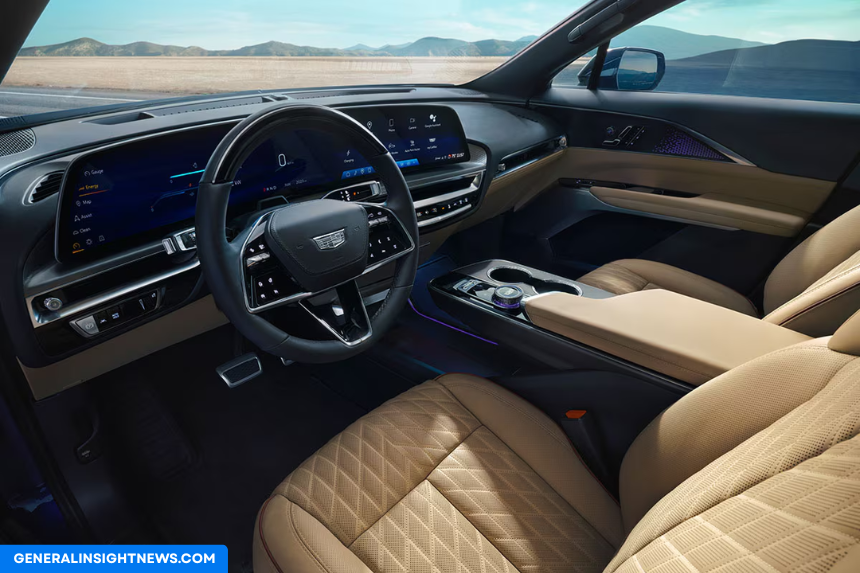
How Cadillac LYRIQ Driving Modes Affect Battery Usage
Cadillac’s current LYRIQ information lists four ordinary modes.
Tour
Tour is the everyday setting. Cadillac describes it as the predominant mode for normal driving, with tuning and calibration intended to deliver a smooth ride.
Cadillac’s general Driver Mode Control guide also calls Tour/Normal the most economical setting and recommends it for daily use.
That makes Tour the best baseline when a driver wants predictable consumption. It does not mean the software unlocks hidden battery capacity or guarantees a specific number of miles.
Sport
Sport provides a stronger feeling of road connection, more immediate torque response, and firmer steering response at higher speeds.
The important efficiency change is not that Sport automatically removes energy from the battery. Instead, the accelerator responds more immediately, making it easier to request high power.
Hard acceleration uses more energy. Sport may also encourage a more aggressive driving style, which can increase average speed and reduce range further.
However, Cadillac does not publish a fixed Sport penalty. Claims that Sport always cuts range by 10–20%, 50 miles, or 70 miles are not supported by Cadillac’s official material.
Snow/Ice
Snow/Ice adjusts the pedal map and slows acceleration and torque response to help prevent wheel slip.
This gentler response might sound efficient, but Snow/Ice is a traction setting—not an advertised range-maximization mode. Drivers normally select it when roads are cold, wet, snowy, or icy.
Those conditions themselves can increase consumption. Cold batteries, cabin heating, denser air, snow, slush, wet pavement, and winter tires can all reduce real-world range.
Therefore, a winter range decline should not automatically be blamed on Snow/Ice mode. The mode is responding to the same difficult conditions that already increase energy use.
My Mode
My Mode lets the driver customize accelerator responsiveness, steering feel, brake response, and Electric Vehicle Sound Enhancement.
Because the settings vary, there is no single My Mode range. A gentle accelerator configuration paired with smooth driving may perform much like Tour. A sharper accelerator setting combined with repeated hard acceleration can consume more.
Cadillac does not publish enough subsystem-level energy data to assign a mileage cost to steering weight, brake feel, or sound enhancement. Accelerator behavior and the driver’s use of speed and power are likely to be more important than the label “My Mode.”
How Cadillac LYRIQ Range Estimates Respond to Driving Modes
The number displayed in the LYRIQ is an estimate, not a fixed promise.
Cadillac says range potential depends on:
- acceleration rate,
- travel speed,
- maintenance,
- tire pressure,
- ambient weather.
Owner-manual information also explains that the estimate responds to recent driving habits, current vehicle conditions, climate settings, and HVAC energy use.
This means the vehicle does not need to subtract a preset number of miles the instant Sport is selected. The estimate can adapt after the vehicle observes how much energy the driver is actually using.
For example:
- Switching to Sport and driving gently may cause little change.
- Switching to Sport and repeatedly accelerating hard may lower the estimate.
- Returning to Tour does not instantly restore energy already consumed.
- A cold morning may reduce the estimate even if Tour remains selected.
- Turning up cabin heat can change the estimate without any drive-mode change.
The mode is one input to the driving experience, while the estimate reflects the wider energy picture.
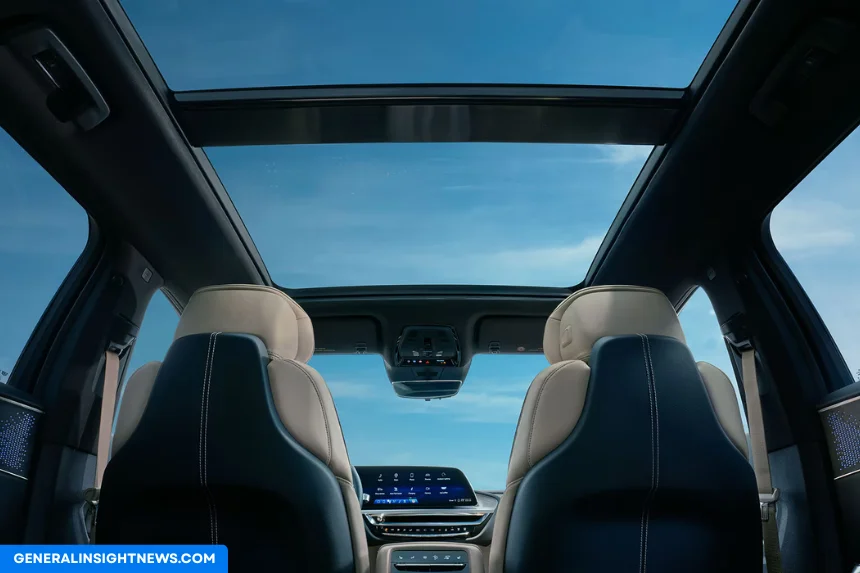
Does Cadillac LYRIQ Tour Mode Offer Better Range?
Tour is the best official default for economical everyday operation.
Cadillac’s support guidance describes Tour/Normal as the most economical mode. Its normal accelerator response also makes smooth power requests easier.
Nevertheless, Tour is not an “Eco” mode with a separate certified range. A calm driver using My Mode could potentially achieve similar efficiency. Likewise, a driver can waste energy in Tour through high speed, rapid acceleration, poor tire pressure, or heavy climate use.
Tour improves the conditions for efficient driving, but the driver and environment still determine the result.
For a long trip with limited charging options, Tour is the sensible choice because it avoids the more immediate response of Sport and the performance energy demand of Velocity Max.
Does Cadillac LYRIQ Sport Mode Increase Battery Usage?
Sport mode can use more battery, but the amount is not fixed.
Cadillac says Sport provides more immediate torque response. Electric motors can deliver high torque quickly, so aggressive accelerator inputs can request substantial power.
The most important distinction is between calibration and behavior:
- Calibration makes the accelerator feel more responsive.
- Behavior determines how often the driver requests that power.
- Speed determines a large portion of highway consumption.
- Repeated acceleration followed by braking wastes energy, even when some energy is regenerated.
If two trips have the same route, speed, weather, HVAC use, and smooth acceleration, the Tour-versus-Sport difference may be modest. If Sport changes how the driver behaves, the difference can become much larger.
Cadillac has not published an official “Sport mode uses X percent more” figure. Therefore, precise competitor percentages should be treated as unsupported estimates unless they come from a clearly controlled, model-specific test.
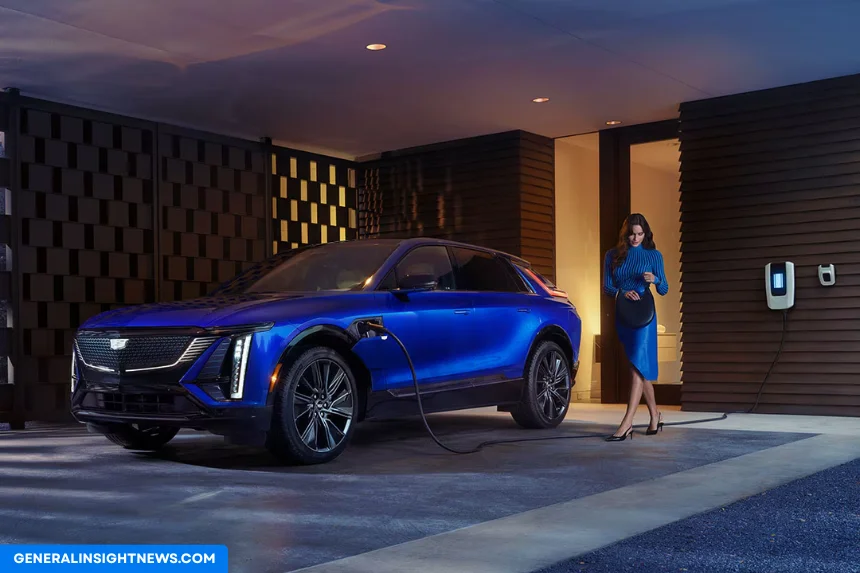
Does Cadillac LYRIQ Snow/Ice Mode Reduce Range?
Snow/Ice mode does not receive a separate official range rating.
Its purpose is to limit wheel spin by softening accelerator and torque response. That can make the vehicle easier to control on slippery surfaces.
A driver may observe lower range while using Snow/Ice, but several other variables are likely involved:
- low battery temperature,
- cabin heating,
- snow or slush,
- wet-road drag,
- winter tires,
- lower tire pressure in cold weather,
- wheel slip,
- slower traffic and repeated stops.
The mode itself does not add battery capacity, nor does Cadillac describe it as a high-consumption setting. It should be selected for control and safety when conditions require it.
Cadillac also advises against using One-Pedal Driving on slippery roads. That guidance matters more than trying to recover a small amount of energy through aggressive regeneration in snow or ice.
How Cadillac LYRIQ My Mode Affects Battery Usage
My Mode can be tuned toward comfort, responsiveness, or a mix of both.
The setting most likely to affect consumption indirectly is accelerator responsiveness. A more aggressive response can make high-power requests easier. A smoother response can help the driver meter power gradually.
Other settings mainly alter feel:
- steering effort,
- braking response,
- Electric Vehicle Sound Enhancement,
- suspension behavior where equipped.
Cadillac does not publish a battery-use table for each combination. Therefore, there is no defensible claim that one My Mode setup adds a specific number of miles.
The practical test is the LYRIQ’s own efficiency data. Drivers can compare similar trips using the same route, speed, temperature, climate settings, tire pressure, and traffic. Even then, several trips are more meaningful than one drive.
Cadillac LYRIQ One-Pedal Driving, Regeneration and Range
One-Pedal Driving is related to efficiency, but it is separate from Tour, Sport, Snow/Ice, and My Mode.
Cadillac allows LYRIQ drivers to select:
- Off for conventional two-pedal behavior,
- On/Normal for moderate regenerative deceleration,
- High for stronger deceleration when the accelerator is released.
The LYRIQ One-Pedal Driving guide describes it as a convenience and efficiency feature. Cadillac also markets regenerative braking as a way to conserve and capture braking energy for added range.
Regeneration converts some of the vehicle’s kinetic energy back into electrical energy. However, the process cannot recover everything used to accelerate because of electrical, mechanical, tire, and aerodynamic losses.
Therefore:
- High does not create free energy.
- High does not receive a separate EPA rating.
- High may help drivers recover energy in stop-and-go traffic.
- Smooth coasting and avoiding unnecessary acceleration can be more efficient than accelerating and regenerating repeatedly.
- Regeneration may be limited when the battery is near full, very cold, or very hot.
- Cadillac does not recommend One-Pedal Driving in slippery conditions.
Regen on Demand, operated through the steering-wheel paddle, offers another way to request regenerative deceleration.
Does Cadillac LYRIQ Velocity Max Increase Battery Usage?
Yes. This is the clearest official example of a performance setting increasing battery usage.
Cadillac’s Velocity Max guide says the feature unlocks additional horsepower and torque and draws more energy from the battery than regular driving. Repeated use can drain battery power, and Cadillac advises drivers not to use it when range is a concern.
Velocity Max availability depends on model and equipment. It should not be confused with ordinary Sport mode.
The distinction is important:
- Sport changes response and feel; Cadillac gives no fixed consumption penalty.
- Velocity Max unlocks additional performance; Cadillac explicitly warns of faster depletion.
- LYRIQ-V is a separate performance model with different hardware and its own EPA range, not a standard LYRIQ temporarily placed in Sport.
What Affects Cadillac LYRIQ Range More Than Driving Modes?
For most owners, these factors have a larger and more consistent effect than changing between Tour and Sport.
Speed
Aerodynamic drag increases as speed rises. Sustained high-speed highway driving can reduce range substantially, regardless of mode.
Acceleration
Hard acceleration demands high power. Smooth, progressive inputs usually improve efficiency.
Temperature and HVAC
Cold weather affects battery performance and increases heating demand. Very hot conditions can require cooling for the cabin and battery.
Cadillac recommends preheating or precooling while plugged in so more battery energy remains available for driving.
Tire pressure and wheel package
Underinflated tires increase rolling resistance. Larger wheels and performance-oriented tires may also affect efficiency.
RWD versus AWD
Cadillac publishes different official ranges for rear-wheel-drive and all-wheel-drive configurations. Hardware, mass, and powertrain differences matter more than selecting an ordinary drive mode.
Terrain
Climbing consumes substantial energy. Regeneration on a descent recovers only part of that energy.
Payload and towing
Passengers, cargo, roof accessories, and trailers add mass or aerodynamic drag.
Rain, snow and road surface
Water, snow, slush, rough pavement, and winter tires increase resistance.
Best Settings for Maximum LYRIQ Range
For the strongest chance of maximizing range:
- Use Tour for normal driving.
- Accelerate smoothly.
- Keep highway speed moderate.
- Precondition the cabin while plugged in.
- Maintain the recommended tire pressure.
- Remove unnecessary cargo or external accessories.
- Anticipate traffic and slow progressively.
- Use regenerative braking smoothly where road conditions allow.
- Avoid Velocity Max when charging access is uncertain.
- Use Snow/Ice when traction requires it rather than prioritizing a range estimate over safety.
Charging above the daily 80% target can also provide more trip range when needed. Cadillac recommends 80% or less for normal daily use and permits a higher target for longer travel.
Common Myths About Cadillac LYRIQ Driving Modes and Battery Usage
“Tour’s EPA number is its mode-specific range.”
False. The EPA figure applies to a vehicle configuration, not an ordinary mode.
“Sport always cuts 10–20%.”
Unsupported. Cadillac publishes no universal percentage.
“Sport removes 50–70 miles.”
Unsupported as a mode-only claim. Different speed, weather, traffic, HVAC, and driving behavior could create a large trip difference, but that is not proof of a preset Sport penalty.
“Snow/Ice is the reason winter range drops.”
Incomplete. The mode is used in conditions that already reduce EV efficiency.
“High One-Pedal always produces maximum range.”
Unproven. It changes deceleration and can recover energy, but efficient driving also depends on avoiding unnecessary acceleration.
“Switching modes changes the battery size.”
False. Battery capacity remains the same.
FAQs: Cadillac LYRIQ Driving Modes, Range and Battery Usage
1. Do the driving modes in Cadillac LYRIQ offer different ranges or battery usages?
No. Asked another way, do the driving modes in Cadillac LYRIQ offer different ranges or battery usages? Cadillac publishes EPA range by vehicle configuration, not separate figures for Tour, Sport, Snow/Ice, or My Mode.
2. Which LYRIQ mode is best for range?
Tour is the most economical official default and the best choice for predictable everyday efficiency. However, speed, acceleration, weather, and HVAC still matter more than the mode name.
3. Does Sport mode use more battery?
It can. Sport’s more immediate torque response may encourage harder acceleration, but Cadillac does not publish a fixed consumption or mileage penalty.
4. Does Snow/Ice mode reduce range?
Cadillac does not assign it a separate range. Winter conditions and climate use commonly reduce range, while Snow/Ice primarily changes torque response for traction.
5. Can My Mode improve efficiency?
A gentle accelerator configuration and smooth driving may support efficiency, but Cadillac publishes no certified My Mode range.
6. Does One-Pedal Driving increase range?
It can recover some energy during deceleration and may help in stop-and-go driving. It does not change battery capacity or guarantee a specific mileage increase.
7. Is One-Pedal High more efficient than Normal?
Not always. High provides stronger deceleration, but the best result depends on traffic, anticipation, road conditions, and how smoothly the driver accelerates.
8. Does Velocity Max drain the battery faster?
Yes. Cadillac explicitly says Velocity Max draws more energy and may deplete the battery faster than normal driving modes.
9. Why does the LYRIQ range estimate change?
The estimate adapts to recent driving, speed, acceleration, climate use, temperature, vehicle conditions, and other factors.
10. What has the biggest effect on LYRIQ range?
Speed, acceleration, outside temperature, cabin HVAC, tire pressure, terrain, drivetrain, wheels, payload, and road conditions usually have the largest effects.
Conclusion
Do the driving modes in Cadillac LYRIQ offer different ranges or battery usages? The answer is yes for real-world usage, but no for separate official range ratings or battery capacities.
Tour, Sport, Snow/Ice, and My Mode change how the LYRIQ responds. Tour is the economical default. Sport can use more energy when its sharper response leads to harder acceleration. Snow/Ice prioritizes traction, while My Mode depends on the chosen settings.
One-Pedal Driving can recover part of the vehicle’s braking energy, but it does not create energy or receive a unique EPA rating. Velocity Max is the notable exception Cadillac explicitly identifies as a feature that draws more battery power.
Ultimately, driving speed, acceleration, weather, HVAC, tires, terrain, and vehicle configuration matter more than the ordinary mode label. Use Tour for predictable range, select Snow/Ice for safety when needed, and judge efficiency through repeated comparable trips rather than unsupported fixed percentages.
Read more at General Insight News