

The Dinka people are a broad Nilotic ethnolinguistic group whose historic homeland lies mainly in South Sudan. They share related language varieties and cultural traditions, but they are not one uniform “tribe” with a single lifestyle, religion, political view, or appearance.
Historically, many rural Dinka communities combined cattle keeping with farming, fishing, and seasonal movement. Today, however, Dinka people also live in towns, cities, refugee-hosting countries, and global diaspora communities. This guide explains their identity, language, culture, history, and modern life while checking several popular myths.
Dinka People Quick Answer
| Question | Direct answer |
|---|---|
| Who are the Dinka people? | A diverse Nilotic ethnolinguistic people associated primarily with South Sudan |
| What names do they use? | Dinka is widely used; self-designations include Jieng/Jiɛ̈ɛ̈ŋ and Muonyjang, with regional spelling and usage differences |
| What language do they speak? | Dinka, also called Thuɔŋjäŋ, a Western Nilotic language with several major dialect clusters |
| Where do they live? | Mainly South Sudan, including parts of Bahr el Ghazal, Jonglei, and Upper Nile, as well as Abyei and diaspora communities |
| How many are there? | No reliable current ethnic census provides a definitive total |
| Are cattle important? | Yes, especially in many historically agropastoral communities, although Dinka livelihoods are diverse |
| What religions do they follow? | Indigenous Dinka traditions, Christianity, and in some cases other or overlapping practices |
| Are they the world’s tallest people? | The available evidence does not establish a global ranking |
Who Are the Dinka People?
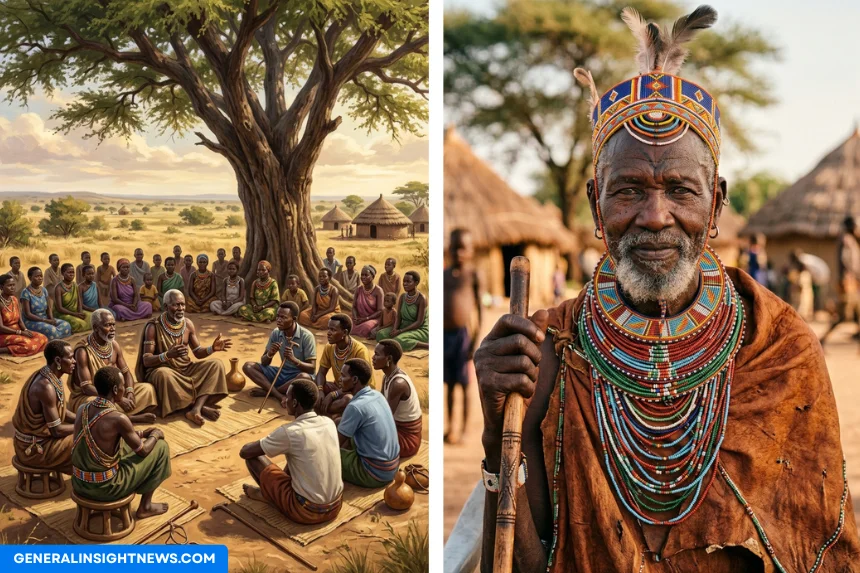
The Dinka people are one of the largest ethnolinguistic groups in South Sudan. “Dinka” is the best-known English name, while self-designations include Jieng or Jiɛ̈ɛ̈ŋ and Muonyjang. However, pronunciation, spelling, and preferred usage can differ among communities and language varieties.
Dinka identity connects many communities rather than one centralized historic nation. Consequently, a custom documented among Bor Dinka, Ngok Dinka, Rek Dinka, or another community should not automatically be assigned to everyone.
The word “tribe” still appears in books and common searches. Nevertheless, “people,” “ethnolinguistic group,” and “Dinka communities” usually convey internal diversity more accurately.
Key Facts About the Dinka People
| Category | Key fact |
| Historic homeland | The Nile basin and adjoining areas of present-day South Sudan |
| Broader identity | Nilotic ethnolinguistic people |
| Language family | Western Nilotic, in the Dinka–Nuer subgroup |
| Major dialect clusters | Rek, Agar, Padang, and Bor in one widely used academic classification |
| Historic rural economy | Agropastoralism, crop cultivation, fishing, and trade |
| Major crops | Sorghum is especially important; crops vary by ecology and household |
| Social organization | Numerous communities, sections, clans, and lineages rather than one traditional central ruler |
| Cultural expression | Song, praise poetry, dance, oral history, personal names, and cattle-related arts |
| Present-day life | Rural and urban communities, education, professional work, displacement, and international diaspora |
Where Do the Dinka People Live?
Most Dinka communities have historic ties to South Sudan. Important areas include parts of Bahr el Ghazal, Jonglei, and Upper Nile, as well as land along the Nile and its tributaries. In addition, Ngok Dinka communities live in and around Abyei, a territory whose political status remains disputed between Sudan and South Sudan.
Water and seasonal flooding have strongly influenced rural life. The internationally recognized Sudd wetland, one of the world’s great tropical wetlands, creates changing patterns of pasture, fishing grounds, floodwater, and dry land.
As a result, some communities historically moved livestock between seasonal grazing areas while maintaining settlements and crop fields. Yet geography is not destiny. Many Dinka people now live in Juba and other cities, elsewhere in East Africa, or farther abroad.
What Language Do the Dinka People Speak?
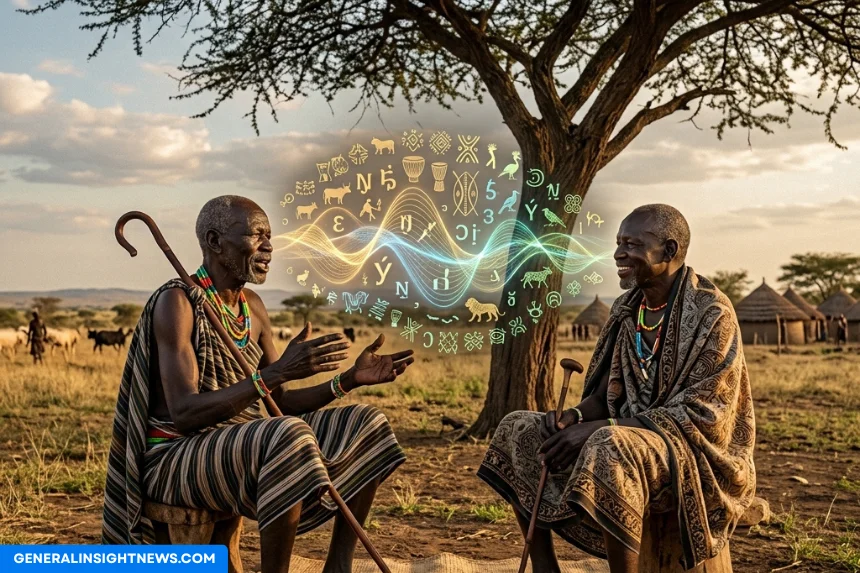
Dinka people speak closely related varieties commonly grouped as the Dinka language. Speakers also call the language Thuɔŋjäŋ, although written forms can differ. According to Nilotic language research at the University of Edinburgh, Dinka belongs to the Western Nilotic Dinka–Nuer subgroup.
The Edinburgh project identifies four broad dialect clusters: Rek, Agar, Padang, and Bor. Other catalogs may split or combine varieties differently. Therefore, one source might call them dialects while another lists several related Dinka languages.
Tone, vowel quality, and voice quality can distinguish words, which makes Dinka linguistically rich and challenging to represent in writing. Latin-based orthographies use added marks and letters to capture those contrasts.
Many Dinka speakers are multilingual. Depending on location and personal history, they may also use English, Juba Arabic, Sudanese Arabic, neighboring South Sudanese languages, or the dominant language of a diaspora country. Meanwhile, community groups and families use teaching, publishing, broadcasting, and digital communication to maintain Dinka varieties across generations.
Are the Dinka One People or Many Communities?
The Dinka are one people in a broad ethnolinguistic sense and many communities in social and political life. Historically, they did not form a single centralized Dinka kingdom with one ruler. Instead, local communities, sections, clans, and lineages organized much of social life.
Kinship connects people across households and generations. However, local identity, dialect, environment, and political history also matter. A person may identify as Dinka while also emphasizing a particular community or region.
Older ethnographies describe chiefs and ritual authorities in some areas. For example, English-language scholarship sometimes uses the phrase “master of the fishing spear” for a particular kind of ritual leader. Still, that historic term does not describe every leader or every Dinka community today.
Why Are Cattle Important in Dinka Culture?
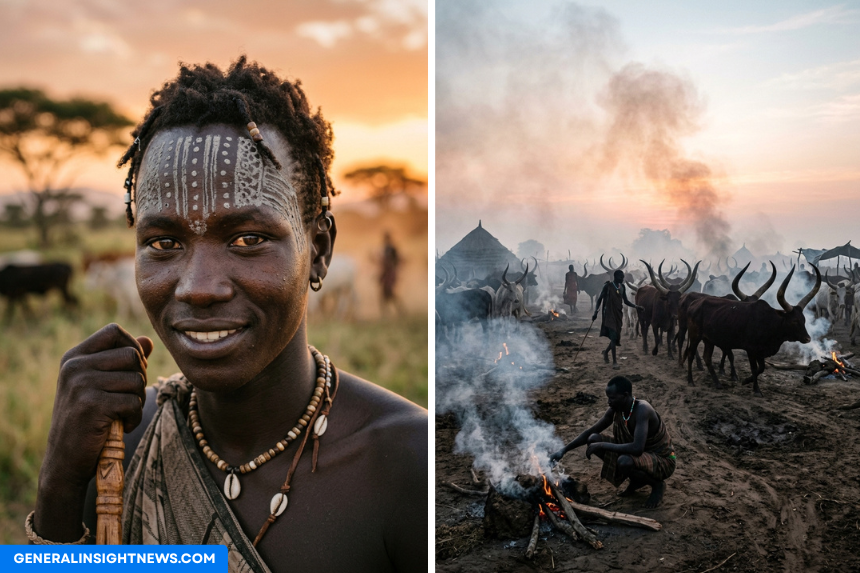
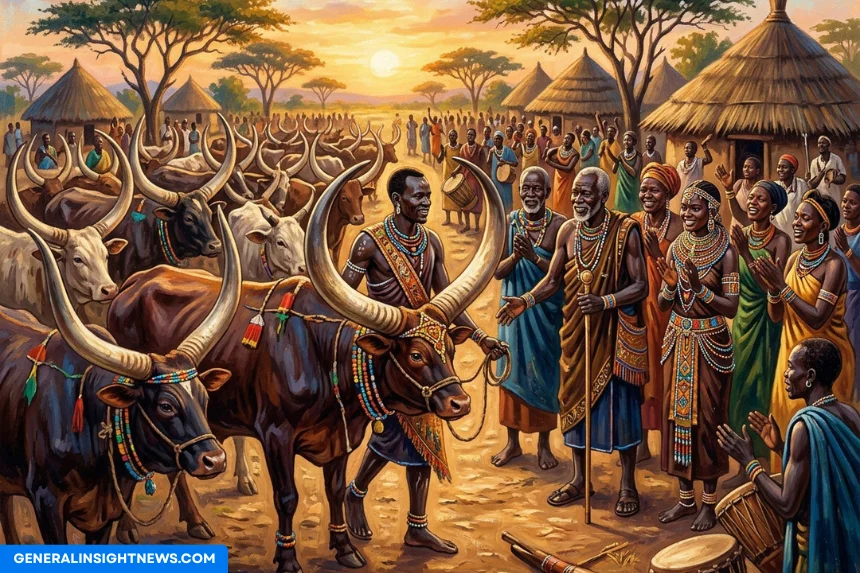
Cattle have held economic, social, artistic, and ritual importance in many Dinka communities. They can provide milk, support household security, store value, and help connect families through exchanges. Moreover, cattle may appear in bridewealth arrangements, personal names, songs, praise poetry, and ceremonies.
This importance fits a wider South Sudanese setting. The World Bank’s South Sudan Resilient Livestock Sector Project describes livestock nationally as sources of food, income, capital, employment, and social standing. However, that national evidence should not erase differences among Dinka households.
Not every Dinka person owns cattle, and cattle keeping is not the only livelihood. Families may grow sorghum and other crops, fish, trade, hold salaried jobs, attend school, run businesses, or combine several activities. Conflict, flooding, land access, animal disease, and market conditions can also change what is possible.
Are Dinka people nomadic?
“Nomadic” is usually too simple. Historically, many rural Dinka communities practiced agropastoralism, meaning that they combined herding with farming and often moved livestock seasonally between settlements, water sources, and cattle camps.
During suitable seasons, households also cultivated crops and used fisheries and wild resources. Therefore, “seasonally mobile agropastoralists” is often more accurate than “nomads.” In addition, the label does not describe urban residents or the diaspora.
How Do Family, Marriage, and Leadership Work?
Family and kinship have long shaped responsibilities, inheritance, mutual aid, and belonging. Yet practices differ by community, generation, religion, education, and whether people live in rural areas, cities, or abroad.
In many documented marriage systems, cattle form part of bridewealth: transfers that recognize a union and create relationships between families. Bridewealth is not the same as a simple purchase, and “dowry” is usually the wrong term because dowry traditionally moves in the opposite direction. Nevertheless, costs and expectations can create real social and economic pressures, and Dinka people themselves debate changing practices.
Age groups and community authorities have also organized duties in some areas. Meanwhile, modern life adds elected government, courts, churches, schools, civil-society groups, professional associations, and diaspora organizations. Consequently, no single traditional model explains how every Dinka family or community makes decisions.
What Religion Do Dinka People Follow?
Dinka religious life includes indigenous traditions and Christianity, sometimes in overlapping forms. In indigenous accounts, a supreme divinity commonly appears under spellings such as Nhialic or Nhialac. Other spiritual powers, ancestors, sacrifice, prayer, and divination may also have roles, although beliefs and terminology vary.
Christian missions expanded their activity during the colonial and postcolonial periods. As a result, many Dinka people identify with Christian churches today. Some maintain indigenous concepts alongside Christian practice, while others draw clearer boundaries between them.
Reliable sources do not consistently confirm current Dinka-only religious percentages. Therefore, precise claims such as “most follow one religion” should be treated cautiously unless a representative, dated survey supports them.
What Roles Do Music, Poetry, and Dance Play?
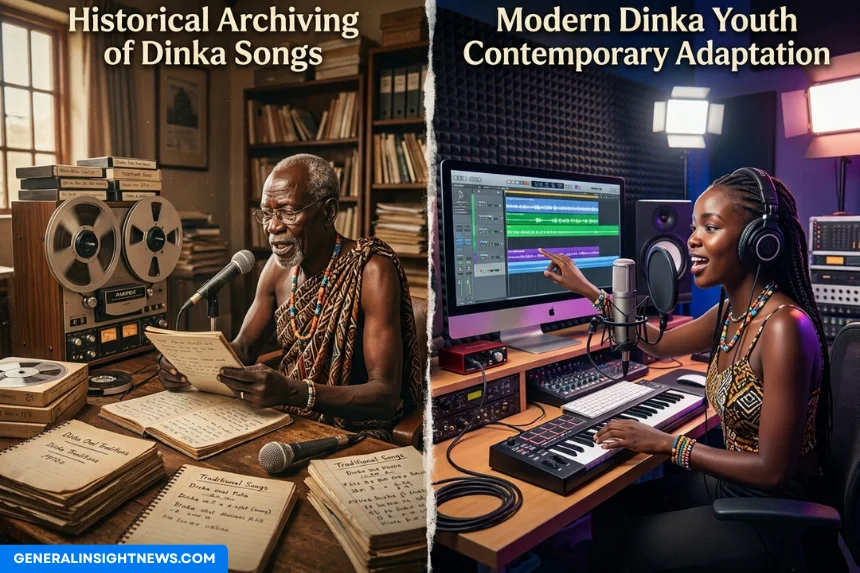
Music and oral expression can preserve history, praise people or cattle, mark loss, accompany celebration, and comment on social life. Songs also carry individual creativity; they are not simply anonymous survivals from the past.
The Smithsonian Folkways archive holds historical recordings of Dinka songs, including ceremonial material. However, those recordings document particular performers, places, and moments. Contemporary musicians and dancers continue to adapt expressive traditions in South Sudan and abroad.
Are Initiation and Scarification Universal?
No. Some Dinka communities have historically marked rites of passage through ceremonies, age-group recognition, and scarification. Patterns and meanings can signal community identity or a transition in social status.
However, the practices vary, and many people do not follow them. War, displacement, schooling, religion, law, urban life, personal preference, and generational change have all influenced initiation customs. Therefore, a photograph of one marked person should never stand in for all Dinka people.
Are the Dinka the Tallest People in the World?
The available evidence does not establish that the Dinka are the world’s tallest people. Dinka individuals are often noted for tall stature, and some older studies reported high averages in selected Nilotic samples. However, those findings do not create a representative global ethnic ranking.
A 1995 study of adults in an Ethiopian refugee camp examined 2,233 Nilotic immigrants and refugees. In that specific setting, the reported mean for Dinka men was 176.4 centimeters, or about 5 feet 9.4 inches. The sample reflected people living through displacement and difficult conditions, so researchers warned that social and nutritional circumstances mattered.
Height varies within every population and responds to childhood nutrition, disease exposure, health care, sex, age, and other factors. In addition, modern global height studies usually compare national samples rather than every ethnic group. Consequently, “among populations historically described as tall” is defensible; “the tallest people in the world” is not proven.
Dinka History Timeline
Dinka history extends far beyond written colonial records. Nevertheless, precise ancient migration dates remain hard to establish, so claims of one exact origin—or a direct connection to ancient Egypt—need stronger evidence than popular websites usually provide.
| Period or date | What happened |
| Before the 1800s | Dinka-speaking communities developed over long periods in the Upper Nile and Bahr el Ghazal regions. Oral histories preserve important accounts, but they do not yield one uncontested origin date. |
| 1800s | Slave raiding, long-distance trade, expanding states, disease, and local conflict disrupted communities across southern Sudan. Experiences varied by place. |
| 1899–1956 | Anglo-Egyptian authorities ruled Sudan. Colonial borders, administrative categories, mission activity, and systems of chiefly authority reshaped local life. |
| 1955–1972 | The first Sudanese civil war affected southern populations. The 1972 Addis Ababa Agreement ended the war and established regional autonomy. |
| 1983–2005 | A second civil war caused mass death and displacement. Many Dinka joined or supported the SPLM/A, but the movement never represented every Dinka person or opinion. |
| 2005 | The Comprehensive Peace Agreement ended the north–south war and created a path to a referendum. |
| January–July 2011 | Southern voters overwhelmingly chose independence, and South Sudan became a sovereign country on July 9, 2011. The UNMISS background history documents this sequence. |
| December 2013 | A political and military crisis became a civil war. Armed actors mobilized ethnicity, and civilians from Dinka, Nuer, and other communities faced atrocities and displacement. |
| September 2018 | Parties signed a revitalized peace agreement. However, implementation remained incomplete, and local violence and political instability continued. |
| 2023–2026 | War in neighboring Sudan, returns across the border, flooding, food insecurity, and renewed violence added pressure. These overlapping crises are not one “Dinka conflict.” |
Modern conflict requires careful language. Dinka and Nuer people have histories of exchange, intermarriage, cooperation, competition, and violence. Therefore, describing recent war as an ancient, inevitable “tribal feud” hides political decisions and the experiences of civilians.
How Do the Dinka People Live Today?
Dinka life today spans cattle camps, farms, market towns, universities, government offices, businesses, churches, arts organizations, sports, and households abroad. Some people maintain close links to rural communities, while others have grown up in Juba, Nairobi, Kampala, Cairo, Melbourne, Omaha, or other diaspora centers.
At the same time, conflict and climate shocks continue to disrupt lives across South Sudan. UNHCR’s South Sudan emergency overview documents large-scale internal displacement and a major refugee population in neighboring countries. Those national figures include many communities and should not be treated as Dinka-only statistics.
Diaspora life can change language use, marriage practices, work, education, and relationships with cattle. Nevertheless, cultural identity does not simply disappear. Families and associations sustain language, music, celebrations, mutual aid, and connections with South Sudan, while younger generations decide what those traditions mean in new settings.
Frequently Asked Questions
1. What does Dinka mean?
“Dinka” is the widely used English ethnonym, but its exact origin is not consistently established in reliable public sources. Many people use self-designations such as Jieng/Jiɛ̈ɛ̈ŋ or Muonyjang instead.
2. Are Dinka and Jieng the same people?
Yes, the terms generally refer to the same broad ethnolinguistic people. However, preferred names, spellings, and pronunciations can vary by community and dialect.
3. What country are the Dinka people from?
The Dinka homeland lies mainly in South Sudan. In addition, Ngok Dinka communities live around disputed Abyei, and Dinka diaspora communities live across Africa, North America, Australia, and elsewhere.
4. What language do Dinka people speak?
They speak related Western Nilotic varieties commonly called Dinka or Thuɔŋjäŋ. Moreover, many speakers also use English, Juba Arabic, Sudanese Arabic, neighboring languages, or a diaspora-country language.
5. How many Dinka people are there?
No authoritative current ethnic census gives a definitive total. Therefore, the frequently repeated figure of about 4.5 million should be treated as an older, uncertain estimate rather than a verified current count.
6. Are Dinka people nomadic?
Not as a universal description. Historically, many rural communities combined seasonal cattle movement with settled farming, fishing, and trade; meanwhile, many Dinka people now live in towns, cities, and diaspora communities.
7. Why are cattle important to the Dinka?
Cattle can provide food, security, value, and social connections. In addition, they may feature in bridewealth, names, songs, praise poetry, and ceremonies, although their role differs among households.
8. What religion do Dinka people follow?
Indigenous Dinka traditions and Christianity both have important roles. However, beliefs vary, some practices overlap, and no reliable current survey provides precise Dinka-only percentages.
9. Are the Dinka the tallest people in the world?
The available evidence does not prove that claim. Although some limited studies describe tall average stature in particular Dinka samples, individual variation and research limitations prevent a definitive global ranking.
10. Who are some well-known Dinka people?
Well-known people of Dinka background include South Sudanese leader John Garang, scholar and diplomat Francis Mading Deng, model Alek Wek, basketball player Manute Bol, and former NBA player Luol Deng. However, prominent individuals represent their own lives and do not stand for every Dinka community.
Conclusion
The Dinka people are a diverse Nilotic people connected by related languages, histories, and cultural traditions, not by one unchanging way of life. Cattle remain an important cultural subject, yet farming, fishing, cities, education, professional work, displacement, and diaspora are also parts of the story.
Ultimately, accurate coverage requires both detail and restraint. It should recognize local differences, separate Sudan from South Sudan, use the correct 2011 independence date, and reject unsupported population and height claims. That approach presents Dinka culture as living, varied, and shaped by Dinka people themselves.