


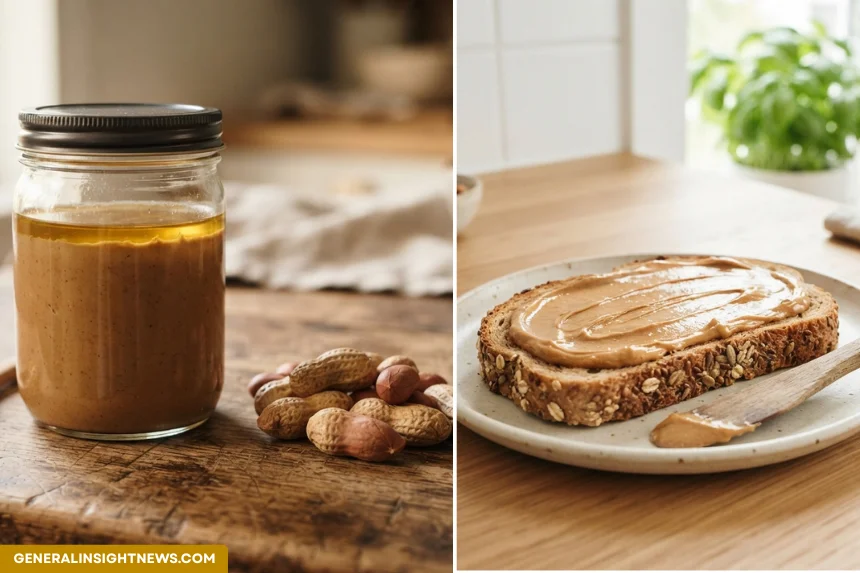
The healthiest peanut butter for most people contains 100% peanuts, with no added sugar, palm oil, coconut oil or unnecessary fillers. A small amount of salt can still fit into a balanced diet, although an unsalted version offers the simplest choice for anyone who wants to reduce sodium.
Peanut butter provides protein, fibre and unsaturated fats. However, every jar differs. Some products contain little more than ground peanuts, while others add sugar, oils, salt and flavourings. Therefore, the ingredient list usually tells you more than claims such as “natural,” “high protein” or “reduced fat.”
The healthiest choice also depends on your needs. Someone managing high blood pressure may prioritise an unsalted product, while a person who needs extra energy may value peanut butter’s calorie density. Anyone with a peanut allergy must avoid it completely.
The Healthiest Peanut Butter in One Sentence
Choose a peanut butter with peanuts as the only ingredient, or peanuts plus a small amount of salt.
The British Heart Foundation recommends nut butters that contain only nuts and no added salt, sugar or palm oil. It also notes that pure peanut butter provides unsaturated fats, protein, vitamins and minerals.
A short ingredient list does not automatically make every food healthy. However, in peanut butter, it removes many of the additions that offer little nutritional benefit.
What to Look for on the Label
Check the ingredient list before studying marketing claims on the front of the jar.
| Label feature | Better choice | Why it matters |
|---|---|---|
| Peanut content | 100%, or close to it | More of the jar comes from peanuts rather than added ingredients |
| Added sugar | None | Peanuts already have a naturally mild sweetness |
| Salt | None or a small amount | Lower-salt choices help reduce overall sodium intake |
| Added oils | Ideally none | Palm and coconut oils add more saturated fat |
| Protein | Compare per 100g | Peanut-rich products usually provide substantial protein |
| Fibre | Compare per 100g | Fibre content varies between products |
| Ingredient list | One or two ingredients | A shorter list makes the product easier to assess |
UK labels list ingredients in descending order by weight. Therefore, the first ingredient contributes the largest proportion of the food.
Look for 100% peanuts
A label that reads simply “Ingredients: peanuts” offers the clearest option.
A recent Which? comparison of 56 peanut butters found that several 100% peanut products ranked highly for protein and fibre. However, the comparison also showed meaningful nutritional differences between jars that appeared similar.
Products containing 95% or 99% peanuts can still form part of a balanced diet. Nevertheless, check what makes up the remaining percentage.
Choose no added sugar
Plain peanuts contain a small amount of naturally occurring sugar, so a nutrition panel does not need to show zero total sugars.
Instead, inspect the ingredients for added sweeteners such as:
- Sugar
- Cane sugar
- Syrup
- Honey
- Molasses
- Glucose
- Fructose
- Dextrose
UK nutrition panels show total sugars, while the ingredient list helps you identify whether a manufacturer added sugar.
Sweetened peanut butter can still fit occasionally. However, it offers no clear nutritional advantage over a product made only from peanuts.
Compare the salt content
An unsalted peanut butter makes sense when you want maximum control over your sodium intake.
The NHS classifies food with 0.3g of salt or less per 100g as low in salt. It classifies more than 1.5g per 100g as high. Use the per-100g figure when comparing jars because manufacturers may use different serving sizes.
A lightly salted peanut butter is not automatically unhealthy. Your overall diet matters more than one ingredient. Still, choosing an unsalted jar leaves more room for salt from bread, sauces and other foods.
Avoid unnecessary palm or coconut oil
Manufacturers often add oil to create a uniform texture and prevent separation.
However, palm and coconut oils contain more saturated fat than many other plant fats. The NHS recommends replacing some saturated fat with unsaturated fat, while the British Heart Foundation advises choosing nut butters without palm or coconut oil.
Oil separation in a 100% peanut product does not indicate spoilage. Stirring the natural peanut oil back into the jar usually restores the texture. Follow the manufacturer’s storage instructions after opening.
Is Peanut Butter Healthy Despite Its Fat Content?
Yes, peanut butter can support a healthy diet despite its high total fat content.
Peanuts provide unsaturated fats, including monounsaturated fat. The NHS explains that replacing some saturated fats with unsaturated fats can help improve cholesterol levels.
However, all fats contain a high amount of energy. Therefore, a large spoonful can add more calories than expected. The British Heart Foundation suggests keeping a typical portion near 30g.
The presence of fat does not make peanut butter unhealthy. Instead, consider three questions:
- What type of fat does the product contain?
- Did the manufacturer add palm or coconut oil?
- Does the portion suit your energy needs?
Is Smooth or Crunchy Peanut Butter Healthier?
Smooth and crunchy peanut butter offer broadly similar nutrition when they contain the same ingredients.
Crunchy varieties may provide slightly more fibre in some brands because they retain larger peanut pieces. However, the difference often remains small, and product recipes vary. Which? found both smooth and crunchy 100% peanut products among its higher-fibre options.
Therefore, choose the texture you enjoy and focus on the ingredient list.
Smooth peanut butter may suit:
- Sauces and dressings
- Porridge and yoghurt
- People who find crunchy foods difficult to eat
- Young children when served safely
Crunchy peanut butter may suit:
- Toast and sandwiches
- People who prefer more texture
- Recipes that benefit from peanut pieces
For babies and young children, never offer a spoonful or lump of thick peanut butter by itself because it can create a choking risk. The NHS recommends spreading it thinly onto food or mixing it into another dish.
Is Natural Peanut Butter Healthier?
Natural peanut butter often contains only peanuts, or peanuts and salt. In that case, it usually provides a better everyday option than a product with added sugar, palm oil and stabilisers.
However, the word “natural” does not guarantee a particular recipe. Always check the ingredients because manufacturers can use broad marketing terms differently.
A jar does not need an expensive price, an organic label or premium packaging to qualify as a nutritious choice. A supermarket own-brand product containing 100% peanuts can meet the same basic criteria as a more costly specialist product.
Is Reduced-Fat Peanut Butter Healthier?
Not necessarily.
Peanuts naturally contain fat, and much of that fat is unsaturated. When manufacturers remove part of it, they may change the recipe by adding sugar, starch, salt or other ingredients to restore flavour and texture.
Therefore, compare:
- Calories per 100g
- Saturated fat
- Sugar
- Salt
- Protein
- Fibre
- The full ingredient list
Do not assume that the words “reduced fat” make one jar healthier than a 100% peanut product.
Is High-Protein Peanut Butter Better?
Standard peanut butter already provides protein. The British Dietetic Association includes nuts and nut butters among useful plant-based protein sources.
Some high-protein products add peanut flour, pea protein, whey or sweeteners. Those additions may suit particular dietary goals, but they do not automatically improve the product.
A higher-protein jar may help someone who:
- Struggles to meet protein needs
- Follows a structured sports-nutrition plan
- Wants more protein from a small serving
However, most people can choose ordinary 100% peanut butter and obtain protein from a varied diet.
What About Organic Peanut Butter?
Organic peanut butter can offer a good option when its ingredients suit your needs. Nevertheless, organic status does not remove calories, saturated fat, sugar or salt.
Use the same checks for organic and conventional jars:
- Does it contain 100% peanuts?
- Has the producer added sugar?
- Does it contain palm or coconut oil?
- How much salt does it provide?
- Does the price fit your budget?
Choose organic because you value the production method, not because the label guarantees a nutritionally superior product.
The Best Peanut Butter for Different Needs
The healthiest product can change slightly according to your priorities.
For heart health
Choose 100% peanuts without palm or coconut oil. Peanuts provide unsaturated fats, while UK health guidance recommends replacing some saturated fat with unsaturated fat.
For high blood pressure
Choose unsalted peanut butter or compare jars for the lowest salt content. The NHS label thresholds can help you identify lower-salt products.
For weight management
Choose a plain peanut butter and measure the serving rather than eating directly from the jar. Peanut butter can feel satisfying, but its high energy density makes portions easy to underestimate.
For building muscle
Look for a 100% peanut product with a strong protein figure per 100g. However, peanut butter should complement rather than replace a varied protein intake.
For diabetes
Choose a product without added sugar and eat a suitable portion as part of a balanced meal or snack. Pairing it with wholegrain toast, oats or fruit can add fibre, although individual carbohydrate needs vary.
People who use insulin or follow a clinical eating plan should use advice from their diabetes team.
For children
Choose smooth, unsalted peanut butter without added sugar. Spread it thinly or mix it into porridge, yoghurt or another suitable food.
The NHS advises parents not to give nut butter by itself to babies or young children because its sticky texture can cause choking.
How Much Peanut Butter Is Healthy?
A practical serving for many adults is around 30g. However, your ideal amount depends on your appetite, body size, activity, health goals and the rest of your diet.
Peanut butter works well in modest portions because it adds flavour, energy and nutrients quickly.
Useful serving ideas include:
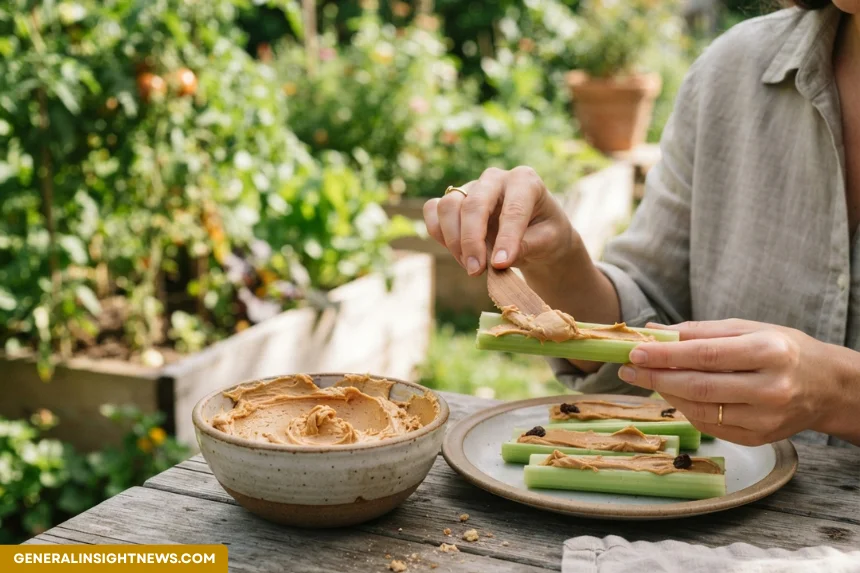
- Spread thinly on wholegrain toast
- Stirred into porridge
- Served with sliced apple or banana
- Mixed into plain yoghurt
- Added to a savoury peanut sauce
- Blended into a smoothie in a measured amount
The healthiest serving pattern is one that fits your complete diet rather than treating peanut butter as an unlimited “health food.”
Common Peanut Butter Claims Explained
| Claim | What it really means |
|---|---|
| 100% peanuts | The jar contains only peanuts |
| No added sugar | The manufacturer has not added sugar, although peanuts contain some natural sugars |
| Natural | Check the ingredients; the term alone tells you little |
| Reduced fat | Compare the full label because the recipe may contain other additions |
| High protein | Check whether the product genuinely provides more protein than plain peanut butter |
| Organic | Describes a production standard, not the complete nutritional profile |
| No palm oil | The producer has not added palm oil; check for other added oils |
| Smooth or crunchy | Mainly a texture choice when ingredients match |
When Peanut Butter Is Not a Healthy Choice
Peanut butter is unsuitable for anyone with a peanut allergy.
Peanut allergy can cause hives, swelling, vomiting, wheezing, breathing difficulty, dizziness or collapse. Even a small amount can trigger a serious reaction in a susceptible person.
Seek emergency help for breathing difficulty, throat swelling, faintness or other signs of a severe allergic reaction.
Some people may also need personalised advice because of:
- Kidney disease
- Swallowing difficulties
- A medically prescribed low-fat diet
- A controlled sodium or potassium intake
- Feeding problems in children
- A history of food allergy
In those cases, ask a doctor or registered dietitian whether peanut butter suits your individual plan.
Nutrition note: This article provides general information and does not replace advice from a doctor, allergy specialist or registered dietitian.
Frequently Asked Questions
What ingredients should healthy peanut butter contain?
The simplest choice contains only peanuts. Peanuts with a small amount of salt can also fit into a balanced diet.
Is peanut butter with palm oil unhealthy?
A small amount does not make the entire diet unhealthy. However, palm oil adds saturated fat, so a 100% peanut product usually offers the better everyday choice.
Is sugar-free peanut butter better?
A product with no added sugar usually offers a better option than a heavily sweetened jar. However, peanuts naturally contain some sugar, so the nutrition panel may not show zero total sugars.
Is crunchy peanut butter healthier than smooth?
Not by a meaningful amount when both products use the same ingredients. Compare the labels because fibre and protein values vary between brands.
Is expensive peanut butter healthier?
Not necessarily. An affordable own-brand product containing 100% peanuts can provide the same core benefits as a premium jar.
Can I eat peanut butter every day?
Many people can include a moderate serving in a balanced diet. However, vary your protein and fat sources and account for peanut butter’s high energy content.
Which peanut butter is best for cholesterol?
Choose a product made from 100% peanuts without added palm or coconut oil. Peanuts contain unsaturated fats, which make them a better choice than foods rich in saturated fat when portions remain appropriate.
Should I refrigerate natural peanut butter?
Follow the storage instructions on the jar. Some brands recommend refrigeration after opening, while others allow cupboard storage. Stir separated oil thoroughly before use.
Conclusion
The healthiest peanut butter for most people contains 100% peanuts and no added sugar, palm oil or unnecessary fillers. An unsalted version offers the strongest choice when you want to limit sodium, although a lightly salted jar can still fit into a balanced diet.
Focus on the ingredient list first. Then compare saturated fat, sugar, salt, protein and fibre per 100g. Finally, keep the portion sensible because even nutritious peanut butter contains a concentrated amount of energy.
Discover more on our website about deodorant that doesn’t burn