



The short answer to “how old are the Appalachian Mountains?” is about 480 million years. That date marks the beginning of the Paleozoic mountain-building events that created the Appalachian system. However, some rocks exposed in the range are about 1.1 billion years old, while later collisions continued to reshape the mountains until roughly 260 million years ago.
Therefore, one number cannot tell the whole story. The Appalachian Mountains are a geologic system assembled in stages, eroded for hundreds of millions of years, and locally modified long after the main continental collisions ended.
| Quick fact | Answer |
|---|---|
| How old are the Appalachian Mountains? | About 480 million years, using the start of Paleozoic Appalachian mountain-building |
| Age of some exposed basement rocks | About 1.1 billion years |
| Main mountain-building span | Roughly 480 to 260 million years ago |
| Final major collision | About 325 to 260 million years ago |
| Atlantic Ocean began opening | About 200 million years ago |
| Highest present summit | Mount Mitchell, 6,684 feet |
| Present tectonic setting | Passive continental margin; no active continent-to-continent collision |
How Old Are the Appalachian Mountains? The Three-Part Answer
The best everyday answer is about 480 million years, but geologists can give three valid dates depending on what “age” means.
First, the rocks are not all the same age. For example, the Blue Ridge exposes granite and gneiss that formed around 1.1 billion years ago. Other Appalachian rocks began as seafloor sediment, volcanic material, or oceanic crust hundreds of millions of years later.
Second, the Appalachian mountain belt began taking shape during the Ordovician Period, around 480 million years ago. Several collisions then folded, faulted, heated, and uplifted the crust. Consequently, mountain-building continued in different places and at different intensities for more than 200 million years.
Third, the modern landscape is younger than the underlying structures. Rivers, weather, landslides, and erosion continually remodel slopes and valleys. Moreover, research suggests that parts of the southern and central Appalachians experienced renewed uplift or river incision during the Cenozoic Era.

Appalachian Mountains Formation Timeline
The Appalachians did not rise in one event. Instead, a long sequence of continental assembly, rifting, ocean closure, collision, and erosion produced the range.
| Approximate time | Event | Why it matters |
| 1.2–1.0 billion years ago | Grenville orogeny and assembly of Rodinia | Created ancient continental crust now exposed in parts of the Blue Ridge |
| 750–540 million years ago | Rodinia broke apart; the Iapetus Ocean opened | Established a new continental margin and basins that collected sediment and lava |
| 480–440 million years ago | Taconic orogeny | Began the classic Paleozoic Appalachian mountain-building cycle |
| 420–350 million years ago | Salinic, Acadian, and Neoacadian events, especially in the north | Added crustal fragments and built new highlands as oceans narrowed |
| 325–260 million years ago | Alleghanian orogeny | Collision between ancestral North America and Africa helped assemble Pangea and built a vast mountain chain |
| About 200 million years ago | Pangea split; the Atlantic Ocean opened | Ended the continental-collision setting and began a long passive-margin phase |
| 66 million years ago to today | Cenozoic erosion and localized rejuvenation | Shaped much of the relief, drainage, gorges, and rounded ridges visible now |
Exact age ranges vary by location and study because the northern, central, and southern Appalachians did not deform at the same time. For example, the USGS account of New York regional geology identifies five northern events, while simpler summaries group the history into three major Paleozoic orogenies.
What Happened Before the Appalachians Formed?
Long before the familiar Appalachian belt existed, continental blocks collided during the Grenville orogeny. That collision helped assemble Rodinia, a supercontinent that predated Pangea by hundreds of millions of years.
Some deep crustal rocks from that episode survived later rifting and collision. Today, erosion exposes them in places such as Virginia’s Blue Ridge. The USGS description of Shenandoah National Park geology dates its oldest rocks to approximately 1.1 billion years.
However, a billion-year-old rock is not proof that the present mountain above it has stood unchanged for a billion years. Mountains can disappear while their deep roots survive. Later tectonic events can then uplift, fault, and expose those older rocks again.
How Did Plate Tectonics Build the Appalachians?
Plate tectonics built the Appalachians by repeatedly closing oceans and driving islands or continents into ancient North America. Each collision added or deformed crust along the continent’s eastern edge.
The Iapetus Ocean opened
Rodinia began breaking apart hundreds of millions of years after the Grenville event. As the crust stretched, lava erupted and sediment accumulated in rift basins. Eventually, the Iapetus Ocean opened between Laurentia—the ancient core of North America—and other landmasses.
Meanwhile, thick layers of sand, mud, and carbonate sediment collected along Laurentia’s passive margin. Those deposits later became sandstone, shale, limestone, and metamorphic rocks found across the Appalachians.
The Taconic orogeny began the Paleozoic range
Around 480 million years ago, the tectonic setting reversed as the Iapetus Ocean began to close. A volcanic island arc approached Laurentia, while oceanic crust descended into the mantle at a subduction zone.
The collision compressed the continental edge and built mountains during the Taconic orogeny. Although the timing differs across the belt, this event supplies the commonly quoted 480-million-year age. Therefore, it is the strongest single answer for a general reader.
Acadian and related events rebuilt the north
Later, crustal fragments associated with Avalonia collided with Laurentia. The Acadian and related events strongly affected the northern Appalachians during the Devonian Period, although their effects and dates vary southward.
As a result, new highlands rose and shed enormous volumes of sediment westward. Some of that material accumulated in basins that later became part of the Appalachian Plateau and the region’s coal-bearing rock sequence.
The Alleghanian collision assembled Pangea
The final major phase occurred when Gondwana, including ancestral Africa, collided with ancestral North America. From about 325 to 260 million years ago, the Alleghanian orogeny folded sedimentary layers, pushed large sheets of rock westward along faults, and thickened the crust.
This collision helped assemble Pangea. The National Park Service overview of collisional mountain ranges describes the Appalachians as part of a much larger collision zone that once continued into what are now Greenland, Europe, and Africa.
In addition, the USGS geologic map of the Southern Appalachian Mountains places collision-related igneous activity from about 450 million years ago and the end of the ancestral North America–Africa collision near 270 million years ago. Those regional dates fit the broader, multi-stage history.
Were the Ancient Appalachians Taller Than the Himalayas?
The ancient Appalachians may have reached elevations comparable to a major modern collision range, but no one can verify their exact maximum height. Erosion removed the former peaks and much of the evidence needed to calculate a precise summit elevation.
Scientists often compare the late Paleozoic Appalachians with the Himalayas because both arose from continent-to-continent collision. The National Park Service says the Appalachians in their prime probably had peaks as high as those in today’s Alpine-Himalayan collision zone. However, the popular claim that they were definitively “taller than the Himalayas” goes beyond the available evidence.
Ultimately, their former size matters less than their scale as a mountain system. The collision thickened and deformed a broad belt of crust, and its connected mountain chain extended far beyond the present eastern United States.

Why Are the Appalachian Mountains So Rounded Today?
Hundreds of millions of years of weathering and erosion helped create the Appalachians’ rounded appearance. Nevertheless, age alone does not explain every ridge, gap, and valley.
Water breaks down rock, rivers carry sediment away, freeze-thaw cycles widen cracks, and gravity moves loosened material downslope. Meanwhile, rock type controls how quickly the surface wears away. Resistant sandstone commonly supports long ridges, whereas shale and soluble carbonate rocks more readily form valleys.
The USGS Appalachian Basin Geologic Mapping Project explains this contrast in the Valley and Ridge province. Therefore, the striped pattern of parallel ridges and valleys records both ancient folding and ongoing differential erosion.
Rounded summits also do not mean the landscape has remained quiet. Rivers continue to cut gorges, slopes still fail, and small earthquakes occur within eastern North America. However, these processes do not equal a new continent-scale mountain-building event.
Are the Appalachians Still Rising?
The Appalachians are not growing at an active plate collision like the Himalayas. The eastern edge of North America is now a passive margin, and the Atlantic Ocean continues to separate North America from Europe and Africa.
However, parts of the range may experience slow regional uplift, isostatic adjustment, or landscape rejuvenation. A peer-reviewed Miocene rejuvenation study found that relief in part of western North Carolina’s Cullasaja River basin increased by more than 150 percent since the Miocene. The authors favored uplift driven by deep Earth processes over climate change alone for that study area.
Still, one river basin cannot assign a single young age to the entire range. Researchers continue to debate how much Appalachian relief persisted from earlier eras, how much later uplift renewed it, and how rivers responded. Consequently, statements that the “modern Appalachians are 20 million years old” need geographic and scientific qualifications.
Are the Appalachians the Oldest Mountains in the World?
Calling the Appalachians “among the oldest mountains” works as a broad description, but declaring them the single oldest range is misleading. Geologists can date minerals and deformation, yet a mountain range is a changing landform rather than an object with one birth certificate.
For example, a range can expose ancient rock even if younger uplift created its present relief. Conversely, an old mountain-building belt can contain young valleys and slopes. Therefore, rankings change depending on whether they compare rock age, the date of an orogeny, structural continuity, or current topography.
The Appalachians are unquestionably ancient relative to many famous ranges. Their Paleozoic construction predates the Atlantic Ocean and the dinosaurs. Even so, older rocks and older orogenic belts exist elsewhere, so “the world’s oldest mountain range” is not a precise or defensible title.
How Do Geologists Know the Appalachians’ Age?
Geologists combine several kinds of evidence rather than reading one date from one rock. Radiometric dating measures the decay of unstable isotopes in minerals such as zircon, which can record when magma crystallized or metamorphism occurred.
In addition, fossils help date sedimentary layers, while field mapping reveals which rocks cut, overlie, fold, or fault others. Geologists also match Appalachian structures and rock belts with related features across the Atlantic. Those correlations show that today’s separated ranges once belonged to a much larger collision zone.
Because each method dates a particular event, the results naturally differ. A zircon may record a billion-year-old crustal origin, while a fault records a 300-million-year-old collision and a river terrace records much younger erosion. Together, those clues create a timeline rather than a single timestamp.
How Large Are the Appalachians Today?
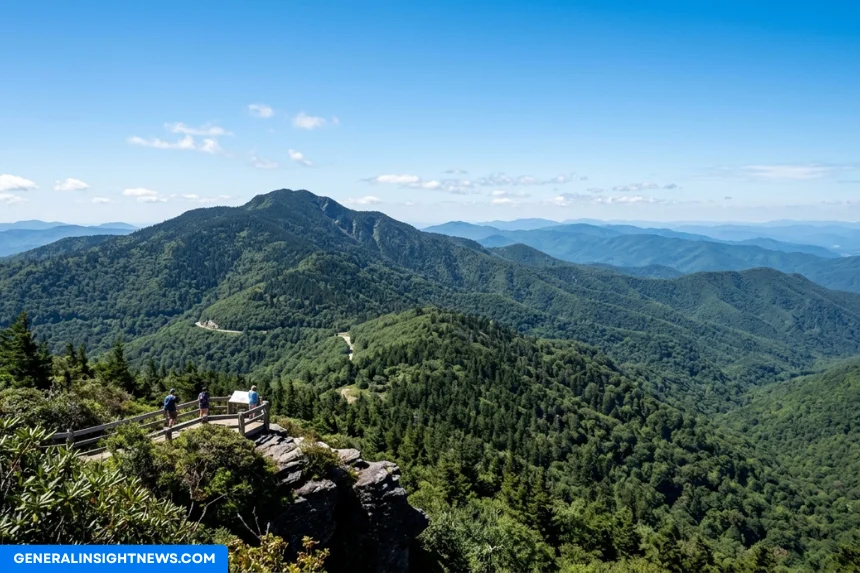
The Appalachian system extends from Newfoundland and Labrador in Canada to central Alabama. Its highest summit is North Carolina’s Mount Mitchell State Park, where the official elevation is 6,684 feet. That makes Mount Mitchell the highest point in the United States east of the Mississippi River.
However, the range contains several distinct physiographic provinces rather than one continuous wall of peaks. The Blue Ridge, Valley and Ridge, Appalachian Plateau, and northern highlands expose different rocks and structural histories. Consequently, a date that fits one province may not fully describe another.
Frequently Asked Questions
1. How old are the Appalachian Mountains in years?
The best short answer is about 480 million years. However, that figure marks the opening stage of Paleozoic Appalachian mountain-building, not the age of every rock or modern slope.
2. Are the Appalachian Mountains 1.2 billion years old?
Parts of their geologic foundation approach that age, and some exposed Blue Ridge rocks are about 1.1 billion years old. Nevertheless, the familiar Paleozoic Appalachian belt began forming much later, around 480 million years ago.
3. Are the Appalachian Mountains older than the dinosaurs?
Yes. The main Appalachian collisions occurred before the first dinosaurs appeared, and the final major mountain-building phase ended roughly 260 million years ago. Therefore, the range’s structural history predates dinosaurs.
4. Are the Appalachians older than the Atlantic Ocean?
Yes. Appalachian mountain-building began hundreds of millions of years before the modern Atlantic started opening about 200 million years ago. In fact, the Atlantic formed as Pangea split after the main collisions had ended.
5. Are the Appalachians older than Pangea?
The earliest Paleozoic Appalachian events predated Pangea. However, the final Alleghanian collision helped assemble Pangea, so the range and the supercontinent share part of the same tectonic story.
6. What formed the Appalachian Mountains?
Several plate collisions formed the Appalachians as ancient oceans opened and closed. In particular, the Taconic, Acadian-related, and Alleghanian orogenies added crust, folded rocks, created faults, and raised mountains.
7. Why are there different ages for the Appalachians?
Different numbers date different things: ancient basement rock, separate mountain-building events, or younger landscape changes. Therefore, figures such as 1.1 billion, 480 million, 300 million, and 20 million years can describe parts of the story but are not interchangeable.
8. Were the Appalachians once as tall as the Himalayas?
They may have reached heights comparable to a major modern continental-collision range. However, erosion erased the summits, so the available evidence does not establish a precise maximum height or prove they exceeded the Himalayas.
9. Are the Appalachian Mountains still growing?
They are not growing through an active continent-to-continent collision. Nevertheless, slow uplift and river incision may be renewing relief in some areas while erosion continues across the range.
10. What is the highest point in the Appalachian Mountains?
Mount Mitchell in North Carolina is the highest summit at 6,684 feet above sea level. Moreover, it is the highest point in the United States east of the Mississippi River.
Conclusion
So, how old are the Appalachian Mountains? About 480 million years is the clearest short answer, although the full history reaches back to roughly 1.1-billion-year-old basement rock. Later collisions rebuilt the range until about 260 million years ago, and erosion plus localized uplift shaped the landscape seen today. Ultimately, the Appalachians are best understood not as a single ancient object, but as a layered record of lost oceans, colliding continents, deep time, and constant change.