


Pablo Huston is best known as the Mexican adopted son of filmmaker John Huston. John met him in Mexico during production of The Treasure of the Sierra Madre in 1947 and subsequently adopted him. A respected biographical reference identifies the boy as Pablo Albarran and says he was about 13 at the time. However, reliable information about Pablo’s later career, location, and present status remains extremely limited.
That short answer contains nearly everything the strongest public sources agree on. Nevertheless, scattered historical records add meaningful details about his place in the Huston family, a reported wife and child, and later estrangement from John. This biography brings those pieces together while clearly separating documented facts from online speculation.
Who Is Pablo Huston?
Pablo Huston was a Mexican boy adopted by the acclaimed American director and screenwriter John Huston. His story entered public view because John met him while making one of Hollywood’s best-known adventure dramas in Mexico. After the adoption, Pablo became part of a family that already had deep connections to film and would later include several prominent actors and directors.
Yet Pablo did not develop a well-documented public career under the Huston name. Major biographical sources mention him mainly in relation to John, the adoption, and the family tree. As a result, basic details that celebrity profiles usually provide—such as an exact birth date, education, occupation, and current residence—remain unconfirmed.
That gap does not make Pablo’s life unimportant. Instead, it requires a different kind of biography: one that values a small number of supportable facts over a dramatic but unverified “untold story.”

Pablo Huston Quick Answer
| Question | Best-supported answer |
|---|---|
| Why is Pablo Huston known? | He is John Huston’s adopted Mexican son. |
| How did they meet? | During production of The Treasure of the Sierra Madre in Mexico in 1947. |
| What was his earlier name? | A biographical reference identifies him as Pablo Albarran. |
| How old was he? | About 12 or 13; one established reference says 13. |
| Who were his adoptive parents? | John Huston and, in the family context, John’s then-wife Evelyn Keyes. |
| Did he work in Hollywood? | No reliable public source reviewed here confirms an acting or filmmaking career. |
| Did he marry? | A period Associated Press item identified an Irish wife named Olga. |
| Did he have children? | The same report identified an infant son named John Walter Huston II. |
| What happened later? | A reference biography says Pablo and John became estranged and lost contact. |
| Is he alive today? | No authoritative recent source reviewed as of August 7, 2026, confirms his status. |
Key Facts About John Huston’s Adopted Son
| Category | Verified or carefully qualified detail |
|---|---|
| Public name | Pablo Huston |
| Reported earlier name | Pablo Albarran |
| Country of origin | Mexico |
| Approximate birth period | Likely the mid-1930s, based only on his reported age in 1947; no exact date confirmed |
| Adoptive father | John Huston |
| Adoptive mother context | Evelyn Keyes, John’s wife during the adoption period |
| Meeting year | 1947 |
| Meeting context | Filming The Treasure of the Sierra Madre in Mexico |
| Adoptive siblings | Tony, Anjelica, Danny, and Allegra Huston within John’s family |
| Reported spouse | Olga, in a historical AP report |
| Reported child | John Walter Huston II, in the same report |
| Verified profession | Not publicly established |
| Verified net worth | Not publicly established |
| Current status | Not reliably confirmed |
Why Pablo Huston’s Biography Requires Careful Research
Most public figures leave behind interviews, credits, institutional profiles, or current first-party accounts. Pablo leaves a much thinner trail. Consequently, one sentence from a respected obituary may carry more evidentiary weight than an entire recent web profile that supplies no original documentation.
The strongest sources in this case serve different purposes. A Los Angeles Times obituary establishes Pablo’s adoption and position among John’s children. A published biographical reference supplies his earlier surname, approximate age, and later estrangement. Film institutions fix the movie’s production period. Finally, a university newspaper archive preserves a rare report about his adult family.
No single source answers every question. Therefore, responsible research must compare dates, attribute details, and leave gaps open. It must also distinguish “not found in reliable public sources” from “never happened.” That distinction protects both accuracy and Pablo’s privacy.
How Did John Huston Meet Pablo Huston?
John Huston met Pablo in Mexico while directing The Treasure of the Sierra Madre. The Los Angeles Times obituary for John Huston says the filmmaker befriended Pablo, whom it described as a Mexican orphan, during the production. The account then identifies Pablo as one of John’s adopted children.
This context matters because it anchors the story to a known professional trip rather than a vague family legend. John spent an extended production period in Mexico, so the meeting occurred while he and his crew worked on location. Still, available authoritative accounts do not provide a day, town, first conversation, or complete sequence of events.
Some online retellings fill that silence with cinematic detail. However, without a direct memoir passage or contemporaneous document, such scenes should not appear as fact. The defensible version remains simple: John met the boy during the Mexican production and went on to adopt him.
The 1947 Mexico Production Timeline
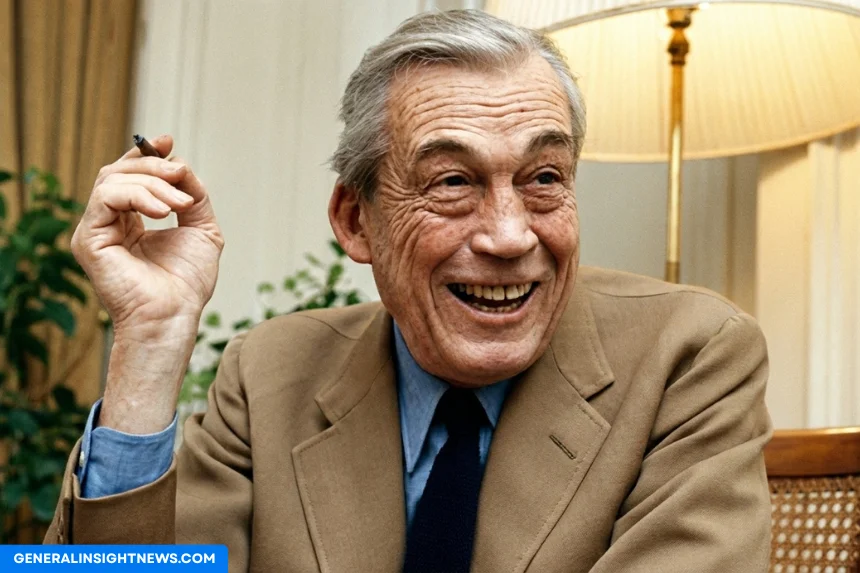
The American Film Institute Catalog dates production from mid-March to July 18, 1947. Warner Bros. released the movie in early 1948, which explains why some summaries connect the adoption to 1948 instead. However, the filming itself places John’s meeting with Pablo in 1947.
This chronology also exposes a major error circulating online. A claim that John first encountered Pablo in 1963 cannot fit a meeting that occurred during production of this particular film. By 1963, the movie had been in theaters for roughly 15 years.
The most accurate wording separates three events: John met Pablo during filming in 1947; the movie reached audiences in 1948; and the formal legal adoption may have concluded during or after the production period. Unless an adoption order becomes publicly available, the exact legal date should remain open.
What Reliable Sources Say About Their Meeting
Two established sources agree on the core relationship. The Los Angeles Times says John befriended and later adopted Pablo. Meanwhile, the Encyclopedia of World Biography profile identifies the boy as Pablo Albarran, describes him as 13, and says John took him in while making the film.
Together, those accounts support the main narrative with complementary details. However, neither source publishes a legal case file. Thus, they establish the accepted biographical record, not every administrative step behind it.
They also do not justify claims about a rescue in a specific marketplace, a particular promise John made, or Pablo’s feelings at the time. Those details may appear in popular storytelling, but they require their own evidence. A careful biography should never convert atmosphere into documentation.
When Did John Huston Adopt Pablo?
The safest answer is that John adopted Pablo around the period when he made The Treasure of the Sierra Madre in Mexico. The meeting took place during 1947 filming. Published accounts then describe Pablo as John’s adopted son, but they do not give a single, independently verified court date.
Some readers may see 1948 because the movie opened that year. Others may find a date attached to a family tree. Yet a release date cannot prove a legal adoption date, and a user-created tree needs documentary citations before it can settle the question.
Therefore, the article should not say “John adopted Pablo in 1947” with absolute precision. “John met him during the 1947 production and subsequently adopted him” communicates what the evidence actually supports. If a court record or contemporaneous family announcement surfaces later, researchers could narrow the timeline.
Why the Exact Adoption Date Remains Unclear
Historical celebrity biographies often compress a long process into a single sentence. In Pablo’s case, sources focus on the memorable human connection rather than the paperwork. Moreover, an international adoption involving a Mexican child and an American filmmaker may have included steps that popular accounts never recorded.
That possibility does not authorize speculation about laws, guardianship, or travel arrangements. It simply explains why “meeting,” “taking in,” and “formal adoption” should not automatically share one date.
Researchers should also resist false precision. An exact day displayed on a genealogy site can look authoritative even when the underlying entry comes from another unsourced family tree. Unless the page shows a verifiable record, the date remains a lead rather than a fact.
Was Pablo Huston Originally Named Pablo Albarran?
The Encyclopedia of World Biography identifies him as Pablo Albarran. That makes Albarran the strongest published candidate for his name before he became publicly known as Pablo Huston. Nevertheless, the accessible public sources reviewed here do not include a Mexican birth certificate or adoption order.
Accordingly, “reportedly named Pablo Albarran” is more precise than declaring a complete legal birth name. Researchers should not automatically join both surnames, add accents, or invent a middle name. Naming customs and legal changes require documentation, especially in cross-border family history.
The distinction may seem small, yet it demonstrates a broader principle. A biography becomes more reliable when it tells readers where a detail comes from and how certain it is. In this case, Albarran has credible reference support, while an exact legal name remains unverified.
How Old Was Pablo Huston When John Met Him?
One established biographical reference says Pablo was 13 when John took him in during the film production. Other historical retellings place him at roughly 12. Because the sources agree that he was a young teenager but not on an exact birth date, “about 12 or 13” gives the most balanced answer.
If he was 13 in 1947, he may have been born around 1933 or 1934, depending on the month of his birthday and the moment they met. If he was 12, the likely range shifts by about a year. Those calculations remain estimates, not proof.
For the same reason, a current-age figure would create false certainty. Even a mathematically correct calculation depends on an unconfirmed starting date. A responsible profile can explain the approximate birth period without presenting it as a documented birthday.
What His Approximate Age Suggests—and Does Not Prove
Pablo’s reported age shows that he was old enough to have a childhood identity and memories before entering the Huston family. However, it does not reveal his schooling, first language, parents’ identities, or prior living arrangements.
Moreover, broad labels such as “orphan” can conceal many different circumstances. Historically, the term sometimes described a child without either parent, a child without one parent, or a child living outside parental care. The major obituary uses the word, but the reviewed sources do not supply a complete family history.
Therefore, the biography should avoid imagining hardship scenes or declaring that John “saved” Pablo. Adoption changed his legal and family connections, yet Pablo’s earlier life cannot be reduced to a plot device in a famous director’s story.
Was Evelyn Keyes Pablo Huston’s Adoptive Mother?
Evelyn Keyes was John Huston’s wife during the 1947 meeting and adoption period. Biographical summaries connect the adopted son to their marriage, so sources commonly identify Keyes as Pablo’s adoptive mother. Still, the clearest surviving accounts place John at the center of the decision.
It is reasonable to describe Pablo as the adopted son of John Huston and Evelyn Keyes in a family summary. However, details about Keyes’s involvement, feelings, or later relationship with Pablo need direct support. The public record reviewed here does not justify a detailed household narrative.
That measured wording also avoids a common biography error: treating a marriage timeline as proof of every private family interaction. Keyes’s legal relationship to John supplies essential context, but it does not tell the complete story of the adoption.

John Huston and Evelyn Keyes’s Marriage Timeline
The Texas State Historical Association biography of Evelyn Keyes says she married John Huston on July 23, 1946. Their divorce followed in February 1950. Thus, their marriage covered the full production and release period of The Treasure of the Sierra Madre.
This timeline supports Keyes’s place in the immediate family context. It also helps readers understand why some biographies describe Pablo as the couple’s adopted son even though later family summaries emphasize John’s paternity.
After the divorce, public sources provide little dependable information about Pablo’s relationship with Keyes. Consequently, claims that she raised him for a particular number of years, stayed in touch, or permanently separated from him should not appear without new evidence.

Pablo Huston’s Place in the Huston Family
John Huston’s family included biological and adopted children across different relationships. The Los Angeles Times obituary identifies five children: Tony, Anjelica, Danny, Allegra, and Pablo. It specifically says that Allegra and Pablo were adopted.
Therefore, Pablo held a clear place in the documented family tree. He was an adoptive brother of Tony, Anjelica, Danny, and Allegra. He was also part of a wider entertainment dynasty that included his adoptive grandfather, actor Walter Huston.
Yet public prominence varied dramatically within that family. Anjelica, Danny, and Tony developed visible screen careers, whereas Pablo left no comparably accessible filmography. That contrast explains why searches for the Hustons yield abundant information on some siblings but only fragments on Pablo.
Pablo Huston’s Adoptive Siblings
Tony Huston worked as an actor, writer, and director. Anjelica Huston became an Academy Award-winning actress and director. Danny Huston also built a long acting and directing career. Allegra Huston became an author and editor. Pablo’s relationship to them comes through John, although the siblings did not all share the same mother or childhood household.
For a reader-friendly reference, Danny Huston’s Wikipedia biography lists Pablo and Allegra as adoptive siblings. Wikipedia helps orient readers, but the major obituary provides stronger independent support for the complete family list.
The phrase “adoptive sibling” describes the family relationship; it does not make Pablo less a member of the family. At the same time, it should not lead writers to invent shared experiences that no source records.
Family Connection Does Not Prove Personal Closeness
A family tree answers “How were they related?” It does not answer “How did they feel about one another?” The reviewed sources do not document Pablo’s adult relationships with Tony, Anjelica, Danny, or Allegra in enough detail to characterize them.
Therefore, descriptions such as “close-knit,” “distant from all his siblings,” or “supported by Anjelica” would go beyond the evidence. Even photographs, if accurately identified, would prove only that relatives appeared together at a moment in time.
This caution becomes especially important when one person did not pursue publicity. Famous relatives often discuss their own experiences without creating a complete record of every sibling. Silence may reflect editorial focus, unavailable archives, or personal boundaries; it does not establish affection or conflict.
Did Pablo Huston Have a Wife and Children?
A historical Associated Press report says Pablo had an Irish wife named Olga and that they had a baby son. This is the strongest specific public evidence found about his adult household. However, it represents a snapshot from one period, not a complete marital history.
The report does not establish Olga’s maiden name, marriage date, profession, later residence, or eventual marital status. It also does not prove that Pablo had only one child. Consequently, a modern profile should not describe Olga as his current wife or claim that the couple remained together for life.
The accurate answer is narrower: a period news item identified Olga as Pablo’s wife and named one infant son. Later family details remain unconfirmed in reliable public sources.
The Historical Report About Olga
The Associated Press item preserved by Texas Tech University places the family in Cuernavaca, Mexico, at the time of reporting. It calls Olga Irish and identifies Pablo as the Mexican adopted son of the noted director.
This contemporary-style report carries more weight than a modern page that repeats a name without showing where it originated. Even so, archive context matters. The available raw newspaper file does not offer a convenient modern profile with follow-up reporting.
Therefore, every present-day statement should remain tied to the historical item: “At the time, the AP reported…” That wording prevents an old fact from masquerading as a current update.
John Walter Huston II
The same article identifies the couple’s 11-month-old son as John Walter Huston II. His name honored the Huston line, combining John’s and Walter’s names. The report also says the filmmaker planned to visit his namesake.
Beyond that moment, the reviewed authoritative sources reveal little. They do not confirm the son’s date of birth, later name usage, education, career, or current location. Moreover, a shared name can create identity confusion in databases and search results.
For privacy and accuracy, writers should not attempt to identify a present-day person as this child based only on a matching name. The historical report supports his existence in that family at that time; it does not authorize a modern personal profile.
What Happened Between Pablo and John Huston?
The Encyclopedia of World Biography reports that John and Pablo became estranged in later years and lost contact. This statement gives the best-supported answer currently available, although it leaves many natural questions unresolved.
No reviewed authoritative source clearly explains the disagreement, timing, or last communication. Likewise, the evidence does not establish whether they ever reconnected privately. John died in 1987, so any account of reconciliation would need a historical source or credible family testimony.
The absence of an explanation should remain an absence. A biography can acknowledge the sadness implied by estrangement without deciding who caused it or what either person intended.
The Reported Estrangement
“Estranged” generally indicates a broken or distant relationship, while “lost contact” indicates an interruption in communication. Those terms describe an outcome, not necessarily a single dramatic event. Relationships can deteriorate gradually, particularly across countries, marriages, careers, and changing households.
Nevertheless, none of those possible factors can be assigned to John and Pablo without evidence. The published reference does not provide a quoted explanation from either man. Thus, the article should attribute the claim and stop short of interpreting motives.
This approach also respects Pablo as a person rather than turning a private family rupture into entertainment. Readers receive the known conclusion while understanding that its causes remain outside the dependable public record.
Why the Reason Should Not Be Invented
Online biography content often rewards certainty, even when evidence is incomplete. A writer may see “lost contact” and expand it into abandonment, rebellion, resentment, or a rejection of Hollywood. Each addition changes the meaning and assigns responsibility.
Moreover, later silence cannot prove the emotional state of either person. John may have discussed the relationship in materials not reviewed here, and Pablo may have maintained his own account. Until a dependable record surfaces, their perspectives remain unknown.
The best editorial choice is explicit restraint: the two reportedly became estranged, but the reason and any later developments have not been reliably established.
Did Pablo Huston Work in Hollywood?
No credible filmography or institutional biography reviewed for this article confirms that Pablo worked as an actor, director, screenwriter, producer, or crew member. His famous surname and relatives make the question understandable, but family connection alone does not create a career credit.
It is possible that Pablo worked privately in an unrelated field, helped on an undocumented project, or used another name. However, possibility is not evidence. A factual biography should say his profession is not publicly established.
This answer differs from saying he “refused Hollywood.” Refusal implies an opportunity and conscious decision that a source would need to document. The record only shows that he lacks a well-established public entertainment career.
No Verified Acting or Filmmaking Career
Reliable screen careers usually generate production credits, trade coverage, union references, interviews, or institutional profiles. Searches for Pablo primarily return family-tree entries and derivative biographies rather than those professional records.
That pattern supports a limited conclusion: researchers cannot verify a public film career for John Huston’s adopted son. It does not prove that Pablo never appeared on a set or assisted informally.
Writers should also guard against namesakes. A credit for “Pablo Huston,” “Pablo Houston,” or “Pablo Albarran” may belong to an unrelated person. Without a source linking the individual directly to John Huston’s family, the credit should not enter this biography.
Was Pablo Huston an Artist or Writer?
Some user-uploaded presentations describe Pablo as a painter, poet, or writer who created an artistic legacy away from Hollywood. However, the reviewed authoritative sources do not identify exhibitions, books, publishers, galleries, awards, archives, or direct interviews that would support those claims.
Consequently, this article cannot present an arts career as fact. Even the word “reportedly” would be misleading if it merely points back to unsourced slides that repeat one another.
A future discovery could change that assessment. For example, a gallery catalog, signed publication, university collection, or family-confirmed archive could connect Pablo to specific work. Until then, the accurate answer is that no credible public record reviewed here verifies a professional artistic or literary career.
Does Pablo Huston Have a Verified Net Worth?
No. Pablo Huston’s net worth is not reliably known. He does not have a verified public career record, financial disclosure, business profile, or documented asset history from which a responsible estimate could be built.
Furthermore, John Huston’s success does not establish what Pablo owned or inherited. Estates may include debts, trusts, private arrangements, gifts, and distributions that differ among relatives. Without probate documentation or credible financial reporting, attaching a dollar figure would amount to guesswork.
Net-worth websites often recycle one another’s estimates until repetition looks like confirmation. In reality, several pages repeating an uncited number still provide no independent evidence. The useful answer for readers is not a speculative range; it is a transparent statement that dependable public data does not exist.
Why Is So Little Known About John Huston’s Adopted Son?
Pablo appears mainly in records about someone else: John Huston. Obituaries and family summaries mention him because he was John’s son, yet they do not provide a stand-alone account of his education, work, or adult life. That source pattern naturally produces a fragmentary biography.
In addition, Pablo seems not to have maintained a prominent public entertainment career under this name. Therefore, the usual archives of interviews, reviews, credits, and publicity do not fill the gaps.
Still, researchers should not confuse limited digitized material with a life devoid of events or relationships. Local records, private papers, Spanish-language archives, and family documents may contain more. The responsible conclusion is simply that dependable, accessible public evidence remains limited.
A Sparse Record Is Not Proof of a Privacy Decision
Many modern profiles say Pablo “chose a private life.” That phrase sounds respectful, but it presents an intention that no reviewed direct statement confirms. A person can have a low public profile because journalists did not follow him, archives were not digitized, his career used another name, or his circumstances changed.
“He lived outside sustained public attention” describes the observable record more accurately. It says what researchers can see without claiming to know why.
This distinction also prevents a circular argument: little information leads writers to declare that Pablo wanted privacy, and that invented desire then explains the lack of information. Good biography breaks the circle by labeling the gap instead of assigning a motive.
Common Problems With Online Family Trees
Genealogy platforms can offer valuable clues, especially when contributors attach birth certificates, marriage records, census pages, or obituaries. However, a family tree without visible supporting documents is a claim, not independent proof.
Errors also spread easily. One user copies a date from another tree, and later profiles cite the repeated date as consensus. Name similarities, estimated years, and automatic record matches can compound the problem.
For Pablo, family-tree pages should guide further searches rather than settle disputed facts. Researchers should look for the underlying record, examine whether it identifies John Huston’s adopted son, and compare it with contemporary sources. Until that verification occurs, exact dates and modern status claims should remain unpublished.
Pablo Huston and The Treasure of the Sierra Madre
Pablo’s biography cannot be separated from the film because its Mexican production created the circumstances in which John met him. However, the movie should serve as historical context, not as evidence about Pablo’s personality or later choices.
John directed and wrote the screenplay, adapting B. Traven’s novel. His father, Walter Huston, played Howard. The production’s location work was unusual and ambitious for a major American studio picture of its era, which kept John in Mexico long enough for the meeting to occur.
Nothing in the reviewed sources indicates that Pablo appeared in the finished film. Therefore, websites should not call him a cast member, crew member, inspiration for a character, or participant in production unless new documentation supports that claim.
Why the Movie Matters to His Biography
The film provides a fixed chronological anchor in an otherwise uncertain story. AFI’s production dates establish when John worked in Mexico, while later biographical sources connect that trip to Pablo. This cross-check makes the 1947 meeting far stronger than a floating date on a derivative page.
The movie also changed John’s professional stature. As a result, biographies of the filmmaker discuss this period extensively, creating the surviving path through which researchers encounter Pablo at all.
Yet that association can overshadow him. Pablo was a real child whose life continued after the crew left Mexico. A thoughtful article uses the movie to establish context and then avoids treating his adoption as merely behind-the-scenes trivia.
The Film’s Lasting Historical Importance
At the 1949 Academy Awards, John Huston won for directing and screenplay, while Walter Huston won supporting actor. Those honors helped cement the movie’s status and made the production period a central chapter in family and film history.
The awards also explain why inaccurate adoption stories can spread widely: audiences remain curious about everything connected to a classic film. Nevertheless, fame does not loosen the standards of evidence. If anything, popular interest makes precise dates and careful attribution more important.
For Pablo’s biography, the Oscars supply scale rather than personal detail. They show why the film endured, but they do not tell us what Pablo thought of it, whether he attended events, or how the success affected his daily life.
Pablo Huston Timeline
| Period | Documented event or careful conclusion |
|---|---|
| July 23, 1946 | John Huston married Evelyn Keyes. |
| Mid-March–July 18, 1947 | John directed The Treasure of the Sierra Madre in Mexico and met Pablo during the production. |
| Around 1947–1948 | John subsequently adopted Pablo; the exact legal date remains unconfirmed in reviewed public sources. |
| January 1948 | The movie entered theatrical release, which may explain 1948 dates in some retellings. |
| March 1949 | The film received three Academy Awards, including two for John and one for Walter Huston. |
| February 1950 | John Huston and Evelyn Keyes divorced. |
| Later historical report | An AP item identified Pablo’s wife as Olga and their 11-month-old son as John Walter Huston II. |
| Later years | A published reference says John and Pablo became estranged and lost contact. |
| August 28, 1987 | John Huston died; his Los Angeles Times obituary listed Pablo among his five children. |
| August 7, 2026 | No authoritative recent source reviewed for this article confirmed Pablo’s living status or current circumstances. |
The timeline deliberately avoids a guessed birthday, marriage year, adoption day, and current age. Those blanks reflect the evidence rather than an incomplete calculation.
Is Pablo Huston Still Alive?
No authoritative recent source reviewed as of August 7, 2026, confirms whether Pablo Huston is alive. Likewise, this research did not identify a dependable obituary that clearly belongs to John Huston’s adopted son.
Therefore, both confident answers—“yes, he is living privately” and “no, he has died”—would go beyond the evidence. Search results for people with similar names cannot resolve the question unless they include identifying family details and credible documentation.
His reported age in 1947 may suggest an approximate birth period, but it cannot establish present status. The most accurate publication wording is: “Pablo Huston’s current living status has not been reliably confirmed in accessible authoritative sources.”
What Can Readers Reliably Conclude?
Readers can confidently conclude that John Huston met a young Mexican boy during production of The Treasure of the Sierra Madre and adopted him. A respected biography identifies the boy as Pablo Albarran and places him at about 13. Major obituary coverage recognizes Pablo as one of John’s five children.
A period AP item also supports a later family chapter involving an Irish wife, Olga, and a baby son named John Walter Huston II. Finally, a published reference reports that Pablo and John later became estranged and lost contact.
Beyond those points, certainty falls away. His exact birth and adoption dates, education, work, wealth, later relationships, and present status remain undocumented in the strongest accessible sources. That does not diminish his life; it simply defines what a responsible public biography can presently say.
Frequently Asked Questions About Pablo Huston
Who is Pablo Huston?
Pablo Huston is the Mexican adopted son of filmmaker John Huston. John met him during production of The Treasure of the Sierra Madre in Mexico in 1947 and subsequently adopted him.
What was Pablo Huston’s original name?
The Encyclopedia of World Biography identifies him as Pablo Albarran. However, no birth certificate or adoption order reviewed for this article confirms his complete legal birth name.
Where was Pablo Huston born?
Reliable accounts identify Pablo as Mexican, but the reviewed authoritative sources do not confirm a specific birthplace. Claims naming an exact town should therefore include a primary or dependable historical citation.
When did John Huston adopt Pablo?
John met Pablo during filming in 1947 and adopted him around that production period or soon afterward. The exact legal adoption date remains unconfirmed in accessible reliable sources.
How old was Pablo when John Huston met him?
An established biographical reference says Pablo was 13, while some other accounts place him near 12. “About 12 or 13” is the safest description because no exact birth date has been verified.
Was Evelyn Keyes Pablo Huston’s adoptive mother?
Evelyn Keyes was married to John throughout the 1947 meeting and adoption period, and biographical summaries associate the adopted son with their marriage. The clearest surviving accounts, however, focus mainly on John’s role.
Is Pablo related to Anjelica and Danny Huston?
Yes. Pablo became their adoptive brother through John Huston. John’s documented children also included Tony and adopted daughter Allegra, although public sources do not fully describe the siblings’ personal relationships.
Did Pablo Huston have a wife and children?
A period Associated Press report identified an Irish wife named Olga and their 11-month-old son, John Walter Huston II. The reviewed sources do not reliably establish later marital details or whether Pablo had other children.
What did Pablo Huston do for a living?
His profession is not reliably documented in accessible authoritative sources. No verified record reviewed here establishes a career in acting, filmmaking, painting, writing, or another specific field.
Is Pablo Huston still alive?
His present living status has not been reliably confirmed as of August 7, 2026. Researchers should not treat an unrelated obituary, a name match, or an unsourced biography claim as proof.
Conclusion: Pablo Huston’s Documented Story
Pablo Huston occupies a small but meaningful place in the history of the Huston family. John Huston met him as a young teenager during the 1947 Mexican production of The Treasure of the Sierra Madre and later adopted him. The record identifies him as Mexican, gives his earlier name as Pablo Albarran, and recognizes him among John’s children.
Historical evidence also offers a glimpse of Pablo as a husband and father. At one point, an AP report identified his wife as Olga and their infant son as John Walter Huston II. Later, according to a published biography, Pablo and John became estranged and lost contact.
Everything beyond that core needs caution. No strong public evidence reviewed here establishes Pablo’s profession, artistic career, net worth, exact birthday, present residence, or living status. Therefore, the honest biography is not the loudest “untold story.” It is the one that preserves the verified record, labels uncertainty, and leaves room for better evidence to emerge.
Read more at General Insight News