

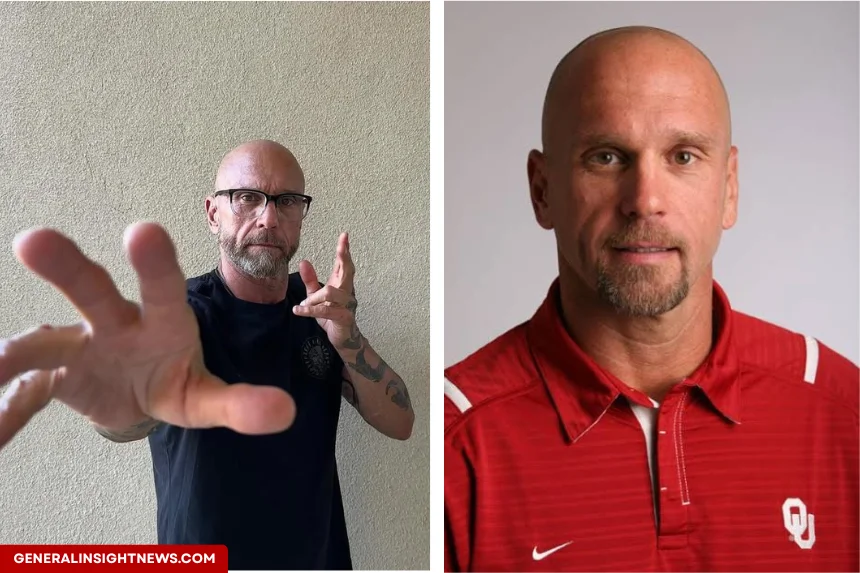
Bruce Kittle is best known to many football fans as the father of San Francisco 49ers tight end George Kittle. But that label only tells part of the story. Bruce has played college football, coached at Iowa and Oklahoma, practiced law, taught law, worked in restorative justice, served as a pastor, and helped athletes use mindfulness and mental preparation.
His career does not follow a simple path. It moves from the offensive line at the University of Iowa to law school, ministry, mediation, college coaching, and performance work. That wide background helps explain why Bruce Kittle often appears in stories about football, family, leadership, and mental strength.
This guide explains who Bruce Kittle is, what he did in football, how his legal and ministry work shaped him, and why his pregame letters to George Kittle became such a meaningful part of the Kittle family story.
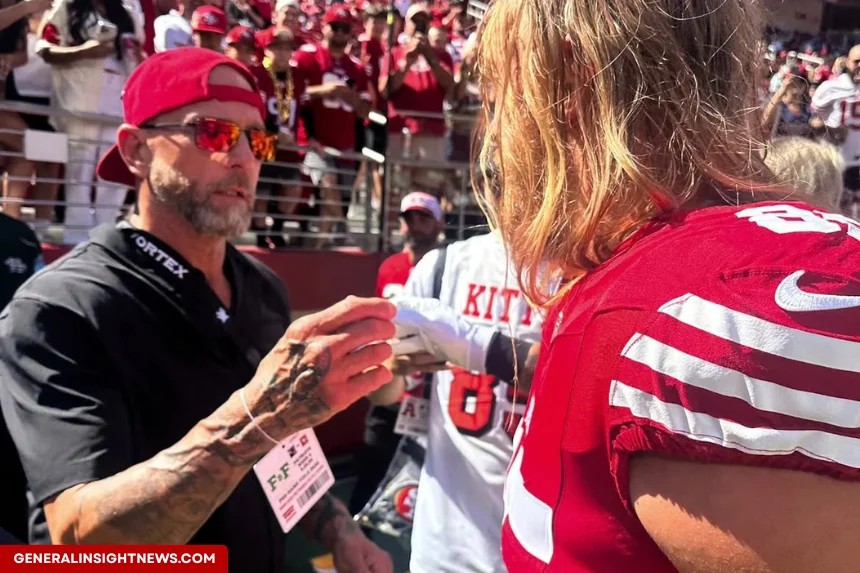
Who Is Bruce Kittle?
Bruce Kittle is a former University of Iowa offensive lineman, former college football coach, attorney, ordained United Church of Christ clergy member, mediator, and performance coach. Many people also know him as the father of George Kittle, the San Francisco 49ers tight end.
Bruce Kittle’s official biography says he earned a B.B.A. from the University of Iowa in 1983, co-captained Iowa’s 1981 Big Ten Champion football team, graduated from the University of Iowa College of Law in 1989, and graduated from Chicago Theological Seminary in 1998. His bio also lists football coaching, teaching, ministry, mediation, and criminal defense law among his roles.
Quick Facts About Bruce Kittle
| Fact | Detail |
|---|---|
| Full name | Bruce Kittle |
| Known for | Football, law, ministry, coaching, performance work, and being George Kittle’s father |
| College | University of Iowa |
| College sport | Football |
| Position | Offensive tackle |
| Coaching roles | Iowa assistant, Oklahoma recruiting coordinator, Oklahoma tight ends/tackles coach |
| Legal background | University of Iowa College of Law graduate and attorney |
| Ministry background | Chicago Theological Seminary graduate and United Church of Christ clergy member |
| Family | Married to Jan; father of Emma and George |
| Current public work | Hidden Pearls Podcast and Mindful Awareness & Performance work |
Why People Search His Name
People usually search Bruce Kittle for one of three reasons. Some want to know about George Kittle’s father. Others want to understand Bruce’s own football career at Iowa and Oklahoma. A third group wants to learn about his unusual path through law, ministry, mediation, and mindfulness-based performance work.
A strong profile of Bruce Kittle should cover all of those areas. He is part of George Kittle’s story, but he also has his own long career in sports, law, faith, and personal development.
Bruce Kittle is not only “George Kittle’s dad.” He is a former college football player and coach with deep experience in law, ministry, mediation, and athlete performance.
Bruce Kittle’s Early Life and Iowa Football Career
Bruce Kittle played offensive tackle at the University of Iowa. He lettered all four years, became a captain, and started at offensive tackle for Iowa’s 1981 Rose Bowl team. His Iowa years shaped both his later coaching career and his family’s football roots.
Cedar Falls Roots
The University of Oklahoma’s athletics bio lists Bruce Kittle’s hometown as Cedar Falls, Iowa, and his high school as Cedar Falls High School. The same bio lists Iowa as his college and identifies him as a 1983 graduate.
Those details matter because Iowa football sits at the center of the Kittle family story. Bruce played there. George Kittle later played there. The father-son link to the Hawkeyes became one of the most familiar parts of George’s public football story.
Playing Offensive Tackle at Iowa
Bruce played offensive tackle, one of the most physical jobs in football. Offensive tackles protect the quarterback and block edge defenders in the run game. The role demands size, balance, toughness, footwork, and a team-first mindset.
Oklahoma’s official bio says Bruce lettered all four years at Iowa as an offensive tackle. It also identifies him as captain and starting offensive tackle for Iowa’s 1981 Rose Bowl team.
The 1981 Big Ten Title
Bruce’s official site says he co-captained the 1981 Big Ten Champion football team at Iowa. That season still matters because it helped mark a major era in modern Iowa football.
For readers who know George Kittle mostly as an NFL tight end, Bruce’s football background adds context. George did not grow up around football by accident. His father had played on one of Iowa’s most important teams and later coached the sport at several levels.
A Note on Conflicting Timelines
One competitor page says Bruce played at Iowa from 1985 to 1989. That timeline conflicts with Bruce’s official bio and Oklahoma’s official athletics bio, which both place his Iowa playing career before his 1983 graduation.
Bruce Kittle’s football career began at Iowa, where he played offensive tackle, became a team leader, and helped build the family’s long connection to Hawkeyes football.
Kittle’s Coaching Career
Bruce Kittle coached football at Iowa, several Iowa schools, and the University of Oklahoma. At Oklahoma, he worked as on-campus recruiting coordinator and later coached tight ends and tackles for the Sooners.
Coaching at Iowa
After graduation, Bruce stayed close to football. Oklahoma’s bio says he spent four years on Iowa’s staff after college. He worked two years as a graduate assistant and two years as a volunteer assistant. During that time, Iowa played in four straight bowl games.
That early coaching work kept Bruce connected to the same program where he had played. It also placed him around respected football minds. Oklahoma’s bio notes that he worked with coaches such as Kirk Ferentz, Hayden Fry, Barry Alvarez, Dan McCarney, and Mike Stoops.
Coaching in Iowa Schools
Bruce later coached at several school levels in Iowa. Oklahoma’s career timeline lists him as head football coach at Northwest Junior High School from 2006 to 2008, assistant football coach at West High School from 2008 to 2009, and assistant football coach at Cedar Falls High School from 2009 to 2010.
These roles show that Bruce did not only coach elite college athletes. He also worked with younger players. That range matters because good coaching changes with the age and needs of the athlete.
Oklahoma Recruiting Coordinator
Bruce joined Oklahoma in 2010 as on-campus recruiting coordinator, according to Oklahoma’s official bio. Recruiting coordinators help manage visits, communication, and the process of introducing recruits and families to a program.
That role fit Bruce’s people-centered background. By then, he had worked in law, ministry, teaching, mediation, and football. Recruiting requires trust, clear communication, and the ability to connect with both athletes and parents.
Coaching Tight Ends and Tackles at Oklahoma
Bruce later served as Oklahoma’s assistant coach for tight ends and tackles. The Oklahoma bio lists him in that role starting in 2011. On3 also lists Bruce as a former Oklahoma tight ends coach with a 2011–2012 coaching period.
That job combined two position groups that need both power and technique. Tackles handle the edge of the offensive line. Tight ends block like linemen on some plays and run routes like receivers on others. Bruce’s own offensive line background made him a natural fit for teaching leverage, hand placement, and blocking angles.
Lane Johnson and Oklahoma’s Offensive Front
Oklahoma’s bio credits Bruce with helping develop Lane Johnson, who moved from earlier roles into a major offensive tackle prospect. The bio says Johnson became a Second-Team All-Big 12 selection after Bruce and the staff moved him into the offensive line mix.
The same Oklahoma bio also says Bruce coached tackle Daryl Williams, who earned Honorable Mention All-Big 12 recognition, and tight end Trey Millard, who received second-team All-Big 12 recognition from AP.
Bruce Kittle coached players at several levels, from schools in Iowa to Oklahoma’s Big 12 program. His strongest coaching identity centers on offensive line and tight end technique.
Bruce Kittle’s Legal, Ministry, and Restorative Justice Work
Bruce Kittle’s career goes far beyond football. He earned a law degree, practiced law, taught law, worked in correctional services, served as a mediator, and became an ordained pastor. These roles give his public story unusual depth.
Law School and Legal Credentials
Bruce earned his law degree from the University of Iowa College of Law in 1989. His official bio says he graduated with high distinction and became a member of the Order of the Coif, an honor society for law graduates with strong academic records.
His official bio also says he belongs to the Wisconsin State Bar and the Iowa Association for Justice. It says courts admitted him to practice before the 7th and 8th Circuit U.S. Courts of Appeals and the Northern and Southern Districts of Iowa.
Legal Practice and Teaching
Oklahoma’s career timeline lists Bruce as a law clerk for the U.S. Court of Appeals for the 8th Circuit from 1989 to 1990. It then lists associate roles at Simmons, Perrine, Albright & Elwood and Michael Best & Friedrich.
The same timeline says Bruce worked as a clinical assistant professor at the University of Wisconsin Law School from 1994 to 2000. Teaching law requires more than knowing rules. It requires explaining systems, guiding students, and helping people think through hard problems.
Bruce’s official site later lists him as an attorney with Petrzelka & Breitbach in Cedar Rapids, focused on criminal defense.
Ministry and Pastoral Work
Bruce also trained for ministry. His official bio says he graduated from Chicago Theological Seminary in 1998 and became an ordained clergy member of the United Church of Christ. It also says he served as pastor of Faith United Church of Christ in Iowa City.
Oklahoma’s timeline lists his pastor role at Faith United Church of Christ from 2007 to 2010.
This background helps explain why Bruce’s later work often uses language around purpose, self-awareness, healing, and community. He did not build his identity only inside football.
Restorative Justice and Mediation
Bruce also worked in restorative justice. Restorative justice is an approach that focuses on accountability, healing, repair, and dialogue after harm. It often asks what happened, who suffered harm, what people need, and who should take responsibility.
Bruce’s official bio says he worked as a mentoring and re-entry specialist for the Sixth Judicial District Department of Correctional Services and as a mediator for the Iowa Peace Institute.
Oklahoma’s timeline lists him as director of restorative justice programs at the Iowa Peace Institute from 2000 to 2003 and executive officer with the Sixth District Department of Correctional Services from 2003 to 2010.
Bruce Kittle built a rare career mix. He combined football coaching with law, teaching, ministry, mediation, and justice work.
Bruce Kittle and George Kittle
Bruce Kittle is the father of George Kittle, the San Francisco 49ers tight end. Their public bond is best known through Bruce’s pregame letters, which George reads before games for motivation, focus, and perspective.
The Father-Son Football Link
Bruce and George both played football at the University of Iowa. People reports that Bruce played offensive line at Iowa and that George later played for Bruce’s alma mater.
That Iowa connection gives the family story a clear throughline. Bruce played in the trenches. George became an NFL tight end, a position that combines blocking and receiving. Both roles require toughness, body control, and pride in physical play.
The Pregame Letter Tradition
Bruce’s pregame letters to George have become one of the most well-known parts of their relationship. CBS San Francisco reported that Bruce began writing the letters when George was a sophomore at Iowa and that the letters arrived before every game after that.
People reports that George reads the letters on the bus ride to the stadium or in the locker room. The letters remind him what he has done and what still sits ahead.
The letters are not just short pep talks. CBS reported that George said Bruce often builds each letter around a different story, movie, or book. That approach turns football preparation into something personal, creative, and emotional.
Why the Letters Matter
The letters matter because they show how Bruce blends coaching with parenting. He does not only tell George to play hard. He connects the moment to memory, story, and identity.
People reported that Bruce has described the letters as a way to help George keep perspective, stay grounded, and be the person his team needs.
That kind of message fits Bruce’s broader career. A person who has worked as a coach, lawyer, pastor, mediator, and performance guide would likely see football as more than technique. The game also involves attention, purpose, fear, confidence, ego, and service to teammates.
Blocking as a Family Theme
CBS reported that when George discussed football advice from his father, Bruce focused heavily on blocking. That makes sense. Bruce played offensive tackle, coached tackles and tight ends, and understands that blocking often decides whether an offense works.
George Kittle became famous for both receiving and blocking. Many tight ends catch passes. Fewer embrace blocking with the same joy. Bruce’s background helps explain why George’s physical style feels like a family inheritance, not just a job requirement.
Bruce and George Kittle share more than a last name. They share Iowa football roots, a love of physical play, and a game-day letter tradition that connects football with family and mindset.
Bruce Kittle’s Family
Bruce Kittle is married to Jan Krieger. They have two children, Emma and George. The Kittle family has a strong public link to sports, wellness, creativity, storytelling, and performance.
Jan Krieger
People reports that Bruce Kittle and Jan Krieger are George Kittle’s parents. Jan also has an athletic background. People notes that Jan earned a place in the Iowa Girls’ High School Athletic Union Hall of Fame and played softball and basketball at Drake University.
That means George and Emma grew up with two parents who understood sports from the inside. Bruce brought football and coaching. Jan brought her own athletic experience and creative influence.
George Kittle
George Kittle plays tight end for the San Francisco 49ers. People describes him as a star tight end and notes that he uses Bruce’s letters as part of his pregame routine.
In this article, George matters because he explains why many readers search for Bruce Kittle. But Bruce’s own story remains broader than his son’s NFL career.
Emma Kittle
People reports that Bruce and Jan also have a daughter, Emma. The article says Emma played sports in high school, earned all-state honors in basketball and volleyball, and later played volleyball at Iowa before transferring to Oklahoma.
Thunderbird Performance lists Emma Kittle as a Hidden Pearls Podcast host and producer, holistic health coach, and yoga and meditation teacher.
A Family Built Around Performance and Care
The Kittle family’s public work often connects sports with wellness. George plays in the NFL. Emma works in yoga, meditation, and holistic health. Bruce works in performance, storytelling, and mindful awareness. Jan brings an athletic and creative background.
That mix gives the family a clear public identity: performance matters, but so do health, connection, and self-awareness.
Bruce Kittle’s family story includes more than football. Jan, Emma, and George each connect sports with creativity, wellness, and support.
Hidden Pearls Podcast and Mindful Awareness Work
Bruce Kittle works with Hidden Pearls Podcast and mindfulness-based performance projects. This work focuses on storytelling, self-discovery, vulnerability, mental health, athlete wellness, and mindful performance.
What Hidden Pearls Podcast Does
Thunderbird Performance says the Hidden Pearls Podcast shares untold stories of people “mindfully becoming their authentic selves” and promotes self-discovery through storytelling.
That mission fits Bruce’s background. He has worked in football, law, ministry, mediation, and personal development. All of those fields deal with pressure, change, conflict, and identity.
Bruce Kittle’s Role
Thunderbird Performance lists Bruce Kittle as part of the Hidden Pearls Podcast team. The site identifies him as “Host, Booking & Legal,” “Papa Bear,” and a Mindful Awareness & Performance coach.
Living Justice Press also lists Bruce with Thunderbird Performance LLC and Hidden Pearls Podcast. It describes him as a performance coach, co-host, restorative justice practitioner and trainer, circle keeper, mediator, yogi, and football consultant.
What Mindful Awareness & Performance Means
Mindful Awareness & Performance, often shortened as MAP, focuses on using awareness to improve how people perform and live. In simple terms, it asks athletes and other high-pressure performers to notice their thoughts, breathing, body, emotions, and choices.
Living Justice Press says Bruce uses tools such as breath work, meditation, affirmations, visualization, and life coaching. It also says his sports performance work focuses on professional and college athletes and coaches.
Work With George’s Mental Preparation
Living Justice Press says Bruce began mental preparation work with George in fifth grade. The bio says they used affirmations and visualization techniques and later developed a wider set of mental preparation tools.
That detail helps explain the pregame letters. The letters did not appear out of nowhere. They fit a long father-son pattern of mental preparation, story, and focus.
Thunderbird Performance
Thunderbird Performance says its mission is to help athletes develop mindful awareness so they can build strong professional careers and become change-makers when they are ready.
The site also frames its work around the mind, body, spirit, and power. That language reflects Bruce’s blend of coaching, ministry, yoga, mediation, and athlete performance.
Bruce Kittle’s current public work connects sports performance with mindfulness, storytelling, and personal growth. It builds on lessons from football, family, law, ministry, and mediation.
Bruce Kittle Career Timeline
Bruce Kittle’s career moves through college football, law, teaching, restorative justice, ministry, Oklahoma football, and mindfulness-based performance work. A timeline helps readers see how those roles connect.
| Years | Role | Organization or Field |
| Early 1980s | Offensive tackle and team captain | University of Iowa |
| 1982–1986 | Graduate assistant and volunteer assistant coach | Iowa football |
| 1989–1990 | Law clerk | U.S. Court of Appeals, 8th Circuit |
| 1990–1992 | Associate attorney | Simmons, Perrine, Albright & Elwood |
| 1992–1994 | Associate attorney | Michael Best & Friedrich |
| 1994–2000 | Clinical assistant professor | University of Wisconsin Law School |
| 2000–2003 | Director of restorative justice programs | Iowa Peace Institute |
| 2003–2010 | Executive officer | Sixth District Department of Correctional Services |
| 2006–2008 | Head football coach | Northwest Junior High School |
| 2007–2010 | Pastor | Faith United Church of Christ |
| 2008–2009 | Assistant football coach | West High School |
| 2009–2010 | Assistant football coach | Cedar Falls High School |
| 2010–2011 | On-campus recruiting coordinator | Oklahoma football |
| 2011–2012/2013 | Assistant coach, tight ends/tackles | Oklahoma football |
| Recent years | Podcast and performance work | Hidden Pearls Podcast / Thunderbird Performance |
This timeline uses Bruce’s official site and the University of Oklahoma athletics bio as the strongest sources for his education, football, legal, ministry, and coaching background.
Bruce Kittle did not build one narrow career. He kept returning to the same themes in different fields: discipline, service, communication, repair, and performance.
What Makes Bruce Kittle’s Career Unusual?
Bruce Kittle’s career is unusual because he moved between football, law, ministry, mediation, coaching, and mindfulness work. Most public sports figures stay in one lane. Bruce built a career that crosses several fields.
He Left and Returned to Football
Grantland described Bruce’s path to Oklahoma as unusual because he had spent many years outside football before returning to a major college program. ESPN’s Oklahoma blog also summarized that he had worked as an attorney, mediator, and pastor before joining the Sooners in 2010 as recruiting coordinator.
That return gives Bruce’s coaching story a different feel. Bruce did not spend every year climbing a standard coaching ladder. He brought life experience from courtrooms, churches, classrooms, mediation circles, and correctional work.
He Blends Coaching With Personal Development
Bruce’s later work shows that he sees performance as more than drills and schemes. Living Justice Press says his Mindful Awareness & Performance approach uses breath work, meditation, affirmations, visualization, and life coaching.
That does not replace football technique. It adds another layer. Athletes still need strength, speed, and skill. But they also need emotional control, focus, and self-understanding.
He Is More Than George Kittle’s Father
Many readers discover Bruce through George. That makes sense because George is an NFL star and Bruce’s letters became part of George’s public story.
Still, Bruce’s own background deserves attention. He played college football, coached at Oklahoma, practiced law, taught law, served as a pastor, worked in restorative justice, and now supports performance and storytelling work.
Bruce Kittle’s career stands out because it crosses sport, law, faith, justice, and wellness. That range makes him more than a typical football parent or former coach.
Common Mistakes About Bruce Kittle
Common mistakes about Bruce Kittle include treating him only as George Kittle’s father, using the wrong Iowa playing timeline, and overlooking his law, ministry, restorative justice, and mindfulness work.
Mistake 1: Calling Him Only George Kittle’s Father
Bruce is George Kittle’s father, and that connection matters. But it should not erase Bruce’s own record.
Bruce played football at Iowa, coached at Iowa and Oklahoma, earned a law degree, served as clergy, worked in mediation, and helped develop performance programs. Those facts create a much fuller profile.
Mistake 2: Using the Wrong Iowa Timeline
Some pages list Bruce’s Iowa playing years in a way that conflicts with his official bio and Oklahoma’s athletics bio. Bruce’s official site says he earned his B.B.A. from Iowa in 1983 and co-captained the 1981 Big Ten Champion football team. Oklahoma’s bio lists him as a captain and starting offensive tackle for Iowa’s 1981 Rose Bowl team.
For accuracy, use those sources over thinner profile pages.
Mistake 3: Ignoring His Legal and Ministry Work
Bruce’s law and ministry background help explain his style. He does not talk about performance only as a coach. He also brings a human-centered lens from legal work, pastoral care, mediation, and restorative justice.
That context matters when discussing his letters to George, his podcast work, and his mindful performance work.
Mistake 4: Making the Story Only About Football
Football matters in Bruce’s story, but it is not the whole story. His work with Hidden Pearls Podcast and Thunderbird Performance shows that he now works in a wider space that includes wellness, storytelling, mental preparation, and personal growth.
FAQs About Bruce Kittle
Who is Bruce Kittle?
Bruce Kittle is a former Iowa football player, former college football coach, attorney, ordained clergy member, mediator, and performance coach. Many people also know him as George Kittle’s father.
Is Bruce Kittle George Kittle’s father?
Yes. Bruce Kittle is the father of George Kittle, the San Francisco 49ers tight end. People reports that George reads pregame letters from Bruce as part of his game-day routine.
Did Bruce Kittle play football?
Yes. Bruce Kittle played football at the University of Iowa as an offensive tackle. Oklahoma’s athletics bio says he lettered all four years and captained Iowa’s 1981 Rose Bowl team.
Where did Bruce Kittle play college football?
Bruce Kittle played college football at the University of Iowa. His official bio says he co-captained the 1981 Big Ten Champion team and graduated from Iowa in 1983.
Did Bruce Kittle coach at Oklahoma?
Yes. Bruce Kittle coached at the University of Oklahoma. Oklahoma’s bio lists him as on-campus recruiting coordinator in 2010–2011 and assistant coach for tight ends and tackles starting in 2011.
What position did Bruce Kittle coach?
Bruce Kittle coached tight ends and tackles at Oklahoma. On3 also lists him as a former Oklahoma tight ends coach.
Is Bruce Kittle an attorney?
Yes. Bruce Kittle earned a law degree from the University of Iowa College of Law in 1989. His official bio says he worked as an attorney and focused on criminal defense at Petrzelka & Breitbach in Cedar Rapids.
Was Bruce Kittle a pastor?
Yes. Bruce Kittle graduated from Chicago Theological Seminary in 1998 and became an ordained clergy member of the United Church of Christ. His official bio says he served as pastor of Faith United Church of Christ in Iowa City.
Who is Bruce Kittle’s wife?
Bruce Kittle’s wife is Jan Krieger. People identifies Bruce and Jan as George Kittle’s parents and notes that Jan also has a strong athletic background.
Who are Bruce Kittle’s children?
Bruce Kittle has two children, Emma and George. Bruce’s official bio names Emma and George as his adult children, and People also discusses both children in its profile of George Kittle’s family.
What are Bruce Kittle’s letters to George Kittle?
Bruce Kittle’s letters are pregame notes that George Kittle reads before football games. CBS reported that Bruce began writing them when George was a sophomore at Iowa and continued the tradition before every game.
What is Hidden Pearls Podcast?
Hidden Pearls Podcast is a storytelling and self-discovery project connected to the Kittle family and Thunderbird Performance. Thunderbird Performance says the podcast shares untold stories of people becoming their authentic selves.
What does Bruce Kittle do now?
Bruce Kittle works publicly through Hidden Pearls Podcast, Thunderbird Performance, and Mindful Awareness & Performance. Living Justice Press describes him as a performance coach, restorative justice practitioner, mediator, yogi, football consultant, and podcast co-host.
Conclusion
Bruce Kittle’s story is bigger than one job title. He played offensive tackle at Iowa, coached football at Iowa and Oklahoma, practiced law, taught law, served as a pastor, worked in restorative justice, and helped athletes use mindfulness and mental preparation.
Many fans first learn his name because of George Kittle. That connection matters. Bruce’s pregame letters and coaching mindset help explain part of George’s public identity. But Bruce’s own life shows a much wider pattern: he has spent decades helping people prepare, repair, compete, reflect, and grow.
The clearest way to describe Bruce Kittle is this: he is a football man, but not only a football man. He is also a lawyer, pastor, mediator, father, storyteller, and performance guide.
Discover more on our website about sade carleena robinson