


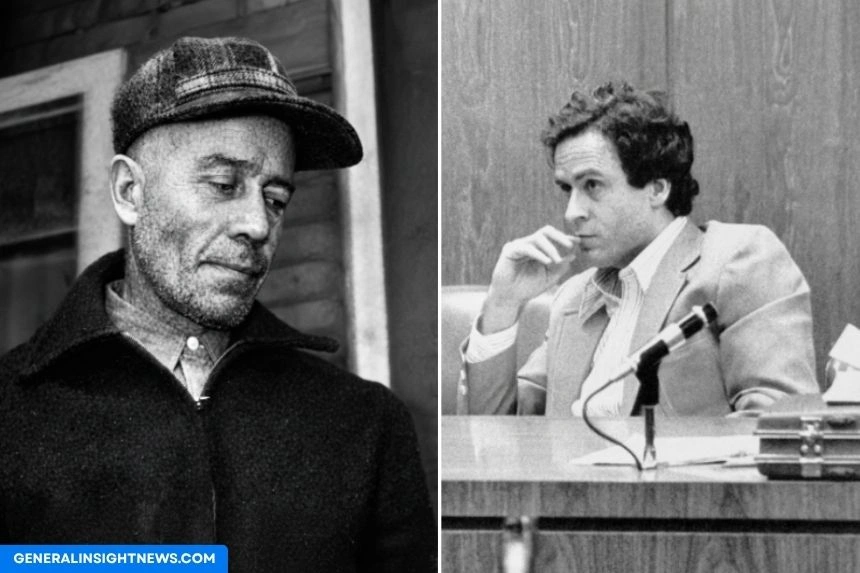
Did Ed Gein help find Ted Bundy? No. There is no credible historical evidence that Ed Gein helped law enforcement identify, locate, investigate, or capture Ted Bundy. The claim gained attention because fictional dramatizations have portrayed or implied a connection between the two infamous killers. However, the real-life timeline and documented investigations tell a very different story.
Ed Gein was arrested in Wisconsin in 1957 and spent the rest of his life in psychiatric institutions. Ted Bundy’s crimes occurred mainly during the 1970s, and police officers ultimately arrested Bundy twice, first in Utah and later in Florida. Gein did not assist with either investigation.
This article separates historical fact from television fiction and explains why the question “did Ed Gein help find Ted Bundy” has become so widely searched.
Did Ed Gein Help Find Ted Bundy?
No. Ed Gein did not help find Ted Bundy.
There is no verified record showing that Gein:
- Profiled Ted Bundy for the FBI
- Provided investigators with clues about Bundy
- Identified Bundy’s methods
- Helped create a criminal profile that led police to Bundy
- Communicated with Bundy investigators
- Helped solve any of Bundy’s murders
The two men occupied very different places in criminal history.
Gein became the focus of a murder investigation in Wisconsin during the 1950s. Authorities arrested him after the disappearance and killing of hardware-store owner Bernice Worden. Investigators then discovered disturbing evidence at his property, and Gein became one of the most notorious criminals in American history.
Bundy, meanwhile, became active as a serial killer years later. Multiple police departments and investigators pursued him across several states during the 1970s.
Therefore, the idea that Gein helped solve the Bundy case is fictional, not historical.
Why Do People Think Ed Gein Helped Find Ted Bundy?
The confusion largely comes from dramatized entertainment.
Television and film often create imagined conversations, combined timelines, or fictional investigative scenes to make a story more dramatic. As a result, viewers may see a historical character perform an action that never happened in real life.
A fictional scene can feel convincing when a production uses real names, real crimes, and real locations. However, historical accuracy does not automatically follow from the use of real people.
That distinction matters especially in true-crime dramatizations.
Netflix’s Monster anthology and other productions have encouraged viewers to search for the historical background behind scenes involving real serial killers. Consequently, the question “did Ed Gein help find Ted Bundy” became a fact-checking topic.
As Encyclopaedia Britannica explains in its fact-check on the claim, there is no evidence that Gein helped catch Bundy.
Who Was Ed Gein?
Ed Gein, whose full name was Edward Theodore Gein, was a Wisconsin murderer and grave robber whose crimes later influenced numerous works of horror fiction.
Authorities arrested Gein in 1957 in connection with the disappearance and murder of Bernice Worden. Investigators searching his property discovered evidence connected to grave robbing and human remains.
Gein’s case became particularly notorious because of the disturbing nature of the discoveries. Nevertheless, popular culture has often exaggerated or changed aspects of his story.
Several fictional characters drew inspiration from Gein, including elements associated with Norman Bates in Psycho and Leatherface in The Texas Chain Saw Massacre. These characters were not direct biographies of Gein, and their fictional stories should not be confused with his actual case.
For background on the documented history, readers can consult Ed Gein’s Wikipedia article and established reference reporting.

When Was Ed Gein Arrested?
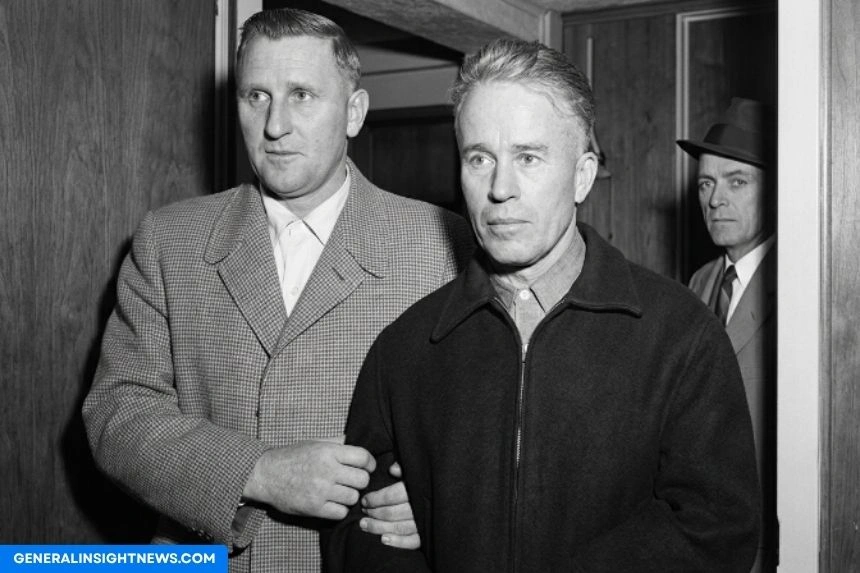
Wisconsin authorities arrested Ed Gein on November 16, 1957.
His arrest followed the disappearance of Bernice Worden from her hardware store in Plainfield, Wisconsin. Investigators connected Gein to the case and searched his property.
After authorities declared Gein legally insane and incompetent to stand trial, he entered Wisconsin’s mental-health system. He remained in institutional custody for the rest of his life.
This timeline alone creates a major problem for the claim that Ed Gein helped find Ted Bundy.
Bundy’s known criminal activity began much later, primarily during the 1970s. By that time, Gein had already spent years in institutional custody.
Who Was Ted Bundy?
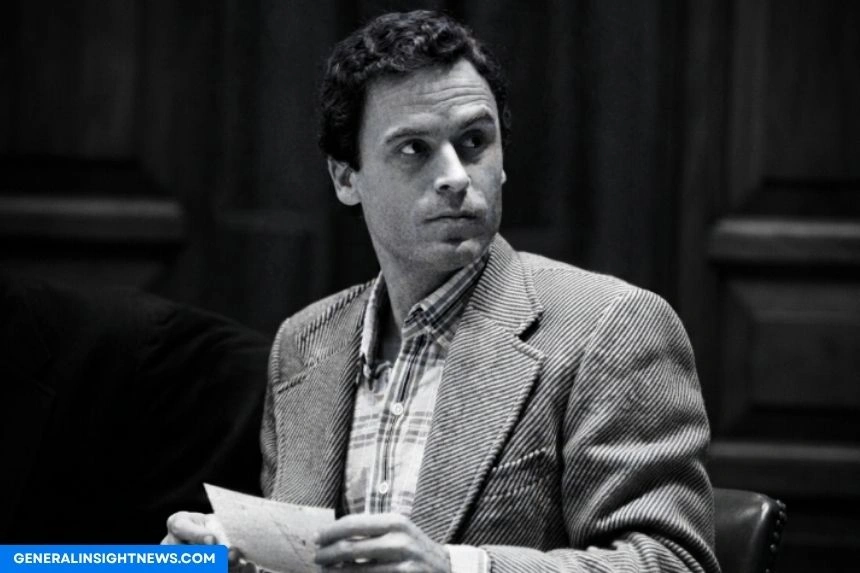
Ted Bundy was an American serial killer who murdered numerous women and girls during the 1970s.
Bundy traveled across several states, and investigators struggled for years to connect crimes that occurred in different jurisdictions. His ability to move between states complicated the investigation.
Authorities first arrested Bundy in Utah in 1975. However, he later escaped from custody and continued committing crimes. Police arrested him again in Florida in 1978 after a traffic stop.
Bundy’s case later became one of the best-known serial-murder investigations in American history.
You can read more about the documented case through Ted Bundy’s Wikipedia article and official or historical criminal-justice sources.

The Timeline Proves Ed Gein Did Not Help Find Ted Bundy
A simple timeline makes the historical situation clearer.
| Year | Ed Gein | Ted Bundy |
| 1957 | Arrested in Wisconsin | Not connected to Gein’s case |
| 1958 | Declared legally insane and institutionalized | Still years before his known crimes |
| 1960s | Remained in institutional custody | Lived as a young adult |
| 1974 | Institutionalized | Major murder investigations began |
| 1975 | Institutionalized | Arrested in Utah |
| 1977 | Institutionalized | Escaped from custody |
| 1978 | Institutionalized | Arrested in Florida |
| 1989 | Died in Wisconsin | Bundy had already been executed |
The chronology does not support a real investigative partnership.
Gein remained under institutional supervision while Bundy’s crimes and criminal investigations unfolded elsewhere. Moreover, no reliable historical record places Gein in an advisory role in the Bundy investigation.
Therefore, did Ed Gein help find Ted Bundy? The historical answer remains no.
How Was Ted Bundy Actually Caught?
Ted Bundy’s final arrest did not result from advice from Ed Gein or another imprisoned serial killer.
On February 15, 1978, Pensacola police officer David Lee stopped Bundy while he drove a stolen vehicle. Bundy attempted to flee, and a struggle followed. Police eventually identified him as a wanted fugitive.
The arrest came after Bundy had escaped from custody twice in Colorado and traveled to Florida.
Law enforcement officers, investigators, witnesses, victims, and evidence played important roles throughout the broader investigation into Bundy’s crimes. The real case involved years of police work across several states.
Therefore, crediting Ed Gein with helping catch Bundy changes the historical record.
Did the FBI Use Ed Gein to Profile Ted Bundy?
No credible evidence shows that the FBI used Ed Gein as a profiler or consultant in the Ted Bundy investigation.
This claim may sound plausible because modern crime dramas often portray imprisoned killers helping authorities understand other criminals. Popular fictional stories have made that scenario familiar to audiences.
However, Ed Gein did not serve as an FBI criminal profiler.
He also did not work as a police consultant.
The FBI did develop criminal-behavior analysis over time, but that history does not establish Gein as an advisor in the Bundy case. A fictional portrayal of an imprisoned killer providing insight should not replace the documented history of either the FBI or the actual investigation.
What Did Ed Gein and Ted Bundy Have in Common?
Ed Gein and Ted Bundy are both remembered as notorious figures in American criminal history, but their cases differed significantly.
Their Crimes Occurred in Different Eras
Gein’s known crimes became public in 1957. Bundy’s murders occurred mainly during the 1970s.
Therefore, their cases did not overlap in the way many fictional stories suggest.
Their Criminal Cases Were Different
Gein’s case involved murder, grave robbing, and the disturbing discovery of human remains at his Wisconsin property.
Bundy committed a series of murders across multiple states. His crimes involved a different pattern and required a complex multijurisdictional investigation.
Their Legal Outcomes Were Different
Courts found Gein legally insane, and Wisconsin institutions held him until his death.
A jury convicted Bundy of murder, and Florida eventually executed him in 1989.
Therefore, grouping them together simply because both became famous criminals can hide important historical differences.
Did Ed Gein Ever Meet Ted Bundy?
There is no credible evidence that Ed Gein and Ted Bundy had a documented in-person meeting.
Both men became famous names in American criminal history, but that does not mean they personally knew one another.
The available historical record does not support claims that Gein advised Bundy, exchanged investigative information with him, or helped authorities understand his crimes.
Any dramatized meeting should therefore be identified as fiction unless reliable historical evidence proves otherwise.
The Difference Between a True-Crime Drama and History
True-crime entertainment often sits between two categories: fact and fiction.
A production may accurately show a real arrest date while inventing private conversations. It may use the names of real investigators while changing events for dramatic pacing. It may also place two historical figures together even when no documented meeting occurred.
This creates a challenge for viewers.
The story can be “based on” real events without presenting every scene as historical fact.
Therefore, viewers should ask several questions after watching a dramatization:
- Did the real people actually meet?
- Does a primary or authoritative source document the conversation?
- Does the timeline make the scene possible?
- Did investigators actually use the method shown?
- Has the production combined events for storytelling purposes?
These questions are especially useful when a show depicts one serial killer helping investigators catch another.
Did Netflix’s Monster Show Ed Gein Helping Find Ted Bundy?
Dramatized portrayals can create the impression that Ed Gein played a role in identifying or catching Ted Bundy. However, viewers should not interpret such scenes as proof of a historical event.
The historical record does not show Gein helping police find Bundy.
As People and other entertainment fact-checking coverage have discussed, the claim became a topic of public confusion because audiences wanted to know whether a dramatic scene had a real-life basis.
The key point is simple: a scene involving real historical figures can still be fictional.
The existence of Ed Gein and Ted Bundy does not make an imagined interaction between them historically accurate.
What Reliable Sources Say About the Claim
Several reputable sources have directly addressed the question.
Encyclopaedia Britannica’s fact-check clearly rejects the idea that Ed Gein helped catch Ted Bundy.
Meanwhile, historical accounts of Bundy’s arrest describe law enforcement events that do not involve Gein.
A useful research method is to compare a dramatic claim with:
- Court records when available
- Law-enforcement histories
- Established reference works
- Reputable contemporary reporting
- Credible biographies
- Documented timelines
If a major claim appears only in a fictional television production and not in reliable historical records, writers should describe it as a dramatization rather than a verified event.
Common Claims About Ed Gein and Ted Bundy
| Claim | Verdict |
| Ed Gein helped find Ted Bundy | False |
| Ed Gein profiled Bundy for the FBI | Unsupported |
| Gein helped police identify Bundy | False |
| Gein worked as a police consultant | No credible evidence |
| Ed Gein and Ted Bundy had a documented meeting | Not established |
| Fictional dramas have connected the two | True |
| Gein was institutionalized during the Bundy investigations | Verified |
| Police arrested Bundy in Florida in 1978 | Verified |
| A dramatized scene automatically proves a historical event | False |
Why This Myth Spread So Quickly
The claim spread because it combines two famous names from true-crime history.
Ed Gein has become a major figure in horror culture. Ted Bundy, meanwhile, remains one of the most heavily documented serial killers in modern American history.
When entertainment connects two recognizable names, the story becomes easy to remember and share.
Moreover, fictional scenes can spread through social media without their original context. A short clip may not explain that a program dramatized or invented an event.
As a result, viewers may search online for confirmation after watching the scene.
That is why the exact question “did Ed Gein help find Ted Bundy” deserves a direct historical answer.
Did Ed Gein Influence Modern Criminal Profiling?
Ed Gein’s case influenced popular culture far more clearly than it influenced the Ted Bundy investigation.
His crimes became reference points for writers, filmmakers, and artists exploring fictional violence and psychological horror. However, saying that his case influenced popular culture is different from saying that Gein personally worked with law enforcement.
The distinction is essential.
A criminal case may influence how later generations discuss psychology or crime without the criminal himself becoming an investigator or expert.
Therefore, claims about Gein’s influence should not be exaggerated into a fictional law-enforcement career.
Why Historical Accuracy Matters in True Crime
True crime involves real victims, real families, and real investigations.
When a dramatization gives a fictional character action to a real criminal, it can unintentionally change public understanding of history. The false claim may then spread through search results, social media posts, and copied biography articles.
Accurate reporting helps protect the historical record.
In this case, the correction is straightforward: Ed Gein did not help find, identify, or capture Ted Bundy.
Police officers and investigators handled the actual Bundy investigation. Gein had no documented role in it.
Did Ed Gein Help Find Ted Bundy? Final Answer
No. Ed Gein did not help find Ted Bundy.
The claim comes from fictionalized storytelling rather than documented history. Gein was already in long-term institutional custody when Bundy’s criminal activities and major investigations unfolded during the 1970s.
There is no credible evidence that Gein advised the FBI, helped police create a profile of Bundy, provided investigators with clues, or participated in Bundy’s capture.
Ted Bundy’s final arrest came after a Pensacola police officer stopped him in Florida in 1978. That real-world law-enforcement event had no documented connection to Ed Gein.
Therefore, when readers ask, “did Ed Gein help find Ted Bundy?”, the most accurate answer is clear: No—the connection belongs to dramatized entertainment, not verified history.
Frequently Asked Questions
1. Did Ed Gein help find Ted Bundy?
No. There is no credible historical evidence that Ed Gein helped investigators find, identify, or capture Ted Bundy.
2. Did Ed Gein help the FBI catch Ted Bundy?
No. No reliable record shows that Gein worked with the FBI or advised investigators in the Bundy case.
3. Did Ed Gein and Ted Bundy ever meet?
No credible historical evidence documents a meeting between Ed Gein and Ted Bundy.
4. How did police actually catch Ted Bundy?
Police arrested Bundy in Pensacola, Florida, in February 1978 after Officer David Lee stopped him while he drove a stolen vehicle.
5. Was Ed Gein in prison when Ted Bundy committed his crimes?
Gein remained in institutional custody during the period when Bundy’s major crimes and investigations occurred.
6. Why do people believe Ed Gein helped find Ted Bundy?
The belief largely comes from fictionalized or dramatized portrayals that connect the two notorious criminals.
7. Did Ed Gein work as a criminal profiler?
No. Gein did not have a documented career as a criminal profiler or law-enforcement consultant.
8. Did the FBI use Ed Gein to understand serial killers?
No credible evidence shows that the FBI used Ed Gein as an advisor in the Ted Bundy investigation.
9. What did Ed Gein and Ted Bundy have in common?
Both became notorious figures in American criminal history, but their crimes, timelines, investigations, and legal outcomes were significantly different.
10. Is the Ed Gein and Ted Bundy connection in TV dramas historically accurate?
Not necessarily. A television drama may use real names and events while inventing scenes or conversations. The claim that Gein helped find Bundy is not supported by credible historical evidence.
Final Perspective
The answer to did Ed Gein help find Ted Bundy is not complicated once the historical record is separated from fictional entertainment.
He did not.
Ed Gein’s 1957 case and Ted Bundy’s 1970s crime spree belong to different investigations and different historical circumstances. Gein never became a documented FBI consultant, criminal profiler, or advisor in the Bundy investigation.
Therefore, any scene suggesting that Gein directly helped catch Bundy should be understood as dramatized fiction unless a production provides credible historical evidence to prove otherwise.
Read More At General insight News