

Type Tin Swe Thant into a search engine and a curious pattern appears. Many pages promise a complete biography, yet the dependable public record tells a smaller, more meaningful story. It begins near Rangoon, crosses an ocean, passes through an American college, and reaches a wider audience through the work of her daughter, journalist and author Alex Wagner.
That record does not provide every familiar celebrity-profile detail. It offers no reliable public birth date, résumé, financial estimate, or catalog of personal habits. Instead, it preserves something harder to reduce to a fact box: a history of migration, names, colonial education, family memory, and belonging.
This profile follows the evidence. It distinguishes facts from reasonable context and online repetition from genuine documentation. Most importantly, it treats Tin as a person whose privacy still matters—not simply as a supporting character in someone else’s public life.
Why Tin Swe Thant’s Story Begins With Three Names
The clearest window into Tin’s childhood comes from Alex Wagner’s account of her mother’s names. Tin was born with a Burmese name. At an English-language school, however, staff would not use it and required a Western “school name.” Her father chose Maureen, reportedly drawing inspiration from the Irish American film star Maureen O’Hara.
Consequently, different communities came to know the same person differently. Childhood friends called her Maureen, while friends in the United States knew her as Swe. Searchers now usually encounter her full Burmese name, Tin Swe Thant.
These names do more than solve a biographical puzzle. They show how institutions, migration, and relationships can shape identity without fully replacing what came before. Each name belongs to a particular social setting, but none alone contains her whole life.
A practical name map
| Name found in sources | Where it belongs | What readers should understand |
|---|---|---|
| Tin Swe Thant | Her Burmese name and the main search term | The name most often used in present-day profiles |
| Maureen / Maureen Thant Gyi | English-language school and childhood circle | A school name imposed by the institution and selected by her father |
| Swe | American friendships | A shorter personal name used by people in her US life |
The map also warns against assuming that alternate names indicate separate people. In this case, they reflect the same person’s passage through different cultural environments.
Tin Swe Thant at a Glance: What the Record Supports
The most reliable profile remains concise. Tin was born near Rangoon—today called Yangon—in the Irrawaddy delta region of Burma, now officially Myanmar. Her family left Burma during the 1960s. She later became a naturalized American citizen and attended Swarthmore College.
Tin married Carl R. Wagner, an American Democratic political strategist. Their only child, Alex Wagner, built a career in journalism and wrote about her mixed Burmese and European American ancestry. Carl died in 2017, which makes “late husband” or “widow” more accurate than the “former spouse” language that appears on some biography pages.
Facts readers can use confidently
- Tin is the Burmese-born mother of Alex Wagner.
- She spent her early life near Rangoon during a period of enormous political change.
- Colonial educational expectations shaped the name she used at school.
- Her family migrated from Burma in the 1960s.
- She became a US citizen and attended Swarthmore College.
- She married political strategist Carl Wagner and had one daughter, Alex.
- Alex later explored this family history in Futureface.
That list may look modest, but it rests on first-person, publisher, institutional, and established news sources. A short verified record serves readers better than a long invented one.
From the Irrawaddy Delta to a Changing Burma
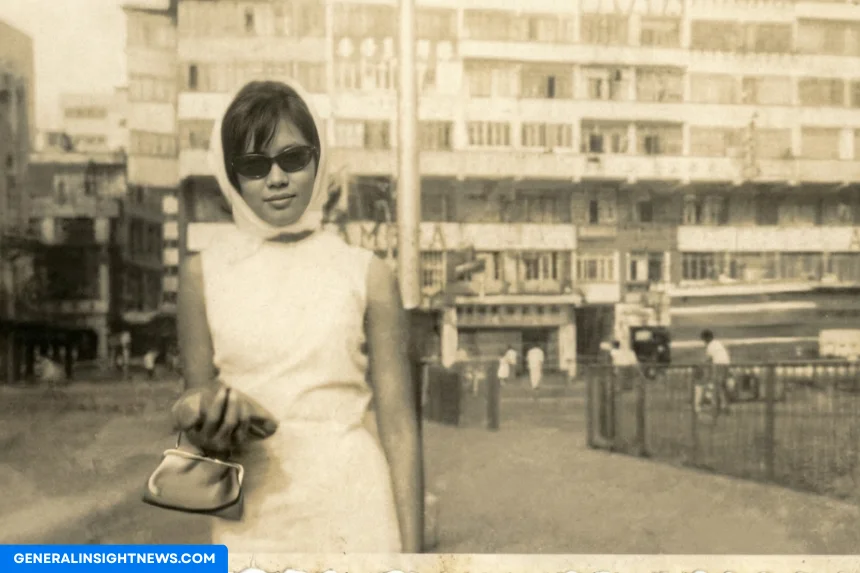
Alex has described her mother as born just outside Rangoon, around the Irrawaddy delta. The geography matters. The Irrawaddy is central to Myanmar’s landscape, economy, and history, while Rangoon served as the country’s colonial capital and remains its largest city under the name Yangon.
Tin’s childhood unfolded as British colonial rule approached its end. Burma gained independence in 1948. Political upheaval did not end there: the following decades brought conflict, military rule, and growing pressure on many families. Readers can explore the broader national chronology through this overview of Myanmar’s history and modern identity.
Historical setting, not a substitute for biography
It would be easy to turn national history into claims about one household. Responsible biography must resist that shortcut. Public sources do not reveal every event Tin witnessed, her family’s political views, or the exact reasons behind each move.
Still, the setting clarifies the world around her. She grew up while older colonial habits remained visible even as the country entered independence. The English-language school’s treatment of her name offers a personal example of that wider tension. It placed Western expectations inside an ordinary childhood routine: answering to a name in class.
The distinction matters. History supplies context, while Alex’s recorded family account supplies the personal evidence. When those two layers remain separate, readers can understand the period without assigning unspoken feelings or experiences to Tin.
How “Maureen” Entered Tin Swe Thant’s Childhood
At Tin’s English school, her Burmese name apparently did not meet the institution’s rules. Staff required a Western name. Her father, U Thant Gyi, selected Maureen after Maureen O’Hara, whose screen presence had reached audiences far beyond the United States and Ireland.
The episode sounds small, yet it reveals unequal power. A child could bring her language, family, and identity to school, but the institution still decided what name counted as usable. Tin adapted because the classroom demanded it.
What the school-name episode does—and does not—show
The evidence establishes the requirement and the chosen name. It does not establish that Tin rejected “Maureen,” nor does it reveal exactly how she felt each time someone used it. Alex’s account says childhood friends continued to call her mother Maureen, suggesting the name became part of real relationships rather than remaining only an administrative label.
Therefore, two truths can coexist. The school rule reflected colonial hierarchy, and the name later carried memories of friendship and youth. Treating it only as oppression would flatten the human story; treating it only as a charming nickname would erase the pressure that produced it.
This balance helps explain why names often occupy such a central place in immigrant family narratives. They can record coercion and affection, loss and continuity, all at once.
A Burmese Name Is Not a Western Surname Formula
Readers accustomed to Western naming patterns may incorrectly divide “Tin Swe Thant” into a fixed first-middle-last structure. Burmese naming traditions do not necessarily follow inherited family surnames. Individual names can contain several elements, and relatives may not share a final name.
That cultural difference also makes low-quality genealogy especially risky. A matching “Thant” does not automatically prove a family relationship, and a record indexed under one element may not map neatly onto Western database fields.
Why careful spelling matters
Biography pages sometimes copy one another’s misspellings or silently rearrange names. Once search engines index the error, repetition can make it look established. However, frequency is not verification.
For Tin Swe Thant, writers should preserve the full form used by strong sources. They should also explain “Maureen” and “Swe” only in the documented contexts. Inventing a maiden name, treating “Thant” as a conventional hereditary surname, or merging unrelated records would create false certainty.
This is one reason the present profile avoids building a family tree from people-search databases. Those tools may generate leads, but they cannot replace a first-person account or a well-sourced public record. Respect for a person’s name starts with resisting systems that force it into the wrong template.
Migration, Citizenship and Swarthmore College
Penguin Random House’s description of the young-readers edition of Futureface says Alex’s mother fled Burma with her family in the 1960s. This publisher source gives a useful decade but not an exact year. Accordingly, a precise arrival date should not appear as fact.
Established accounts also say Tin became a naturalized US citizen before attending Swarthmore College. That sequence—migration, citizenship, higher education—helps place her early American life, even though the public record does not provide a full enrollment transcript or personal chronology.
What can safely be said about Swarthmore
Tin attended Swarthmore College in Pennsylvania, a selective liberal arts institution with Quaker roots. Some secondary profiles assign her a particular major, but an accessible institutional source has not confirmed it. The careful formulation is simply that she attended Swarthmore.
This restraint does not diminish the accomplishment. For a young woman from Burma rebuilding life in the United States, reaching an American college formed a significant part of the documented journey. Yet a biographer should not decorate that achievement with an unsupported subject, graduation year, or campus story.
The same rule applies to naturalization. It signals a formal change in citizenship, but it does not tell us that Tin abandoned Burmese identity. Alex’s work suggests the opposite: Burmese history and family memory remained important across generations.
Tin Swe Thant and Carl Wagner’s Family
Tin married Carl R. Wagner, a Midwestern American who became a notable Democratic campaign strategist. Their partnership joined Burmese and European American family histories in Washington, D.C., where their daughter grew up.
Carl’s career placed him near national politics. According to his Washington Post obituary, he advised candidates including Bill Clinton, Edward Kennedy, and George McGovern and co-chaired Clinton’s 1992 presidential campaign. He died at his Washington home in June 2017 at age 72.
Public husband, comparatively private wife
Carl’s professional record creates an important contrast. Newspapers documented his campaigns, clients, and influence because he chose a public political career. Tin did not leave a comparable public résumé. Writers should not fill that gap by assigning her a career based on association.
Nor should they assume she played an operational role in her husband’s political work. A spouse may understand, support, challenge, or simply live alongside a public career; none of those possibilities proves a job title.
What the sources do establish is a marriage and a family. Tin and Carl were Alex Wagner’s parents, and their distinct ancestries later became the central routes in Alex’s search for belonging. That is substantial without turning Tin into an unelected campaign figure.
Raising Alex Wagner Between Burmese and American Worlds
Alex Wagner grew up in Washington as the only child of a Burmese mother and a white American father. Public profiles often summarize that background in one sentence. Alex’s later reporting and memoir show why the reality was more layered.
Her maternal line connected her to Burma and to migration through the United States. Her paternal line connected her to Luxembourgish and Irish roots. At home, those histories did not combine into a tidy percentage chart; they shaped stories, silences, food, names, memories, and questions about belonging.
Tin’s influence appears through Alex’s questions
Tin rarely speaks through a large archive of her own interviews. Instead, readers encounter her influence through the questions Alex asks: What survives migration? Who decides which ancestry counts? What happens when a family story meets a historical record? Can a mixed-race American feel fully at home in multiple lineages?
An official Luxembourg Embassy event biography describes Alex as the only child of a Burmese mother and a Midwestern father. That institutional summary supports the basic family structure. Alex’s memoir adds the emotional and investigative dimensions.
We should still avoid claiming that Tin deliberately designed a particular identity curriculum for her daughter. The public record shows influence and inheritance, not every private parenting decision.
Alex Wagner’s Career Made the Family Connection Searchable
Tin Swe Thant became a recurring search subject largely because Alex built a visible career. Alex has worked as a journalist, editor, television host, and author. Readers interested in a concise career overview can consult the cited sources on Alex Wagner’s public biography.
That visibility changes how family members appear online. A parent who did not seek celebrity can suddenly acquire biography pages, guessed financial profiles, and recycled “facts.” Search demand grows faster than the body of evidence.
Relationship does not transfer public status
Calling Tin “Alex Wagner’s mother” helps readers identify her, but it should not erase her separate humanity. Conversely, Alex’s prominence does not make every part of Tin’s life public property.
This distinction guides the article’s limits. Alex has publicly described the naming story, Burmese origin, migration, and family ancestry, so those subjects can be covered with attribution. Tin’s current routine, private relationships, finances, and exact residence lack the same public foundation.
A responsible profile therefore answers the central identity question while declining to manufacture completeness. That approach may feel unusual in a search landscape full of instant fact boxes, but it produces a more accurate and humane result.
How Futureface Brought the Family Story Into Public View
Alex published Futureface: A Family Mystery, an Epic Quest, and the Secret to Belonging in 2018. The book follows her effort to investigate both sides of her ancestry and test easy assumptions about mixed-race identity.
The publisher’s description of Futureface identifies Alex as the daughter of a Burmese mother and white American father. It also frames the project around family mysteries, race, ethnicity, and the question of who her people are.
The maternal journey is not a standard celebrity profile
Alex did not use her mother merely to provide colorful background. The maternal story opens questions about colonial history, migration, inherited memory, and how archives preserve—or fail to preserve—ordinary lives.
In a WHYY conversation about identity and ancestry, Alex discussed the search behind the book. Likewise, an MPR News interview on her family tree gives readers a reliable entry point into the memoir’s larger themes.
These interviews matter because they keep interpretation connected to Alex’s own stated project. They offer far stronger evidence than biography sites that compress a complex family investigation into a list of dates.
Visiting Myanmar Changed an Inherited Story Into a Journey
Researching ancestry from a distance can make a homeland feel symbolic. Traveling there adds place, encounter, and contradiction. Alex’s work took her toward Myanmar as she examined her mother’s side of the family.
An Elon University account of Alex Wagner’s talk describes her exploration of heritage and identity, including journeys connected to both parents’ origins. The event demonstrates how Tin’s migration story became part of a public discussion about American belonging.
Memory and archives answer different questions
Family memories preserve voices, relationships, and emotional emphasis. Archives preserve whatever institutions chose—or managed—to record. Neither source type alone guarantees a complete history.
Tin’s different names illustrate the challenge. A school record might use Maureen, a US document might use Tin Swe Thant, and a friend might remember Swe. Without context, a researcher could split one person into several identities or merge her with someone unrelated.
Alex’s journey shows why ancestry research requires more than matching text. Researchers must ask who created a record, what naming system it assumed, and what political conditions surrounded it. In that sense, Tin’s biography offers a lesson in method as well as family history.
What Tin Swe Thant’s Story Reveals About Names
Names often look like the simplest facts on a form. In practice, they carry power. Families choose them, institutions alter them, friends shorten them, and migrants decide which versions to use in new settings.
Tin’s school name came from an institution that would not accommodate her Burmese name. Yet her father selected the replacement, connecting it to a film star known around the world. Later, childhood friends retained Maureen while American friends used Swe.
One identity can hold several social histories
The important point is not that one name is “real” and all others false. Tin Swe Thant was her Burmese name; Maureen belonged to a school and childhood world; Swe belonged to relationships in America. The origin of each name differs, so each tells a different truth about social context.
For immigrants, alternate names can make pronunciation easier, reduce discrimination, satisfy bureaucracy, preserve intimacy, or simply continue an old habit. We should not assume which motive applies unless the person explains it.
Tin’s documented experience specifically identifies school pressure. Beyond that, careful readers should leave room for complexity. Her story becomes richer when the names remain connected instead of competing for authenticity.
Burmese American Identity Across Generations
Tin’s life belongs to a broader history of migration from Burma to the United States, but no individual should stand in for an entire community. Burmese Americans differ in ethnicity, religion, language, migration period, legal status, and political experience.
Still, her family’s story illustrates a familiar generational pattern. The migrant generation carries memories of departure and adapts to American institutions. The next generation inherits fragments, asks why certain details disappeared, and may travel or research to rebuild a fuller account.
Inheritance includes unanswered questions
Children do not inherit culture as a sealed package. They receive recipes, expressions, expectations, photographs, silences, and names. They also inherit the historical forces that shaped what parents could preserve.
Alex’s search in Futureface reflects that process. Her mother’s Burmese origin supplied a lineage, but lineage alone did not answer how Alex should understand herself. Investigation complicated the easy story of a harmonious “post-racial” future.
Tin’s significance therefore lies partly in what her life allowed a later generation to ask. Her migration connected places; her names preserved institutional history; and her family memories gave Alex a starting point. None of this requires readers to imagine private confessions that Tin never made publicly.
A Family Story at the Intersection of Race and Belonging
The Wagner family brought together a Burmese immigrant mother and a white Midwestern father whose ancestry reached Ireland and Luxembourg. In the abstract, that sounds like a neat multicultural narrative. Alex’s work challenges neatness.
Race in America shapes how other people read a face, name, or family. Ancestry, meanwhile, may involve records and origins that do not line up with a person’s daily social experience. Belonging adds another layer: someone can possess a documented connection to a place without feeling entirely at home there.
Tin’s biography should preserve that complexity
Reducing Tin to “the Asian mother of a famous journalist” would reproduce the simplification that Alex’s book investigates. Yet turning her into a symbol of every immigrant mother would create another stereotype.
The evidence supports a more grounded reading. Tin came from Burma, navigated different names, became American, attended college, married, and raised a daughter whose work returned to the family’s histories. Those facts create a meaningful arc while leaving room for an interior life that the public cannot fully know.
Good biography does not eliminate every ambiguity. It shows readers where the evidence ends and why the remaining space belongs to the subject.
Verified Facts Versus Online Biography Claims
Search results frequently reward pages that sound certain. Consequently, exact ages, occupations, fortunes, and family details can travel from one unsourced profile to another. Repetition then disguises the original absence of evidence.
For Tin Swe Thant, the safest approach is to sort claims by status rather than repeat them with disclaimers buried at the end.
Claim-status table
| Common search question | Responsible answer | Why |
| Where was she born? | Near Rangoon in Burma, now Yangon, Myanmar | Supported by Alex’s first-person account |
| When did she immigrate? | Her family left Burma in the 1960s | Publisher source supports the decade, not an exact year |
| Did she attend Swarthmore? | Yes | Supported across established biographical sources |
| What did she study? | Not firmly established in accessible authoritative sources | Secondary sites should not settle it |
| What was her profession? | The public record does not clearly document one | Marriage to a strategist does not prove a political job |
| What is her net worth? | No credible public estimate exists | No verified assets, earnings, or disclosures |
| How old is she? | Her exact birth date is not reliably public | Guessing from life events would remain inference |
| Where does she live now? | Not appropriate to assert without a current public source | Privacy and accuracy both apply |
This table gives readers useful answers without rewarding speculation.
Why Net-Worth Claims About Tin Swe Thant Fail
Some biography templates treat wealth as mandatory. A number appears even when the subject has no public financial disclosures, known business sale, published salary, or court record that could support one.
Tin’s public record offers none of the inputs needed for a defensible estimate. Her daughter’s media career and her late husband’s political work do not reveal Tin’s personal assets. Family relationship cannot serve as an accounting method.
A number without a method is not evidence
A credible estimate should explain income sources, ownership, debts, valuation date, and uncertainty. Without those elements, a dollar figure functions as search bait rather than financial reporting.
Therefore, the accurate answer is simple: Tin Swe Thant’s net worth is not publicly verified. That statement may attract less attention than a dramatic number, but it protects readers from misinformation.
The same caution covers property and inheritance. Even if a public record once connected a family member to a home, it would not reveal present ownership, debt, or total wealth. Responsible profiles should keep private finances private unless the subject or an authoritative filing makes them relevant and verifiable.
Why Privacy Belongs in This Biography
Tin appears in public because her daughter wrote about family history and her husband worked in politics. That does not mean she accepted the same level of scrutiny as either relative.
Privacy is not an obstacle to biography; it is part of accurate biography. When sources do not reveal an exact birth date, current address, health history, or daily routine, a writer should not hunt for scraps merely to fill headings.
Public relevance has a boundary
Her migration and naming experiences have clear relevance because Alex placed them in a published exploration of ancestry. Carl’s career matters because it explains the other side of Alex’s family and has extensive public documentation. Tin’s bank balance or private contact details add no comparable understanding.
This boundary also protects against mistaken identity. People-search and genealogy platforms may combine individuals with similar names, especially when naming traditions do not match Western database fields. Publishing those matches can expose unrelated people as well as misrepresent Tin.
The better editorial choice is to tell the verified story fully, add historical context carefully, and say “not publicly known” when evidence stops. Restraint builds trust.
How to Read Future Profiles of Tin Swe Thant Critically
Readers can evaluate a biography before accepting its claims. First, check whether it links to a first-person account, reputable publisher, institution, or established newsroom. A long reference list means little if every page repeats the same uncited sentence.
Second, look for calibrated language. A trustworthy article distinguishes “was born” from “is reportedly born,” and it does not convert an estimated decade into an exact date.
Four quick verification questions
- Does the source explain how it knows the fact?
- Is the claim independently confirmed, or do sites cite one another?
- Could the claim invade privacy without adding public value?
- Does the naming format respect Burmese conventions?
These questions work especially well for age, career, education, and wealth claims. They also help readers notice when a page uses Alex Wagner’s achievements as though they belonged to Tin.
Finally, compare the level of detail with the subject’s public role. A private person with no interviews should not suddenly have a precise list of hobbies, measurements, investments, and beliefs. Excessive detail can signal fabrication rather than superior research.
Frequently Asked Questions About Tin Swe Thant
The following answers address the most common searches while preserving the line between established biography and speculation.
Who is Tin Swe Thant?
Tin Swe Thant is a Burmese-born naturalized American best known publicly as the mother of journalist and author Alex Wagner. She grew up near Rangoon, now Yangon, migrated with her family during the 1960s, attended Swarthmore College, and married Democratic political strategist Carl R. Wagner. Much of what the public knows about her comes from Alex’s writing and interviews about ancestry, race, and belonging.
Where was Tin Swe Thant born?
Alex Wagner has described her mother as born just outside Rangoon around the Irrawaddy delta in Burma. The country now uses the official name Myanmar, and Rangoon is now generally called Yangon. Public sources do not provide a more precise birthplace that should be repeated confidently.
Why was Tin Swe Thant called Maureen?
Her English-language school required her to use a Western school name because it would not accept her Burmese name. Her father selected Maureen, reportedly after actor Maureen O’Hara. Childhood friends continued to know her by that name, while friends in America often called her Swe.
Is Tin Swe Thant Alex Wagner’s mother?
Yes. Tin is Alex Wagner’s mother, and Carl R. Wagner was Alex’s father. Institutional profiles describe Alex as their only child. Alex has repeatedly discussed her Burmese maternal ancestry in her book Futureface, public-radio interviews, essays, and appearances about identity.
Who was Tin Swe Thant’s husband?
Her husband was Carl R. Wagner, a Democratic political strategist who advised major US political figures and helped lead Bill Clinton’s successful 1992 presidential campaign. Carl died in Washington in 2017. Reliable sources support describing him as Tin’s late husband; pages that casually call him an ex-husband do not establish a divorce.
Did Tin Swe Thant attend Swarthmore College?
Yes. Established accounts say she became a naturalized US citizen and attended Swarthmore College. However, accessible authoritative sources do not firmly establish every detail of her enrollment, such as a major or graduation year. Those specifics should remain unclaimed unless the college or Tin confirms them.
When did Tin Swe Thant move to the United States?
Penguin Random House’s material for Futureface says her family left Burma in the 1960s. A reliable exact year is not readily available. Therefore, the decade is the most precise responsible answer rather than a date copied from an unsourced biography.
What does Tin Swe Thant do for a living?
No dependable public source clearly documents her occupation or a detailed career history. Some online pages may assign professional labels, but association with her husband’s political work or her daughter’s journalism does not prove employment. The accurate answer is that her career is not established in the accessible public record.
What is Tin Swe Thant’s net worth?
Tin Swe Thant’s net worth is not publicly verified. Credible financial estimates require evidence about earnings, assets, ownership, debts, and timing. None is available in authoritative sources, and the finances of Alex Wagner or Carl Wagner cannot responsibly substitute for Tin’s personal financial information.
Is Tin Swe Thant still alive, and where does she live?
Recent reputable sources do not prominently report her death, but they also do not provide a verified current residence or routine. A responsible profile should not guess. Readers should avoid people-search pages that expose possible addresses, because they can be outdated, invasive, or connected to someone else with a similar name.
A Life Best Understood Through Memory, Not Metrics
Tin Swe Thant’s public story does not need an invented birth date, job title, or fortune to feel complete. Its strongest details already carry weight: a Burmese childhood near Rangoon, an English school that demanded another name, a family departure in the 1960s, American citizenship, college, marriage, motherhood, and a daughter’s return to ancestral questions.
What the verified record leaves us
Her names form a compact history. Tin Swe Thant connects her to Burmese identity. Maureen records a colonial institution and a childhood community. Swe belongs to friendships in America. Together, they show continuity through change rather than a simple replacement of one self by another.
Alex Wagner’s Futureface brought parts of that history into public view, but it did not turn every corner of Tin’s life into public data. That remaining privacy deserves respect. The most truthful profile holds both realities at once: Tin’s experiences matter to a larger conversation about migration and belonging, and much of her life still belongs to her.
For readers, that may be the most valuable conclusion. Biography earns trust not by pretending to know everything, but by making the known facts clear, placing them in honest context, and refusing to disguise guesses as knowledge.